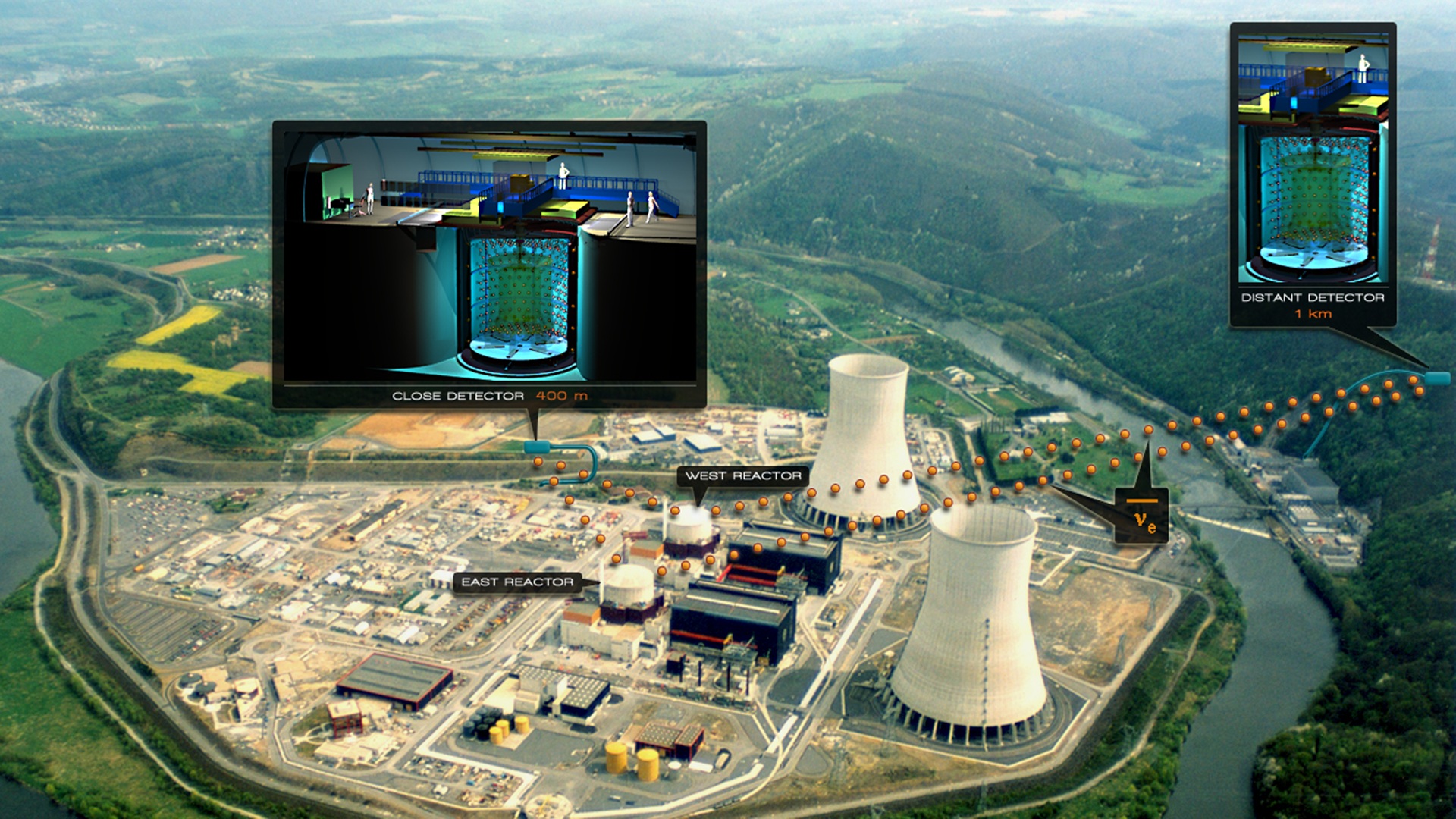
Scientists have achieved a major breakthrough in nuclear physics after making the first direct measurement of antineutrinos released by spent nuclear fuel following a reactor shutdown. The experiment was carried out by a research team at the Max Planck Institute for Nuclear Physics (MPIK) in the city of Heidelberg, Germany. It found that detectors can identify the faint stream of antineutrinos produced by radioactive decay even after reactors stop generating electricity. According to Anthony Onillon, PhD, and Thierry Lasserre, PhD, both physicists at MPIK who led the study, the findings revealed that antineutrino detectors could independently verify reactor status and monitor spent fuel during maintenance and after shutdown. “Antineutrinos interact only extremely rarely with matter,” Onillon said. “However, when one interacts within the Double-Chooz detector, a characteristic double-light signal is produced that can be distinguished from background events.” Spotting an invisible signal The researchers carried out the measurement at the Chooz nuclear power plant in northern France using the Double Chooz detector. It is installed around 1,312 feet (400 meters) underground. It sits equally far from the site’s two reactor cores. Moreover, the detector contains more than 1,060 cubic feet (30 cubic meters) of liquid scintillator. This is a material that emits tiny flashes of light when struck by an antineutrino. Although antineutrinos rarely interact with matter, physicists can identify them through a characteristic double-light signal that distinguishes them from background radiation. The Double-Chooz detector. Credit: Double-Chooz collaboration For the project, the team analyzed 17.2 days of data collected while both reactor units were completely shut down. Over that period, the detector recorded about 100 antineutrino candidate events originating from radioactive decay inside the reactor cores and nearby spent-fuel cooling pools. The signal closely matched detailed simulations of the remaining nuclear fuel and the decay of long-lived fission products. It provided the first direct experimental confirmation of theoretical predictions for antineutrino emissions from shutdown reactors and spent nuclear fuel. Nuclear reactor monitoring The findings suggest antineutrino detectors could become useful not only while reactors are generating power, but also during refueling outages, maintenance work, and long-term storage of spent nuclear fuel. “Until now, reactor antineutrino experiments have mainly focused on operating reactors, where the antineutrino flux is much larger,” Onillon concluded in a press release. “Detecting the tiny residual signal after shutdown required exceptionally low backgrounds and careful analysis techniques developed by the Double Chooz collaboration over many years.” According to the researchers, these measurements could provide an independent way to verify whether a reactor is operating and help confirm inventories of spent fuel without relying solely on conventional inspection methods. Researchers Thierry Lassere and Anthony Onillon discussing the data. Credit: R. Lackner / MPIK Meanwhile, interest in this approach is already growing. Results from the JUNO-TAO experiment, presented at the Neutrino 2026 conference, have also explored the detection of antineutrinos produced by spent nuclear fuel during reactor shutdowns. The Double Chooz measurement now provides the first published benchmark for those efforts. Double Chooz was created to study neutrino oscillations. It played a key role in measuring the neutrino mixing angle θ13, one of the fundamental parameters governing how neutrinos change between different types as they travel through space. It has now shown a new capability outside its original mission.The study has been published in the journal Physical Review Letters.Recommended ArticlesGet the latest in engineering, tech, space & science - delivered daily to your inbox.Based in Skopje, North Macedonia. Her work has appeared in Daily Mail, Mirror, Daily Star, Yahoo, NationalWorld, Newsweek, Press Gazette and others. She covers stories on batteries, wind energy, sustainable shipping and new discoveries. When she's not chasing the next big science story, she's traveling, exploring new cultures, or enjoying good food with even better wine.
Antineutrinos spotted from spent nuclear fuel for first time after reactor shutdown
Full Article
Original Source
Read the full article at Interestingengineering →KhanList aggregates and links to publicly available news content. We do not host full articles from third-party sources. Always verify important information with original sources.