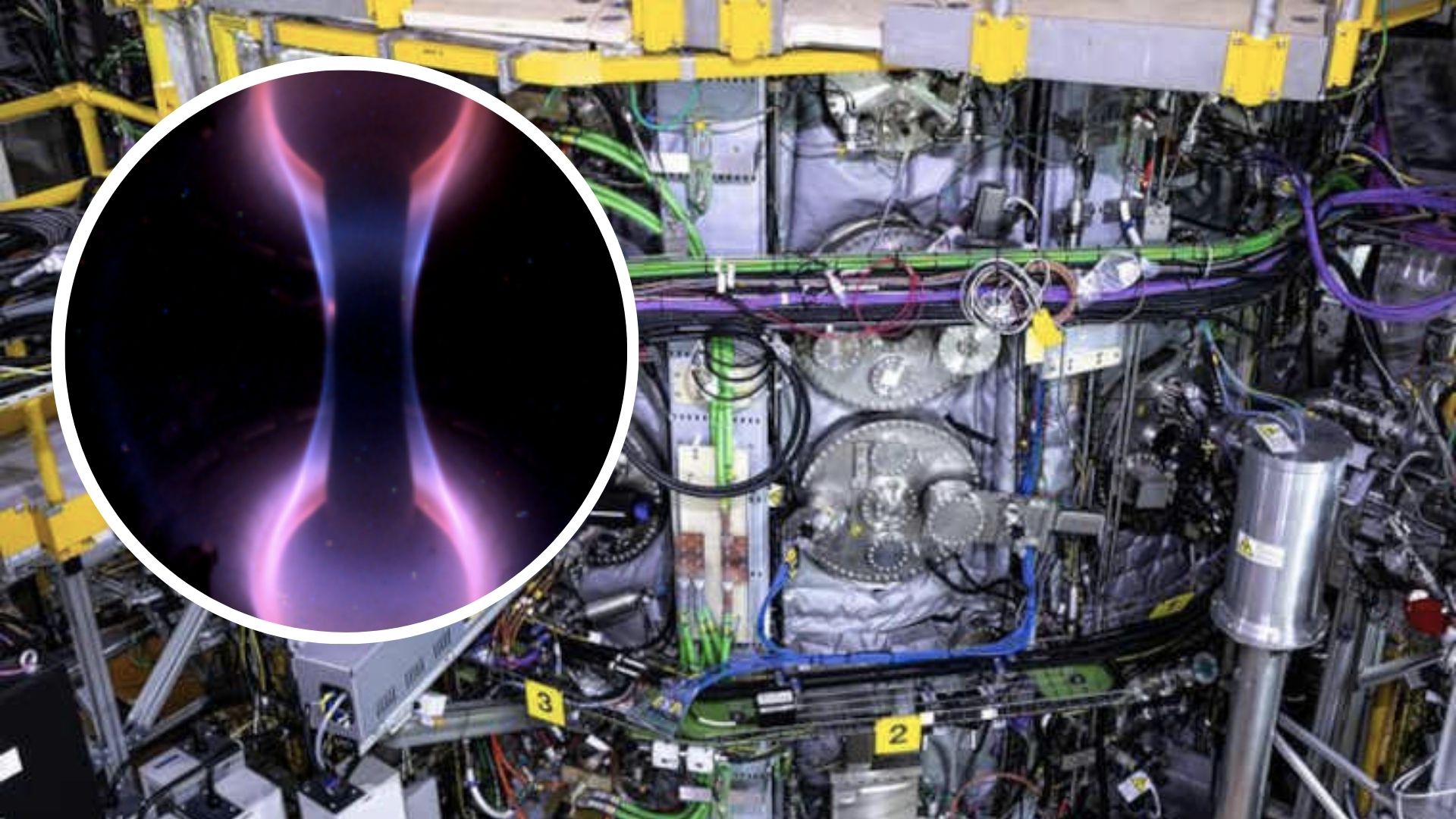
A major achievement at the UK’s MAST Upgrade fusion facility could help solve one of the biggest challenges facing commercial nuclear fusion: how to create powerful plasma without allowing it to become unstable.The United Kingdom has taken another significant step towards practical nuclear fusion after scientists operating the MAST Upgrade machine achieved the highest plasma pressure ever recorded on the facility while keeping the plasma stable. Need to operate at extremely high temperatures The breakthrough was announced by the UK Atomic Energy Authority (UKAEA) following the completion of the machine’s fifth experimental campaign, which ran through 2025 and 2026 and produced more than 1,100 fusion plasmas. The achievement is important because future fusion power plants will need to operate at extremely high temperatures, pressures and densities while maintaining precise control over the plasma.Nuclear fusion is the process that powers the Sun. On Earth, scientists are attempting to reproduce this process by heating hydrogen isotopes to enormous temperatures until they form plasma—a hot, electrically charged state of matter.For fusion reactions to become increasingly productive, scientists need to bring the fuel to high temperatures and densities and confine it effectively.Pressure is particularly important. A higher-pressure plasma can potentially generate more fusion power from a given volume, making high-pressure operation an important consideration for future commercial fusion reactors. But increasing plasma pressure also creates a major problem: instability. One of the most serious challenges is known as an Edge Localised Mode, or ELM.ELMs are sudden bursts of instability that occur at the edge of a fusion plasma. They can rapidly release a significant amount of the plasma’s stored energy towards the surrounding components.According to UKAEA, a single event can eject up to around a tenth of the plasma’s stored energy. Repeated events could damage the walls and exhaust components of a future fusion power plant, increasing maintenance requirements and potentially threatening the economic viability of fusion energy. Results genuinely shape the design of future fusion power plants In other words, producing an extremely hot plasma is only part of the challenge. Scientists must also find ways to keep that plasma under control.“The results genuinely shape the design of future fusion power plants. Accessing four stable high-performance plasma regimes, including QH-mode, QCE and I-mode and our world-first plasma position control technique, demonstrates that MAST Upgrade is producing science at the leading edge of what is possible,” said James Harrison, Head of MAST Upgrade Science at UKAEA.“The level of international interest in our data reflects the UK’s central role in global fusion research, and these findings take us another step closer to practical fusion energy.”The latest MAST Upgrade experiments demonstrate that this can be achieved even as plasma pressure is pushed higher.The MAST Upgrade team investigated several advanced operating regimes designed to suppress or reduce damaging instabilities.These included Quasi-Continuous Exhaust (QCE) and Resonant Magnetic Perturbations (RMP), as well as two additional regimes known as Quiescent H-mode (QH-mode) and I-mode.These approaches are designed to improve plasma confinement while reducing the damaging effects associated with large ELMs. The experiments showed that MAST Upgrade could access four different stable, high-performance plasma regimes under conditions relevant to future fusion machines. This matters beyond the experiment itself. The ultimate objective is to develop operating methods that could be incorporated into machines designed to produce electricity.One of the most notable developments was a new method for detecting and controlling the position of the plasma in real time.The MAST Upgrade team used measurements of visible light produced by deuterium in the machine’s divertor region. By analysing this light, researchers could detect tiny positional imbalances in the plasma.The significance of this approach goes beyond simply monitoring the experiment. Future commercial fusion plants will need highly sophisticated automated control systems capable of responding to changes in the plasma rapidly and accurately.A power plant cannot depend on scientists manually adjusting every parameter. Real-time automated control will be essential for reliable operation.Keeping the plasma stable is only one part of the challenge. A fusion reactor must also deal with extraordinary amounts of heat and particle exhaust.The MAST Upgrade experiments investigated the use of nitrogen at the edge of the plasma. Researchers found that adding small quantities of nitrogen can cause a large proportion of the exhaust power to be emitted as light.Recommended ArticlesGet the latest in engineering, tech, space & science - delivered daily to your inbox.Prabhat, an alumnus of the Indian Institute of Mass Communication, is a tech and defense journalist. While he enjoys writing on modern weapons and emerging tech, he has also reported on global politics and business. He has been previously associated with well-known media houses, including the International Business Times (Singapore Edition) and ANI.
Practical nuclear fusion milestone achieved, higher plasma pressure feat recorded
Full Article
Original Source
Read the full article at Interestingengineering →KhanList aggregates and links to publicly available news content. We do not host full articles from third-party sources. Always verify important information with original sources.