
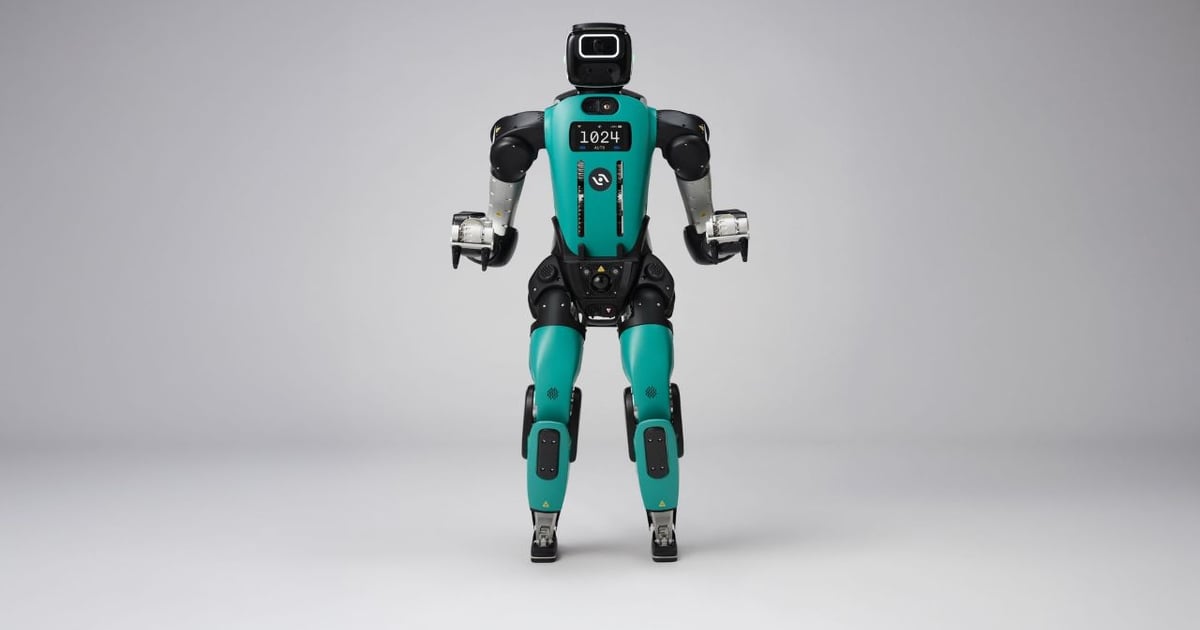
Agility Robotics has become the first publicly listed humanoid robotics company in the U.S., following completion of its business combination with the former Churchill Capital Corp XI.The company’s common stock began trading on the Nasdaq exchange last week under the ticker AGLT.The offering generated about $465 million in capital before expenses, according to the company, which Agility plans to use to accelerate the commercialization of its humanoid robot Digit.The move comes as U.S. robotics developers look to ramp up production and push deployments from demonstrations to real-world environments. It also follows the FCC’s July initiative to restrict the import of advanced robotic devices produced abroad.Bill Ray, an analyst at Gartner, said Agility’s IPO is significant in showcasing the U.S.’s standing in the robotics market.“The Chinese companies are leading the way in manufacturing robots, so as an American company, it’s quite significant politically to have a company out there doing it,” he said.Related:Google Genie 4 brings world models closer to robot and AI testingGeorge Chowdhury, a robotics analyst at ABI Research, similarly said the public offering reflects growing confidence in the commercial potential of robotics technology.“It also helps differentiate frontier technologies, like humanoids, from the overall tech AI-data center market, which is proving increasingly exposed to market turbulence,” he said.Industrial applications offer a more practical routeRay said Agility’s focus on manufacturing and logistics gives it a more commercially grounded proposition than humanoid developers targeting domestic applications.While companies such as Figure and Tesla attract significant attention with their ambitions to build general-purpose humanoid robots, Ray questioned how quickly those applications could become commercially viable.“They are far more practical,” he said of Agility’s industrial uses. “Today, you cannot actually buy a robot like Tesla’s Optimus.”Chowdhury said Agility’s approach is “market-leading,” unique in how it commercializes the technology, in a way more familiar to traditional industrial robotics manufacturers.“Agility is the most commercially mature humanoid company going after enterprise markets,” he said. “They have built distribution networks, integration strategies, progressive pricing and payment strategies, and they work with safety and regulatory bodies to increase adoption across the board.”“Most importantly, they have live commercial deployment,” adding that his company’s research found about 100 Digit robots “at work” today, he added.Related:Honda demonstrates remote-controlled robot for complex physical tasksHowever, Agility still faces challenges as it looks to scale deployments. Ray noted that warehouses offer relatively structured environments for humanoid robots, but they are also among the most heavily automated workplaces.So, integrating humanoids into existing operations without requiring substantial changes to infrastructure or workflows will be important.“One of the things about the new generation of robots is we really want to fit them in with our existing way of working,” he said. “If you have to build a cage around the robot, the cage will cost more than the robot.”Commercial deployments will be key to proving ROIAgility’s valuation remains below those of some of its better-known rivals, despite having robots operating in commercial environments, Chowdhury said.He argued that this reflects a broader investment trend in which firms promising widespread adoption of humanoid technology in the future can attract greater investor interest than those already commercializing the technology.“Companies that are selling the intangible fully automated future, with humanoids everywhere and doing everything, are preferred by investors to those that are actually deploying and commercializing the technology today,” he said.Related:Prompt: AI moves beyond the screen“Investors would rather bet on the future - even if it isn’t guaranteed - than today.”For Agility, the challenge will be to demonstrate that its funding, customer orders and early deployments can translate into repeatable, commercially viable operations.“Things like the incorporation of humanoids into fleet management systems and [warehouse management systems] would be a good indication,” Chowdhury added. “We also need to see more live demos of humanoids, more case studies about where they’ve been deployed and what value they’ve added.”About the AuthorContributing WriterScarlett Evans is a freelance writer with a focus on emerging technologies and the minerals industry. Previously, she served as assistant editor at IoT World Today, where she specialized in robotics and smart city technologies. Scarlett also has a background in the mining and resources sector, with experience at Mine Australia, Mine Technology and Power Technology. She joined Informa in April 2022 before transitioning to freelance work.
Agility Robotics goes public as first U.S. specialist humanoid maker
Full Article
Original Source
Read the full article at Aibusiness →KhanList aggregates and links to publicly available news content. We do not host full articles from third-party sources. Always verify important information with original sources.