
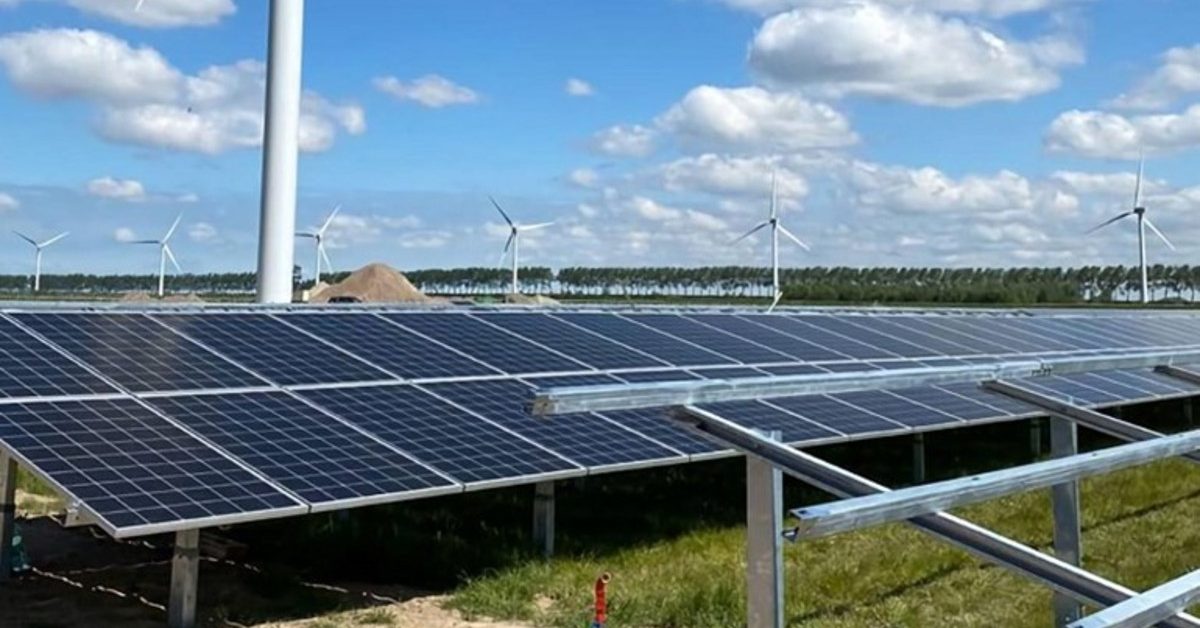
Image: Vattenfall Solar and battery storage can do a lot of the heavy lifting in a renewable electricity system. Add wind, and supplying reliable power gets nearly 20% cheaper, according to new analysis from energy think tank Ember. Wind fills gaps when solar output drops, so the system needs fewer batteries to keep electricity flowing. Ember’s analysis, produced with the Global Wind Energy Council (GWEC), found that adding wind to solar and battery storage cuts the median cost of meeting 90% of electricity demand from $105 to $86 per megawatt-hour. The median cost of solar and wind power covering all demand is $89/MWh, with batteries and a little backup. More wind means fewer batteries Solar and wind don’t follow the same schedule. Their output varies by time of day and across seasons, allowing one to offset the other’s shortfalls. That matters because storing enough electricity to get through a long stretch of weak solar output gets expensive. Wind reduces the amount of energy the batteries need to store in the first place. In the US, adding wind reduces the modeled battery requirement to meet 90% of demand from 20 hours of electricity use to 12 hours. Europe sees the same reduction, while China’s requirement falls from 18 hours to 12. The savings also put cheaper renewable power within reach of more regions. With wind included, regions that account for 75% of global electricity demand can meet 90% of their electricity demand at less than $100/MWh. With solar and batteries alone, that share is only 50%. “We already know that solar and wind are cheap,” said Daan Walter, principal at Ember. By combining solar, wind, and batteries, we can deliver reliable power at remarkably low costs almost everywhere in the world. That’s a pretty fundamental shift in the economics of energy. What happens when it’s cloudy and still? The researchers also looked at prolonged periods of low output. Globally, weighted by electricity demand, a week of low solar output occurs roughly four times a year. A week in which both solar and wind output are low occurs only about once every four years. That’s a global average, so individual locations will have different experiences. Ember defines a lull as seven consecutive days of output below half the source’s average. Combining wind and solar reduces the gaps in low output. New coal and gas doesn’t make financial sense The findings also raise questions for developers planning new fossil fuel plants. Ember identifies 845 GW of coal and gas capacity in planning worldwide. Adding wind raises the share located in regions where solar, wind, and battery storage can meet 90% of demand for under $100/MWh from 71% to 90%. In China alone, wind brings another 91 GW of planned coal and gas capacity into the range where renewables are cheaper. Include backup to cover all demand, and 706 GW of the planned fossil fuel capacity sits in regions where the renewable-based alternative costs less than $100/MWh. Without wind, that figure falls to 520 GW. For investors financing fossil fuel plants in the pipeline that are expected to run for decades, there is likely already a cheaper renewable alternative available to meet the same electricity demand, so it’s worth scrutinizing the project’s economics. Ember’s interactive Wind + Solar + Battery Atlas lets users explore reliable electricity costs in their own region. Read more: Renewables to reach 40% of total generating capacity, beat gas within a year – EIA If you’ve ever considered going solar, make it easy by finding a trusted, reliable solar installer near you that offers competitive pricing by checking out EnergySage. It has hundreds of pre-vetted solar installers competing for your business, ensuring you get high-quality solutions and save 20-30% compared to going it alone. Plus, it’s free to use, and you won’t get sales calls until you select an installer and share your phone number with them. Your personalized solar quotes are easy to compare online, and you’ll get access to unbiased Energy Advisors to help you every step of the way. Get started here. FTC: We use income earning auto affiliate links. More.
Adding wind cuts solar + battery storage power costs nearly 20%
Full Article
Original Source
Read the full article at Electrek →KhanList aggregates and links to publicly available news content. We do not host full articles from third-party sources. Always verify important information with original sources.