
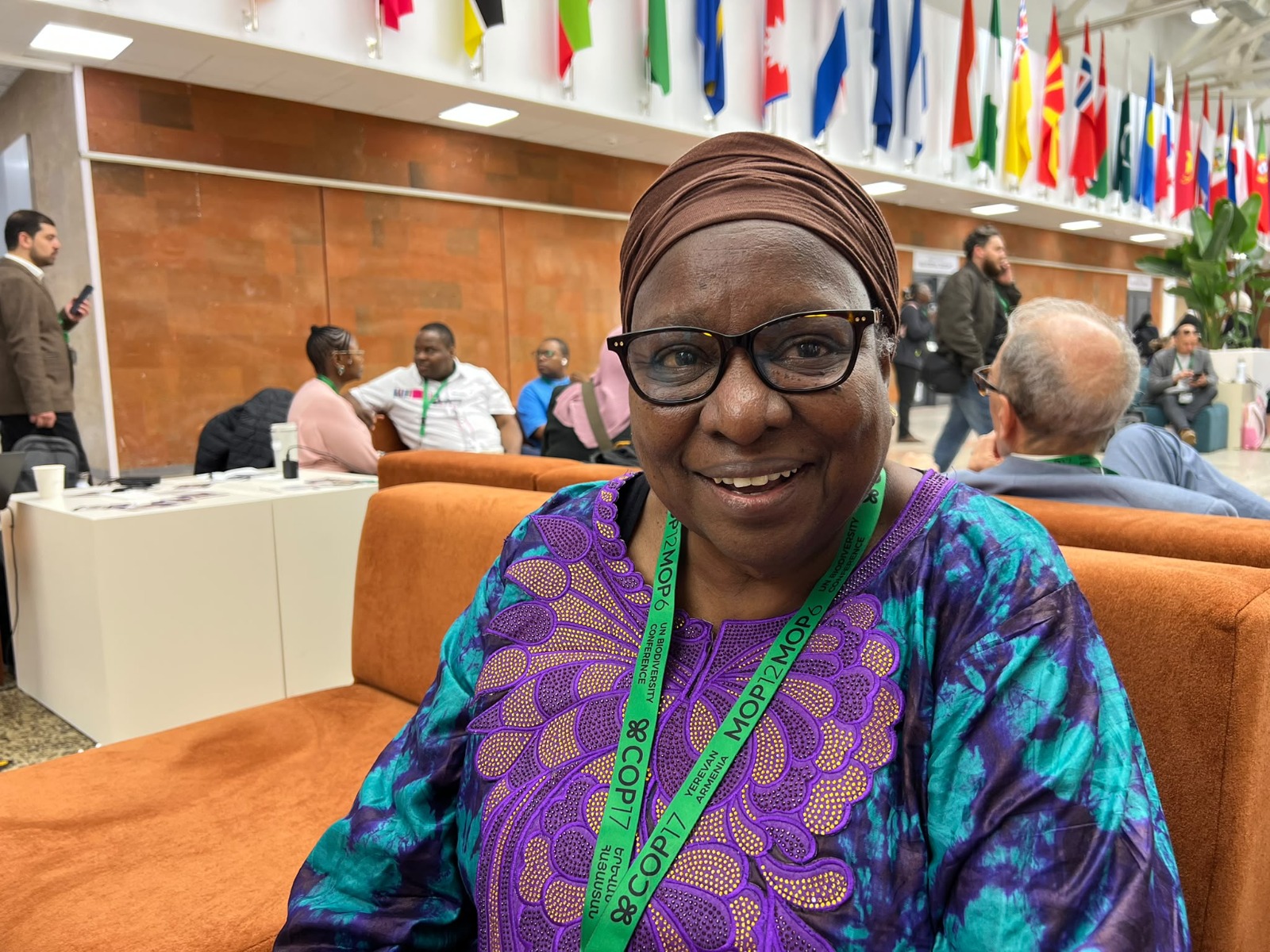
At the 2026 U.N. biodiversity conference (COP17) in Yerevan, Armenia, discussions are underway to finalize the operations, governance, and modus operandi of the Subsidiary Body on Article 8(j) — a group which would significantly boost the decision-making of Indigenous peoples and local communities at future biodiversity COPs.Mongabay spoke with Lucy Mulenkei, co-chair of the International Indigenous Forum on Biodiversity who was among those who had worked to get the new body over the line.She discussed the Subsidiary Body on Article 8(j), barriers that still exist to stop it from becoming operational and hopes for the biodiversity conference.While barriers still exist for this historic body, such as finalizing the modus operandi and opposition by some parties, she is optimistic the COP will end positively. YEREVAN, Armenia — Two years ago at the 2024 U.N. biodiversity conference (COP 16) in Cali, Colombia, a meeting room packed with people representing some of the world’s thousands of Indigenous Peoples, erupted into cheering and applause. After three decades of hard work and negotiations, a seemingly obscure group within the Convention on Biological Diversity (CBD), the Subsidiary Body on Article 8j, had finally been adopted — forming a body that would significantly boost the voice and decision-making of Indigenous peoples and local communities at future biodiversity COPs. Now, at October’s U.N. biodiversity conference (COP 17) in Armenia, Indigenous representatives are deep in discussions to finalize how it will operate, its governance and the modus operandi of this body — how the permanent body will function day-to-day. This includes establishing co-chairs, advancing 12 tasks under a programme of work and addressing funding mechanisms. “It gives us a proper seat at the table … [but] it’s taken too long,” said Lucy Mulenke, co-chair of the International Indigenous Forum on Biodiversity. Mulenkei was among those who had worked to get the new body over the line. A Masai leader from Kenya, Mulenkei is also executive director of the Indigenous Information Network. A former broadcast journalist, she spent 17 years reporting on environmental issues in East Africa. She eventually switched roles to become an activist focusing on the traditional skills and knowledge of Indigenous nomadic pastoralists and hunter-gathers. Negotiations are going in force, she told Mongabay, though barriers exist. Cristiane Pankararu, an Indigenous leader from Brazila and director-president of INBRAPI (Instituto Indígena Brasileiro para Propriedade Intelectual), added they still have to ensure funding mechanisms but parties are still arguing about how to govern. Indigenous delegates at the COP16 U.N. biodiversity conference’s last plenary on Nov. 1. Image by UN biodiversity via Flickr (CC BY 2.0) Among the advisory roles she has since taken on, Mulenkei is a member of the WWF’s Indigenous People’s Consultative Group, and was also at the historic first meeting of the new Subsidiary Body on Article 8(j) in Panama in October 2025. Speaking at an event during the first week of COP, Mulenkei said: “We are linked with biodiversity because we are the ones protecting our resources where we are on the ground.” As COP 17 heads towards its conclusion on Oct. 30, 2026, Mongabay spoke to her about how discussions are going and what she hopes the conference with achieve. This interview has been edited for length and clarity. Mongabay: How did you become involved in working for Indigenous rights? Mulenkei: I decided to work with communities simply because of the lack of a voice for the rights of Indigenous peoples back home. I found there was marginalization for a long time, and I wanted to bring their voices up … I grew up in a traditional village, that way of life has always been around my me … so I wanted to promote that. Mongabay: Just before COP, WWF released its Living Planet Report. How do you think it portrayed the importance of Indigenous people and their role in conservation? Mulenkei: The report is a milestone … it is going to make a lot of change in the world, and people will start recognizing the vital role of indigenous peoples … who are able to continue protecting these resources [and] continue restoring the lost biodiversity. We made great strides two years ago at COP16 in Colombia adopting a permanent body that aims to support the full and effective participation of IPLCs [Indigenous Peoples and local communities] in implementing the 2030 nature goals, but there is still so much more to be done by governments, businesses and civil society to ensure commitments about rights, equity and inclusion are implemented. Governments can establish targets and regulations, but implementation ultimately takes place across farms, forests, fisheries, businesses, cities and communities — without genuine partnership, meaningful inclusion and our rights truly recognized, the 2030 nature goals will never be achieved. Brazilian pine seeds are planted on the Ibirama-La Klãnõ Indigenous Territory. Image courtesy of Anderson Coelho. Mongabay: Why is having a subsidiary body so important for Indigenous Peoples? Mulenkei: It’s important because it gives the space that will allow Indigenous people and local communities to dive deeper into issues that impact them around the implementation of the KMGBF [Kunming-Montreal Global Biodiversity Framework, the global biodiversity agreement] . It will enhance linking and learning for governments, partners, donors, U.N. agencies and other stakeholders working in the Convention on Biological diversity [and] will involve, more effectively, the IPLCs in discussions and decision-making, funding opportunities and working together … [it] will include and encourage inclusivity. It gives us a proper seat at the table … [but] it’s taken too long. Mongabay: So, what does that mean for Indigenous people then? Mulenkei: It means a lot…. we are going to have a power to discuss many other issues and also other parts of the convention. The subsidiary body will give us even more strength to be able to work collectively to implement the Global Biodiversity Framework. Mongabay: What barriers still exist to stop it from becoming operational? Mulenkei: The barriers that still exist are issues that have not been fully finalized like the [new body’s] modus operandi … and related provisions of the conventions that ensures continuity, coherence and meaningful participation. There remains opposition by some parties too — some aspects in the discussions and negotiations to finalize the work of setting up the subsidiary body, but I do believe Yerevan COP17 will lead us positively. Mongabay: An issue that has come up a lot at this COP — and that relates to Article 8(j) — is the importance of combining science with Indigenous knowledge, rather than keeping them in separate silos. What are your thoughts on this? Hemerson Dantas dos Santos Pataxó HaHaHãi and Aniraldo Xavier Kariri-Sapuyá pose for a photo amid 150 plants inside “Horta Medicinal,” a reference medicinal garden set up in 2023 in the village of Caramuru by the federal government. Image by Karla Mendes/Mongabay. Mulenkei: I think there is an urge to bring both together … We do we have our own innovations, we have our own resources … [but] researchers come to our countries, to our continents, to our people and we can no longer stay separate, we are working together. I think the Nagoya Protocol, which is part of the Convention of the Biological Diversity … came out to make sure that if we are working with the researchers, or with … pharmaceuticals and their scientists, when they come to take these medicinal products, there has to be that [concept of] benefit sharing. If that scientist is coming to me and wanting to take some of the knowledge that we have on different products, and different resources, there has to be that understanding; there has to be mutually agreed terms … we want our communities to be recognized. Mongabay: How do you think recognition and respect for rights of Indigenous Peoples will have changed by end of COP? Mulenkei: My hope is that we can now sit down and start a process that will bring together the issues that we have discussed for many years … awareness and capacity enhancement will be crucial to the respect and recognition for the rights of Indigenous Peoples and Local communities. Their knowledge, stories and innovation will bring traditional science to the world and clearly reaffirm the vital role they play in the restoration of biological resources. IPLCs will continue taking action for nature as they have always, and take examples and experiences gained from COP17 back to their regions, countries and communities. Banner image: Lucy Mulenkei was among those who had worked to get the new body over the line. A Masai leader from Kenya, Mulenkei is co-chair of the International Indigenous Forum on Biodiversity. Image by Mark Hillsdon/Mongabay. At Yerevan’s COP17 biodiversity summit, a steep climb ahead for ‘30 by 30’ target Related Mongabay podcast: For Australia’s Indigenous Desert Alliance, caring for Country starts with a story. Listen here: FEEDBACK: Use this form to send a message to the author of this post. If you want to post a public comment, you can do that at the bottom of the page. Cite this articleMark Hillsdon (2026). ‘A proper seat at the table’: Lucy Mulenkei on Indigenous decision-making at the COP17 biodiversity summit. Mongabay Conservation news. DOI: https://doi.org/10.66709/news-334199 Credits Topics
‘A proper seat at the table’: Lucy Mulenkei on Indigenous decision-making at the COP17 biodiversity summit
Full Article
Original Source
Read the full article at News →KhanList aggregates and links to publicly available news content. We do not host full articles from third-party sources. Always verify important information with original sources.