
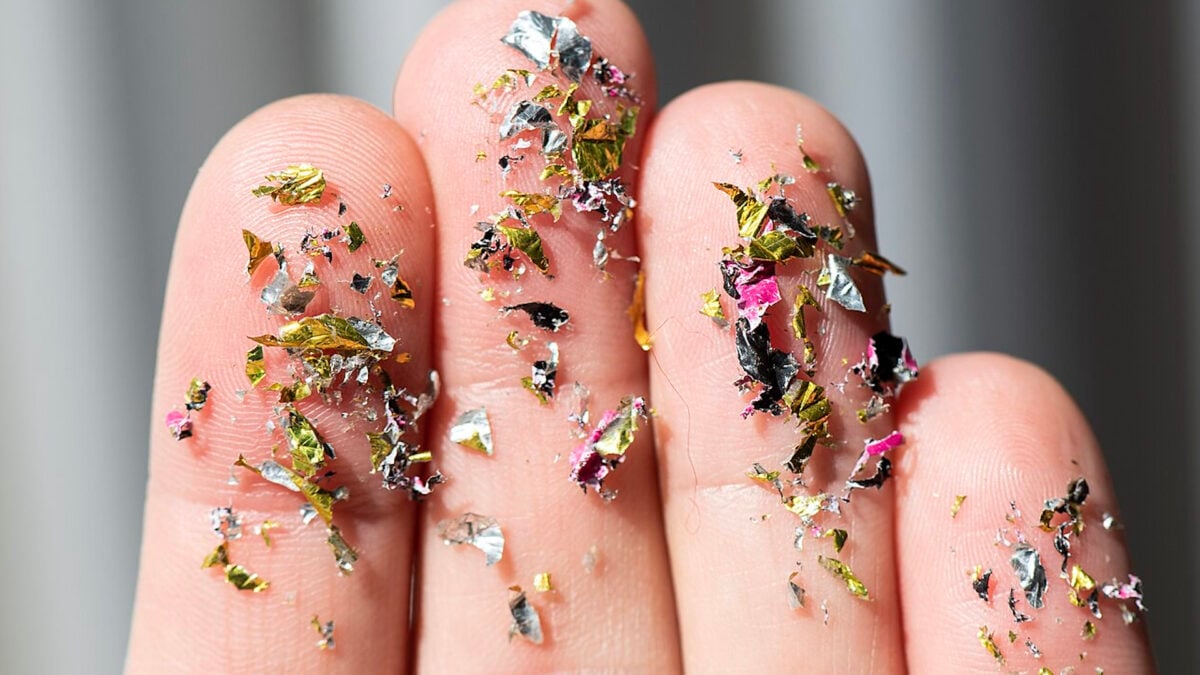
A wave of research has linked microplastics—tiny plastic particles capable of infiltrating human tissues—to health issues in recent years, including increased risk of heart attack, certain cancers, and reproductive problems. Researchers are still working to understand exactly how microplastics affect our health, but newly discovered documents suggest industry scientists have been aware of the potential risks for decades. An investigation by the Los Angeles Times obtained internal memos among chemical company scientists and executives revealing that the plastics industry has been aware of and concerned about the possibility of microplastics contamination in the human body for at least 50 years. This revelation comes just two weeks after a study published in Nature found some of the strongest evidence yet to suggest that microplastics cause biological damage. “Our findings challenge the prevailing paradigm of plastic inertness [and] identify a possibly overlooked mechanism for the detrimental effects of microplastics on health and the environment,” the authors wrote in their paper. Decades of silence The LA Times investigation found evidence of industry concern dating all the way back to 1974, when a German scientist named Gerhard Volkheimer presented research to company and government scientists. His study showed that ingested bits of PVC (polyvinyl chloride, commonly known as vinyl) plastic can end up in an animal’s bloodstream and then infiltrate its organs, including the liver, brain, lungs, and others, within just two hours. Volkheimer also fed human test subjects potato starch, which moves through the body similarly to PVC, and found that it showed up in their blood and breast milk. So if potato starch can do this, it’s likely that PVC can do this as well. In the years following the presentation, industry personnel repeatedly referenced the research in internal memos, the Times found. One 1975 letter written by an executive at chemical maker Union Carbide said the Volkheimer study had “been cited often as a ‘horror story’ on ingesting PVC resin.” He countered the findings, pointing to a 1947 industry-sponsored study in which animals fed flakes of a PVC-like plastic called Geon 202 did not get sick. Other documents show that the industry continued to cite Volkheimer’s research through the 1970s, 1980s, and 1990s, the LA Times reports. Since then, scientists have found ample evidence to corroborate his findings, showing that microplastics can pass from the gut to the bloodstream and accumulate in the organs. How those plastic particles then impact human health remains more of an open question, but a growing number of studies point to significant risks. Evidence for health hazards is growing The Nature paper published earlier this month found evidence to suggest that plastics are not chemically inert once tiny fragments enter the body, contradicting a long-held assumption about their safety. “As plastic fragments into smaller and smaller particles, its surface area increases enormously,” senior study author Wei Min, a professor of chemistry and biomedical engineering at Columbia University, said in a statement. “Then microplastics change the water that surrounds them, generating high-energy, reactive radicals that very likely contribute to biological damage that we see in animals and potentially in humans as a result of microplastic exposure.” Because our bodies are full of water, it’s reasonable to assume that microplastics could create those free radicals, called reactive oxygen species (ROS), inside us. It’s possible that this is the mechanism behind at least some of the health issues that have been linked to microplastics, but confirming that will require more research. Tracey Woodruff, a professor of epidemiology and population health at Stanford University who reviewed the documents obtained by the LA Times, told the publication they indicate scientists and executives at major chemical companies long chose to remain silent on the potential risks of microplastics, but a spokesperson for the chemical industry’s largest trade group disputed that claim. “Scientific debate over what the evidence shows is not silence. It is how sound science and effective policy advance,” Craig Davis, senior director of plastics chemistry at the American Chemistry Council, told the LA Times. “Our industry is committed to advancing microplastics science by supporting independent research and policies that would do so.” Plastic is already a ubiquitous part of our lives, and these hazardous particles have been detected across nearly all populations and throughout the human body. In many ways, the damage is done. The question now is, how severe are the consequences?
Microplastics Are Infiltrating Our Bodies. Chemical Companies Saw This Coming Decades Ago
Full Article
Original Source
Read the full article at Gizmodo →KhanList aggregates and links to publicly available news content. We do not host full articles from third-party sources. Always verify important information with original sources.