
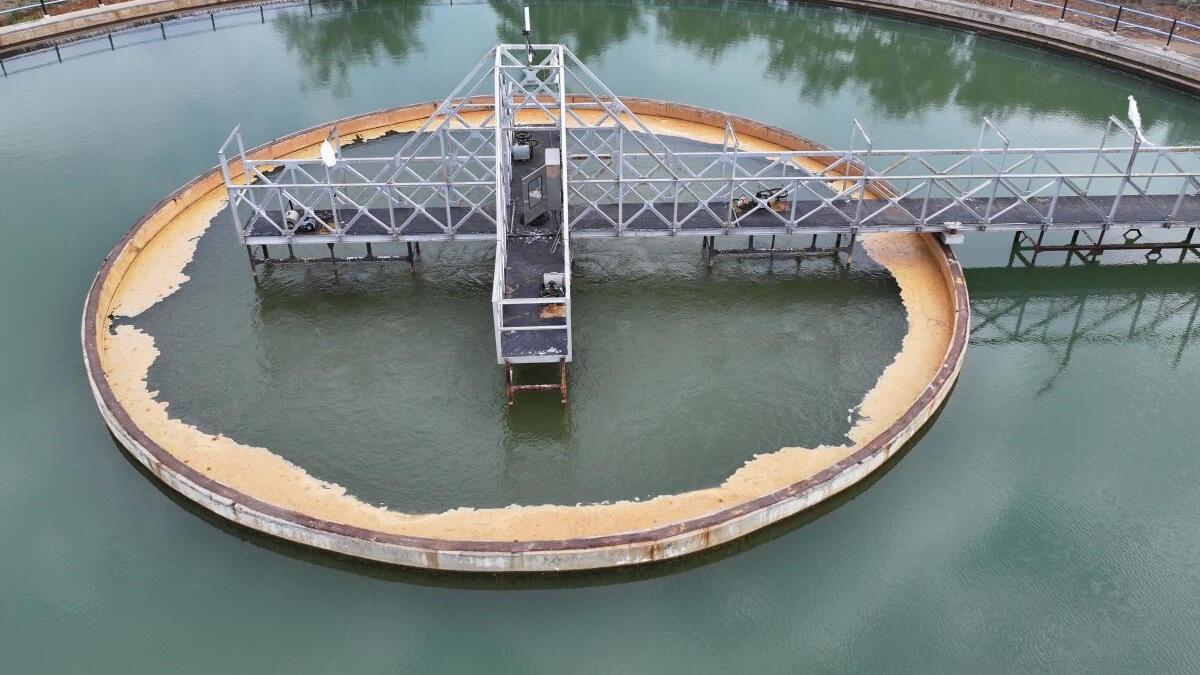
Dust particles settle in the clariflocculator at the Pilloor II drinking water treatment plant at Velliangadu in Coimbatore. | Photo Credit: JOTHI RAMALINGAM_ B Heavy rain in the catchment areas of Bhavani river has increased the turbidity of water supplied to parts of Coimbatore city, leaving it discoloured despite treatment.The Siruvani, Pilloor II, and Pilloor III drinking water schemes supply water to Coimbatore city. The Pilloor II and Pilloor III schemes draw water from river Bhavani and together supply about 270 million litres a day (MLD), against the city’s requirement of 350 MLD.Residents in several areas have complained about the colour of the drinking water supplied to their homes.Officials at the Pilloor II water treatment plant said raw water turbidity had risen to 70–160 Nephelometric Turbidity Units (NTU) since the rains began on October 18, against the usual range of 10–50 NTU, requiring higher doses of treatment chemicals. The plant treats around 125 MLD.Heavy rain increases surface runoff, carrying soil, silt and other suspended particles into the Bhavani river and the Pilloor reservoir. Strong inflows also stir up accumulated sediment, raising the turbidity of raw water and increasing the time required for treatment, the officials said.At the Pilloor II water treatment plant, the quantity of ferric alum used to treat raw water has increased from about one tonne under normal conditions to nearly four tonnes, depending on turbidity. Ferric alum helps suspended particles clump together and settle before filtration. The permissible turbidity limit for treated drinking water is 10 NTU during the monsoon and below 5 NTU under normal conditions, the officials said.Chlorine dosage is increased to 2.5 parts per million (ppm) during the monsoon, compared with 1.5 ppm under normal conditions, to ensure adequate residual chlorine at the consumer end and help prevent water-borne diseases, the officials said.Officials said the situation was expected to improve as rainfall subsided. They said that there would be no shortage of drinking water in the city until March 2027, with the recent rains replenishing storage in the Pilloor reservoir to 91 feet against its full level of 100 feet, and the Siruvani reservoir to 38 feet against 50 feet. Published - October 28, 2026 08:33 pm IST
Heavy rain affects drinking water quality in Coimbatore
Full Article
Original Source
Read the full article at Thehindu →KhanList aggregates and links to publicly available news content. We do not host full articles from third-party sources. Always verify important information with original sources.