
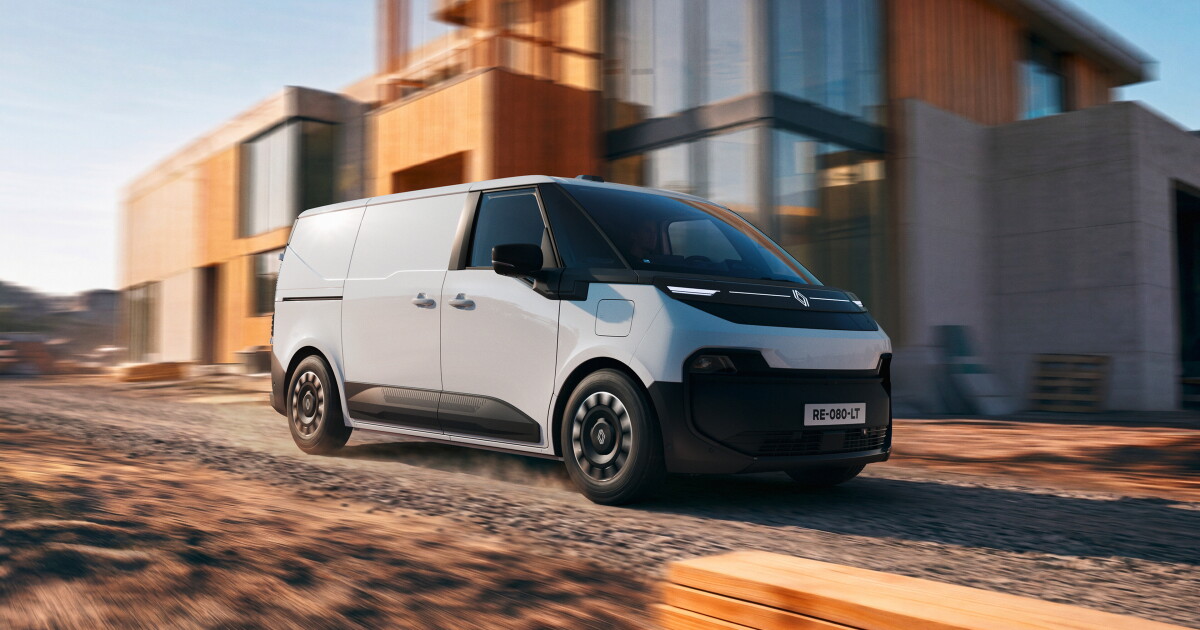
Mention the brand Renault to average American drivers and you’ll likely get a blank stare. The French auto marque exited the United States decades ago.However, the global unveiling of the new Renault Trafic E-Tech van should cause major consternation across North America, from Detroit to Silicon Valley. That’s because the new electric Trafic is not just an update of a regional delivery workhorse, it’s a technological milestone.Europe's very first fully Software-Defined Vehicle (SDV) in the light commercial sector demonstrates a new level of forward-looking industrial strategy where the automotive physical hardware is entirely subservient to digital code. Renault claims the long-range Trafic E-Tech can run for 428 miles in stop-go low-speed urban environmentsRenault Traditional commercial vehicles rely on dozens of separate, isolated Electronic Control Units (ECU) to manage systems, from the anti-lock brakes to cabin climate controls. The new van sweeps all that hardware away, replacing it with a centralized electronic architecture powered by just two high-performance supercomputers running an Android-based Operating System.The vehicle is linked directly to Google Cloud and functions as an upgradeable rolling computer. It can receive full over-the-air software updates to improve almost any function, like electric motor efficiency or new driver-assistance systems throughout its lifecycle.More importantly for commercial operators, this advanced software allows them to display their own delivery apps, route-scheduling platforms or temperature-monitoring software directly onto the van’s dashboard. There’s no need for clunky aftermarket tablets, dangling wires and third-party tracking boxes that clutter all modern fleets today.More savings come from cloud-connected, predictive artificial-intelligence maintenance that flags failing components before an expensive, disruptive breakdown on a live delivery route. The high-tech new Trafic E-Tech is International Van of the Year but won’t be sold in the USRenault The tech under the hood is matched by a leap forward in high-voltage electrical engineering that leaves current American commercial EV tech looking distinctly dated. The current crop of commercial electric vehicles dominating the US market like the Ford E-Transit or the GM-backed BrightDrop series, are using older, slower-charging 400-volt electrics. The new Trafic uses an 800-volt platform that yields immediate operational dividends for business owners.Commercial vehicle downtime equals lost revenue. The Renault’s highly optimized 81-kWh battery pack supports ultra-rapid DC fast charging. It can juice its battery from 15% up to 80% capacity in less than 20 minutes. That translates to around 174 extra miles of range while the driver takes a short lunch break.The maximum mileage with the long-range model is claimed to be a massive 428 miles (690 km) in stop-go low-speed urban environments. Out of town, the aerodynamics of driving a brick-shaped commercial van at sustained US highway speeds drops real-world range closer to 200 miles.There’s another American audience looking at the new Trafic with barely disguised lust. For enthusiasts of specialized mobile living spaces and overland travel, its high-voltage skateboard layout holds implications for the future of camper conversions.Its mid-sized platform is a favorite for third-party upfitters. By integrating standard vehicle-to-load capabilities directly into an 800-volt electrical system, this new Renault allows future camper conversions to draw high-wattage electrical current straight from the massive main propulsion battery.This means future mobile homes built on this chassis could comfortably run induction cooktops and heavy-duty air conditioning without heavy propane tanks or complex secondary lithium battery banks. Even minimalist van-lifers who appreciate compact layouts like the Amstervan dual-lounger would see their off-grid capabilities vastly expanded by this integrated high-voltage architecture. Sophisticated software links means operators can flash info and routes onto the driver’s dashboardRenault North Americans may never spot one of these vans at a local dealership but the ripple effects are likely to cross the ocean to rewrite the rulebook for commercial vehicles. The electronic architecture is likely to influence vans sold by corporate partners like Volvo, Nissan or Mitsubishi.As international delivery fleets face increasing regulatory pressure to eliminate emissions without losing precious operational hours to sluggish charging grids, this French medium van could be the blueprint for a fast-charging, highly connected commercial future.Already crowned International Van of the Year, the new Trafic E-Tech pairs a 215-hp (160-kW) electric motor and 800-volt architecture with a choice of 60-kWh or 81-kWh batteries. The entry-level model delivers up to 217 miles (350 km) on the WLTP cycle (or 317 miles/510 km for city driving) and starts at €41,500 (about US$49,000). The flagship 81-kWh variant extends range to 292 miles (470 km) on WLTP (or 428 miles city), supports ultra-fast 240-kW DC charging, hauls up to 2,866 lb (1,300 kg), and starts at €47,000 ($55,500).Source: Renault
800-V high-tech work van rewrites the rulebook for camping & commerce
Full Article
Original Source
Read the full article at Newatlas →KhanList aggregates and links to publicly available news content. We do not host full articles from third-party sources. Always verify important information with original sources.