
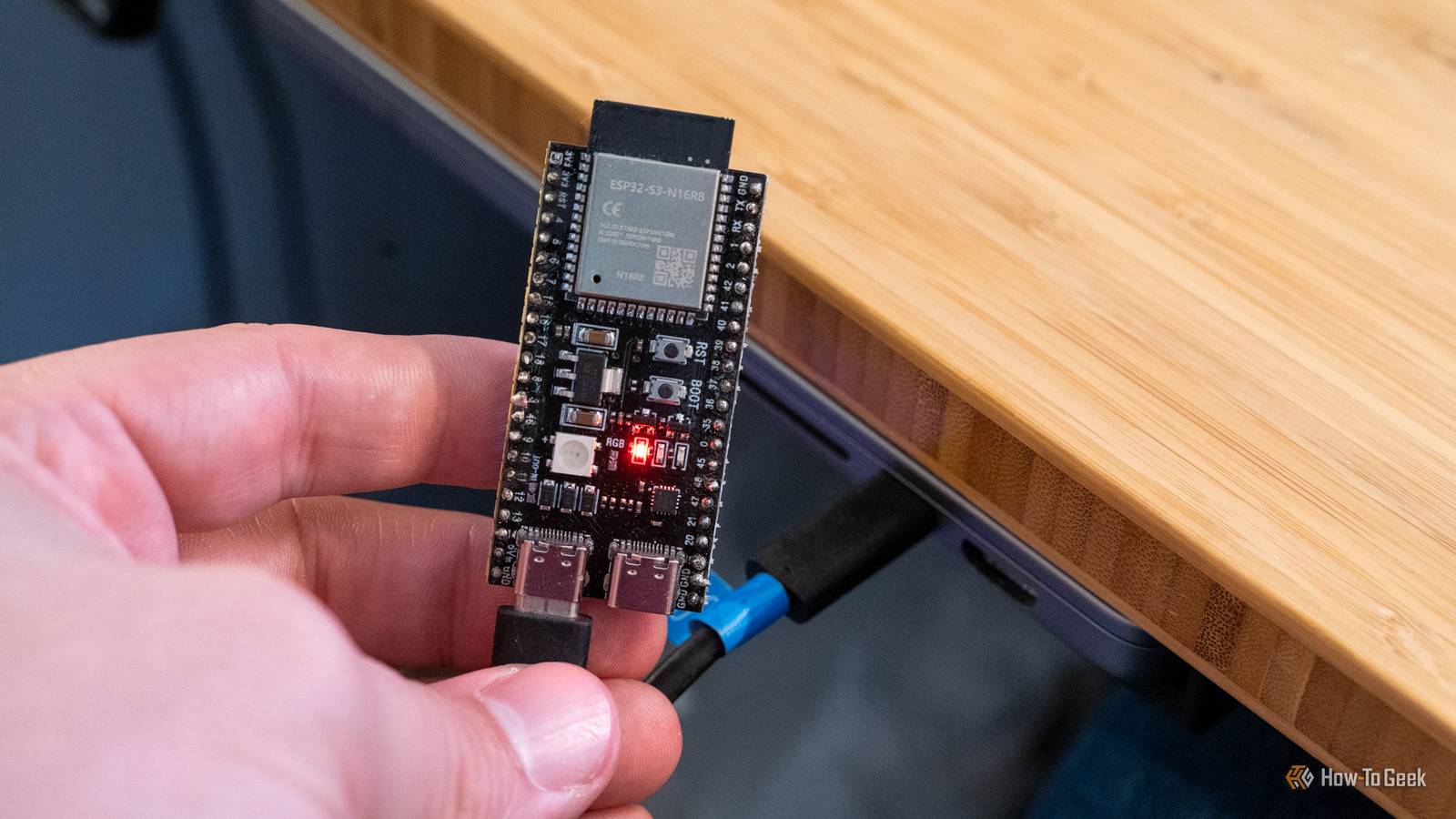
Published Oct 27, 2026, 11:01 AM EDT Sydney Butler is a technology writer with over 20 years of experience as a freelance PC technician and system builder and over a decade as a professional writer. He's worked for more than a decade in user education. On How-To Geek, he writes commerce content, guides, opinions, and specializes in editing hardware and cutting edge technology articles. Sydney started working as a freelance computer technician around the age of 13, before which he was in charge of running the computer center for his school. (He also ran LAN gaming tournaments when the teachers weren't looking!) His interests include VR, PC, Mac, gaming, 3D printing, consumer electronics, the web, and privacy. He holds a Master of Arts degree in Research Psychology with a minor in media and technology studies. His masters dissertation examined the potential for social media to spread misinformation. Outside of How-To Geek, he hosts the Online Tech Tips YouTube Channel, and writes for Online Tech Tips, Switching to Mac, and Helpdesk Geek. Sydney also writes for Expert Reviews UK. He also has bylines at 9to5Mac, 9to5Google, 9to5Toys, Tom's Hardware, MakeTechEasier, and Laptop Mag. Power tools are a modern marvel that anyone who has tried working with human-powered drilling or sanding will tell you we too easily take for granted. But while these tools are compact and powerful, they aren't that smart for the most part. Which is why it's incredibly cool that some enterprising DIY enthusiasts have found various ways to use cheap ESP32 boards to add a little brains to the brawn of their power tool workhorses. Just one more thing you don't have to worry about Credit: Anatoliy Cherkas/Shutterstock.com If you do carpentry or another discipline that creates tons of dust, then you probably have a dust collector in your garage or workshop. But you can't leave it running all the time, and it's a pain to walk over to it and turn it on and off as you work. That's what FoxDotBuild's DustCollection software is designed to do. It uses several ESP32 boards to let you remotely activate and deactivate your dust collector. One board is the relay, waiting for messages on the Wi-Fi network telling it to turn the dust collector on or off. Another board is a remote with a manual switch. A third board uses a hall effect sensor to tell whether a given device is turned on or off. It can activate the dust collector whenever it detects that another piece of equipment is turned on. The setup also involves using an RC hobby servo to operate a blast gate, and the software is written to delay closing the valve on the blast gate, so that the dust collector can clear the conduit between itself and the dust-generating machine. If that seems too complicated, I also found nunashop's AUTO SHOPVAC, which uses an ESP32 as its core to build a shop vacuum controller that will start the vacuum when it detects another machine is turned on. Better than a blinking light Want to know a secret? It turns out that our dear readers love it when we write about power tool batteries. It sounds like a pretty boring topic, but battery-powered tools have become so powerful and practical, they usually trump corded devices as a total package. At least when it comes to enthusiast DIY rather than actual professional contractor work. The thing is, unlike a laptop or phone, power tool batteries don't give you much information past a few basic LED indicator lights. But if you use OBI ESP32 combined with an ESP32-C3, you can read diagnostic information from Makita LXT batteries. In principle, it should be possible to do this for other brands of battery too, but as of this writing I haven't been able to find anything for brands like Ryobi that does the same thing. Fumes be gone Credit: Sonluna/Shutterstock.com This one is a little different from the dust collector and shop vac projects. Curious Scientist did an amazing project building on an earlier remote-controlled fume extractor project. It uses an ESP32-C3 that combines with an optical dust sensor, VOC sensor, and an OLED display. The ESP32 uses sensor data about air quality to control the previously modified fume extractor, and turns it on or ramps it up until it detects that the air is now at an acceptable level of cleanliness. This is just a small-scale demo though, designed to clean fumes at a soldering station. It would be an entirely different kettle of fish to scale this up for woodworking or some other discipline that makes lots of dust. Also, a DIY air-quality sensing setup like this obviously isn't calibrated or certified, which means you can't take the readings as meaning the air is safe or clean. But it is a pretty cool proof of concept, and anyone could do something similar if they were so inclined. Give your air compressor a digital pressure display and smarter controls Letting the pressure get to you Credit: Vheathen This last one is pretty cool, and a lot of DIY and workshop jobs benefit, because they all rely on compressed air in some way. Vheathen’s ESP32 pressure controller, which is just a prototype and the project hasn't been updated in over six years as of this writing. But I still think it's a neat idea, and as you can see from the project image above, the execution is pure jury-rigged gold. The setup can be attached to a simple air compressor and act as a pressure relay. It measures the pressure, and then switches the compressor off. It also switches it off when a certain amount of continuous runtime is reached. Yes, a modern compressor will just do this by itself with no help from anyone, but I can't help but admire the chutzpah and bold execution — don't try this one at home kids. One small board (and a few more parts) can elevate your 21st Century toolkit While it's true that most of these DIY workshop upgrades use just one or two $5 boards, it is also true that you'll also have to spend time and money on some of the other bits and bobs. So maybe these aren't cheap mods, but at least the advent of the ESP32 has made the "intelligent" part of the process affordable, so you can focus on the big stuff, like wires and gluing things to other things. With the power of code monkeys and wrench monkeys combined, who knows what will be possible tomorrow?
4 power tool upgrades that start themselves with a $5 ESP32 board
Full Article
Original Source
Read the full article at Howtogeek →KhanList aggregates and links to publicly available news content. We do not host full articles from third-party sources. Always verify important information with original sources.