
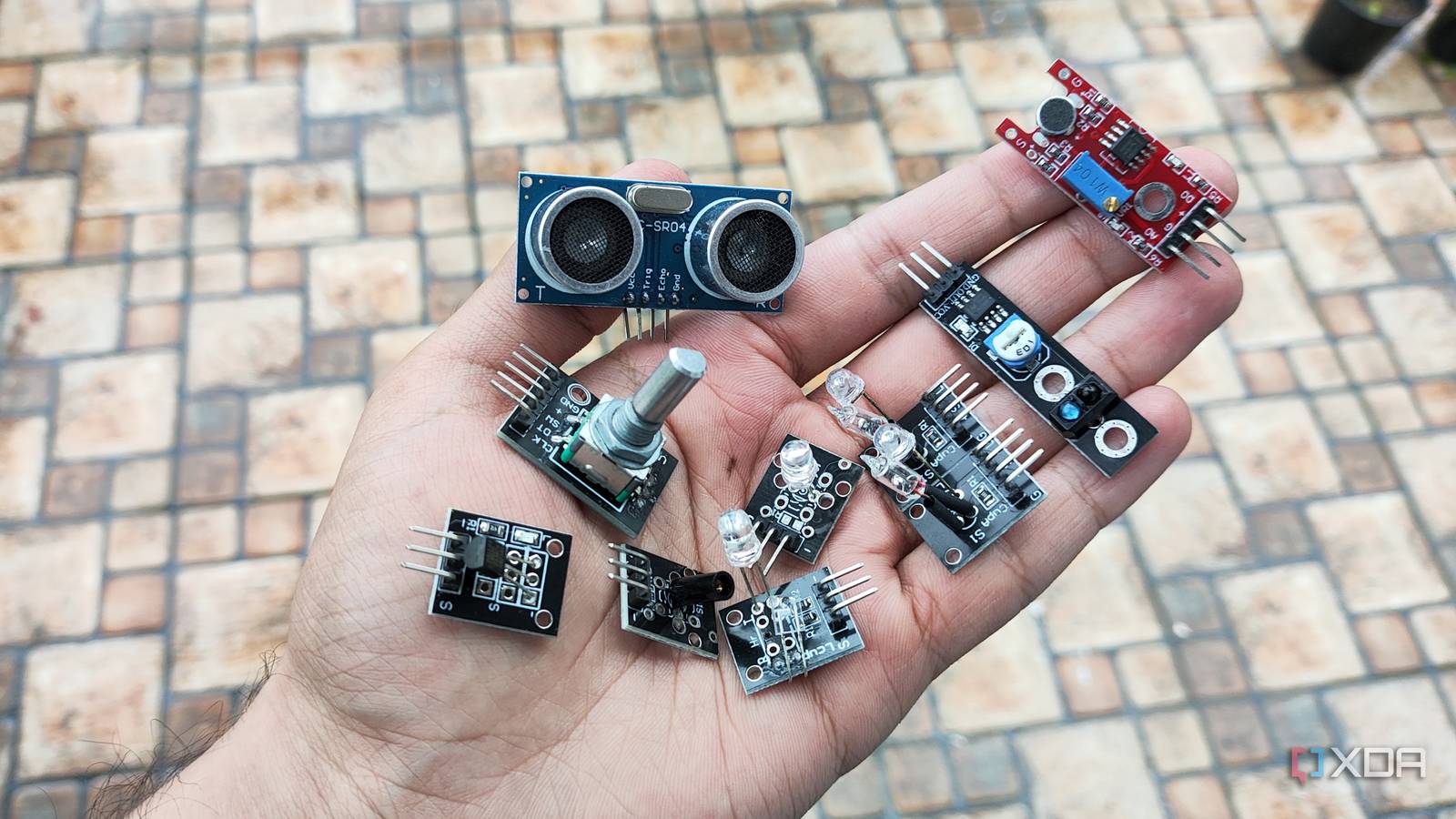
Published Sep 7, 2026, 11:00 AM EDT Ayush Pande is a PC hardware and gaming writer. When he's not working on a new article, you can find him with his head stuck inside a PC or tinkering with a server operating system. Besides computing, his interests include spending hours in long RPGs, yelling at his friends in co-op games, and practicing guitar. Besides their cheap prices, solid Home Assistant support, and extensive wireless connectivity options, ESP32 boards are versatile enough to accommodate a bunch of I/O accessories. On the display front, you've got tiny e-ink screens, dot matrix LED grids, and e-ink modules to render all sorts of cool dashboards and statistics with your ESP32. There are also breadboards that, when combined with the right circuitry components, can make prototyping complex setups a piece of cake. That said, I'd always recommend going for sensor modules when you're just starting out. Since they mesh incredibly well with Home Assistant, you can combine the metrics gathered by them with trigger-action rules to automate the rest of your smart home paraphernalia. Better yet, you don't even need a lot of coding experience to get them working with HASS. As long as you have a spare afternoon and enough jumper cables, you can spin up several fun automations with ESP32 and sensor combos. The KY-002 is pretty good for vibration-based automations Booting your home lab by hitting your desk is as fun as it sounds The KY-002 is one of the most common sensors you’ll find in random kits, and while it’s not the most accurate option for measuring vibrations, it makes for a surprisingly neat addition to everything from your smart gizmos to full-on gaming PC setups. Once you’ve got it hooked up to an ESP32, you can use its vibration-detection provisions to build some wild automation pipelines on Home Assistant. Combine it with the wake-on-LAN integration on HASS, and you can force the latter to send WoL packets to your PC every time you knock on your desk. Or, you can toss the entire ESP32 + vibration sensor combo into your mailbox, and have it send a notification every time the lid gets opened. Pair the whole thing with a smart plug, and you can slam your desk like a caveman to power on lights, chargers, and other “dumb” devices. The KY-037 sensor works well with faint sound triggers That said, its KY-038 sibling is better for noisy environments Just like the KY-002, the KY-037 is great for wacky automations, except this cheap sensor is more concerned with sounds rather than physical vibrations. Specifically, the KY-037 can provide digital and analog readings for faint sounds, making it useful when creating triggers for soft claps, whispers, and footsteps in an empty room. But when it comes to typical rooms with ambient noise, I’d recommend ditching the KY-037 and switching to its KY-038 counterpart. The smaller electret condenser microphone on the KY-038 provides better noise suppression, which is why this sensor fares better for HASS automations involving kitchen appliances and home lab environments. The HC-SR501 is a beginner-friendly option for detecting movement But personally, I prefer the mmWave presence sensor for dedicated lighting automations The HC-SR501 is a passive infrared (PIR) motion sensor, meaning it uses changes in infrared radiation to detect human (or animal) movement. On paper, this makes it really effective for nighttime light automations, where Home Assistant turns on lamps or LED strips upon sensing human presence in a room instead of keeping everything powered on after sunset. However, it’s more of a budget-friendly motion light solution for halls and porches than a dedicated lighting setup for the average room. My biggest complaint about PIR sensors like the HC-SR501 is that they tend to have issues detecting presence when you’re stationary. As such, the slightly more expensive mmWave presence sensor is better for automation workflows where you may need to sit still for longer periods. Nevertheless, the HC-SR501 is a fun sensor for ESP32 beginners, and you can fine-tune the re-trigger timers to further cut down the false positives in your presence-detection automation projects. You can opt for the BME280 (or even the DHT22) for DIY weather stations Despite its affordable price tag, I wouldn't recommend grabbing the DHT11 for this project While we’re on the subject of beginner-friendly sensors, I have to admit that some of the weather-monitoring sensors in the inexpensive range leave a lot to be desired. The most common of these is the DHT11, which has a limited temperature range of 0°C to 50°C alongside an accuracy of ±2°C. For automations involving standard room temperature, it’s really inaccurate, and I’d always recommend going for the DHT22 or the BME280 as your first temperature sensor. I’ve configured my ESP32 weather station with a BME280, and its ability to deliver nearly-instantaneous readings makes it perfect for complex trigger-action workflows. For a beginner-friendly automation pipeline, you can control cheap air conditioning units and motor blinds using the temperature readings gathered by your ESP32 + DHT22/BME280 combo. If you’re a 3D printing enthusiast like me, you can leave this setup in your filament storage cabinet and receive alerts when the humidity level starts to hit the danger zone. ESP32 and cheap sensors are a match made in HASS heaven If you’re still on the hunt for cool ESP32 sensors, I’ve got a couple more recommendations. The BH1750, for example, can record precise ambient light conditions in a room, making it great for dynamic lighting automations. Magnetic reed sensors like the MC-38 are pretty useful for detecting when a window/door opens or closes, while capacitive soil moisture sensors work incredibly well when you pair them with automatic sprinklers. Brand AITRIP Connectivity Features UART, USB
4 beginner-friendly ESP32 sensors you need first and foremost
Full Article
Original Source
Read the full article at Xda-developers →KhanList aggregates and links to publicly available news content. We do not host full articles from third-party sources. Always verify important information with original sources.