
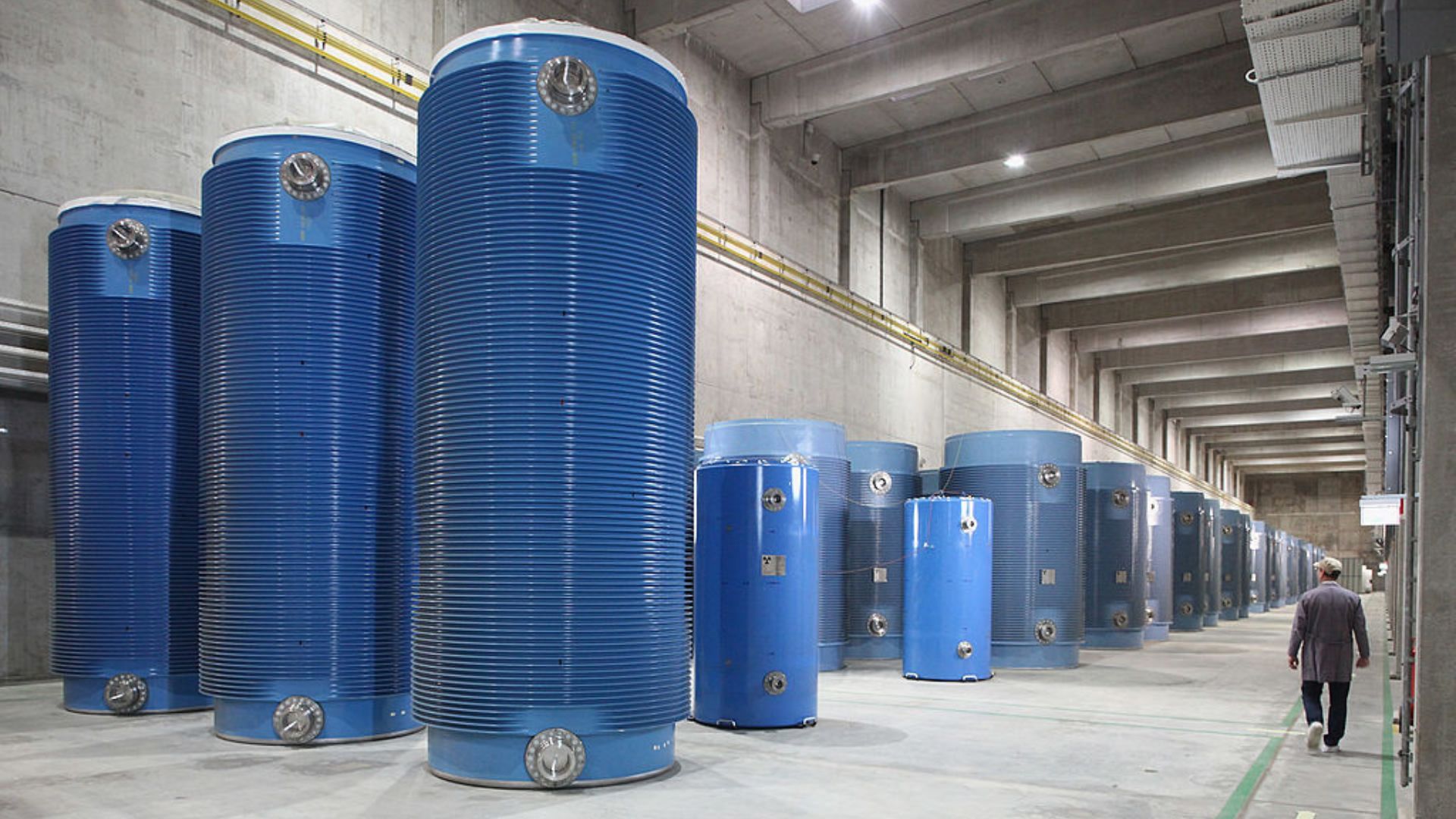
Researchers from the Korea Institute of Materials Science (KIMS) have discovered that aluminum alloy used to store spent nuclear fuel loses strength and is prone to degradation when exposed to temperatures exceeding 300 degrees Fahrenheit (°F) for a prolonged period. During the experiments, the team noted that after about 10,000 hours of exposure to temperatures between 300-470°F (150-240°C), nanoscale changes occurred in the storage material. These microstructural transformations lowered the strength and hardness of the alloy, making them unsuitable for long-term storage of the nuclear fuel waste. Challenges of long-term storage Existing methods for storing spent (used) nuclear fuel after it has been removed from a reactor include interim dry storage. Instead of keeping the fuel in water-filled cooling pools, it is placed inside large, sealed metal-and-concrete containers called dry casks. The fuel is still hot because it continues to produce decay heat (heat from the radioactive decay of leftover radioactive materials). The casks are designed to release this heat naturally through air circulation, so they don’t need water for cooling. Moreover, inside each cask are metal support structures, such as basket rails and shims, which hold the fuel assemblies securely, keep them properly spaced for safety, and remain inside the cask for decades. Because these parts are continuously exposed to heat and cannot be easily inspected or replaced after the cask is sealed, researchers need to know how their strength and other material properties will change over many years. This is where the latest research, led by Senior Researcher Junho Lee of the Department of Nuclear Safety Research at KIMS, comes in. ”To safely store spent nuclear fuel over long periods, it is important to understand not only the initial performance of internal components but also exactly how the materials change over time,” said Lee. Predicting decades of aging Our study reveals how nanoscale changes within the material lead to actual strength degradation and provides a basis for predicting material performance decades into the future, he added. In addition to providing experimental data on how the material’s properties change after more than a year (417 days, equivalent to 10,000 hours) of exposure to higher temperatures, the researchers also proposed a new accelerated aging method to evaluate its behavior over a decade. They developed a model that uses high-temperature tests to predict how the alloy will age over decades under normal storage conditions. The team exposed the aluminum material to much higher temperatures for shorter durations. These experiments accelerated the aging process while establishing a time–temperature equivalence relationship in which similar degradation states occur under different combinations of temperature and exposure time. The new approach, according to the researchers, would help them predict any internal changes in the material’s properties without actually performing decade-long storage tests. These results are expected to offer valuable insights for the safe long-term storage of spent nuclear fuel without actual testing. The study provides a way to predict how materials inside spent nuclear fuel storage casks will age over decades, helping ensure long-term safety and supporting the inspections, safety assessments, and regulatory approvals needed for future dry storage systems. The findings were published in the International Journal of Energy Research. Get the latest in engineering, tech, space & science - delivered daily to your inbox.
300–470°F exposure for 10,000 hours degrades aluminum alloy in nuclear fuel casks
Full Article
Original Source
Read the full article at Interestingengineering →KhanList aggregates and links to publicly available news content. We do not host full articles from third-party sources. Always verify important information with original sources.