
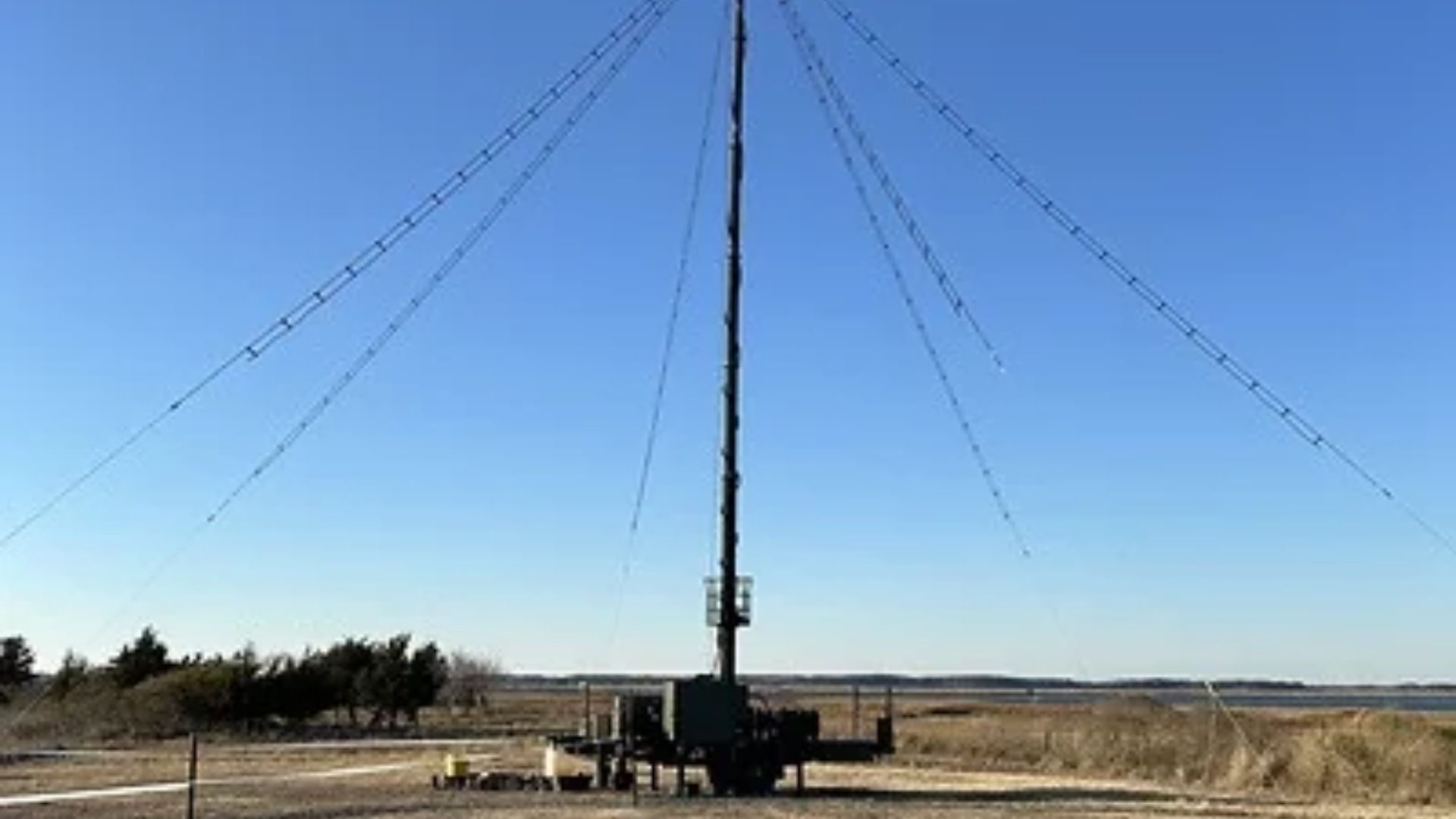
Key TakeawaysLeidos won a $40.8 million U.S. Marine Corps contract to build and support 14 Medium Range Air Defense Radar (MRADR) systems, with deliveries scheduled through August 2028.Using digitized antennas and advanced signal processing derived from the MELPS sensor program, MRADR delivers 360-degree aerial tracking while minimizing electromagnetic emissions that expose troop positions.The contract transitions the program from four 2023 prototypes into operational deployment and includes options to retrofit earlier prototypes and fielded MELPS units. Defense contractor Leidos has secured a $40.8 million contract from the U.S. Marine Corps to build and support 14 Medium Range Air Defense Radar (MRADR) systems, transitioning the mobile air-surveillance program from early prototyping into operational fielding. Scheduled for completion by August 2028, the new sensors are engineered to give expeditionary units continuous 360-degree aerial awareness while keeping their electromagnetic footprint low enough to evade enemy detection. Conventional military radars transmit powerful radio-frequency pulses that act like a beacon for enemy electronic intelligence and anti-radiation missiles, forcing frontline units to turn off their sensors for survival. To operate inside contested littorals and island chains under the Marine Corps’ Expeditionary Advanced Base Operations concept, Marines need persistent surveillance that tracks incoming threats without giving away their firing positions. How MRADR tracks threats without broadcasting its location Announced in a Leidos press release on November 18, 2026, MRADR builds directly on lessons from the company’s Marine Expeditionary Long Range Persistent Sensor (MELPS). Rather than relying on high-power active transmissions that peer adversaries can easily triangulate, the architecture combines digitized antennas, sensitive receivers, and advanced digital signal processing to maintain a continuous 360-degree air picture with minimal electromagnetic emissions. Developed through Leidos subsidiary Dynetics, which operates primary radar engineering and manufacturing facilities in Huntsville, Alabama, and Woodlake, California, the mobile sensor is designed to spot, track, and classify low-flying cruise missiles, crewed aircraft, rockets, and unmanned aerial systems. In addition to delivering 14 new units, the $40.8 million contract includes an option to retrofit both the four MRADR prototypes built under a $32 million award in 2023 and previously fielded MELPS hardware to a common operational standard. “Marines need air defense capabilities that can keep pace with an increasingly complex operating environment,” said Matt Becker, vice president of Leidos Defense Sensors, in the company announcement. “This award allows us to help the Marine Corps work toward a significant increase in survivable air-surveillance capability that supports the warfighter wherever the mission takes them.” Integrating into the Marines’ layered air defense network In operational service, MRADR is engineered to plug directly into the Marine Corps’ broader command-and-control and air-defense architecture rather than operating as a standalone sensor. According to reports, the mobile radar can be mounted on tactical platforms such as the Amphibious Combat Vehicle chassis and paired with existing sensors like the Northrop Grumman AN/TPS-80 Ground/Air Task-Oriented Radar (G/ATOR). By feeding target tracks into fire-control networks, MRADR can cue interceptors such as the Medium Range Intercept Capability (MRIC), which pairs Marine command systems with Tamir interceptors adapted from Israel’s Iron Dome, allowing distributed Marine batteries to engage aerial threats while minimizing active emissions from higher-signature radars. Expanding Leidos’ low-signature sensor portfolio The Marine Corps production order adds momentum to Leidos’ broader push into low-probability-of-intercept and counter-drone sensing under its NorthStar 2030 corporate strategy. Alongside MRADR, the Reston, Virginia-based contractor is developing the Army Long Range Persistent Surveillance (ALPS) sensor for continental missile defense initiatives as well as the Multifunction X-Band Radar (MXR) for mobile counter-unmanned aircraft missions.Get the latest in engineering, tech, space & science - delivered daily to your inbox.Kaif Shaikh is a journalist and writer passionate about turning complex information into clear, impactful stories. His writing covers technology, sustainability, geopolitics, and occasionally fiction. A graduate in Journalism and Mass Communication, his work has appeared in the Times of India and beyond. After a near-fatal experience, Kaif began seeing both stories and silences differently. Outside work, he juggles far too many projects and passions, but always makes time to read, reflect, and hold onto the thread of wonder.
US Marines to get Leidos’ air-defense radars that can hide from enemy sensors
Full Article
Original Source
Read the full article at Interestingengineering →KhanList aggregates and links to publicly available news content. We do not host full articles from third-party sources. Always verify important information with original sources.