
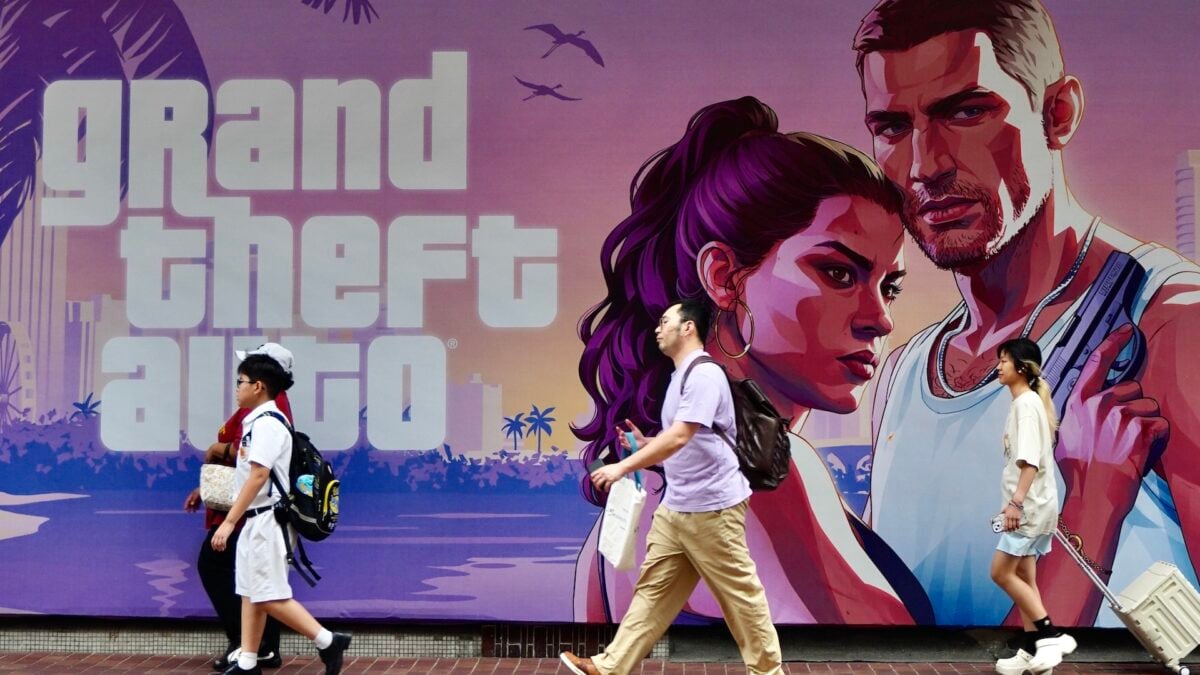
Los Santos has seen its fair share of chaos, from high-speed police chases to bank heists and all-out street warfare. But the fictional city at the heart of Grand Theft Auto V may soon have another problem to contend with: rising sea levels. Researchers have turned to the popular video game to investigate what a warmer world could mean for its real-life inspiration: Los Angeles. By extracting elevation data from the game’s virtual landscape, they simulated how rising sea levels could inundate the city’s beaches, harbors, and coastal infrastructure over the coming centuries. In a new study published in Geoscience Communication, a team of researchers demonstrated that video games can be used to turn abstract sea-level rise projections into vivid simulations of familiar cities disappearing underwater. “Although climate change affects us humans directly, it is often difficult to convey the spatial reality of these impacts to a wider audience,” Hugues Lantuit, a researcher at the Alfred Wegener Institute, Helmholtz Centre for Polar and Marine Research and co-author of the study, said in a statement. “Abstract figures, maps and model projections of sea-level rise in centimeters or meters rarely convey the human impact of a flooded neighborhood or a familiar landmark.” A grim (virtual) reality Sea-level rise is among the most far-reaching consequences of climate change, threatening millions of people living in coastal communities around the world. Yet, unlike more immediate and visible climate disasters such as wildfires and hurricanes, the gradual encroachment of the ocean can be difficult to visualize. Projections of sea levels rising over the coming decades can feel abstract, making it challenging for people to grasp just how dramatically their surroundings could change. To help bring that picture closer to home, the researchers behind the new study turned to video games as an accessible tool. “Many games have now advanced graphically to such an extent that they can reproduce real-world locations almost true to life,” Paul Nörenberg, a researcher at the Institute of Environmental Sciences and Geography, University of Potsdam and lead author of the study, said in a statement. GTA V is arguably the ideal candidate. Millions of players have spent hours wandering the streets of Los Santos, exploring its neighborhoods and becoming familiar with its virtual landscape, which is heavily inspired by Los Angeles. But how would the virtual city fare against a threat that even its most notorious criminals can’t outrun? The researchers decided to find out by flooding it. Los Santos in crisis The researchers tested two contrasting climate scenarios, with and without storm surges, to explore how different levels of future greenhouse gas emissions could affect Los Santos. The first assumed strong climate action that would limit global warming, while the second represented a high-emissions future with substantially less mitigation. They simulated flooding under both scenarios at three points in time: 2100, 2300, and 2500. To make the experiment more realistic, they also ran each simulation with an additional 62.6 inches (1.59 meters) of water, representing the highest still-water level recorded at the Los Angeles tide gauge, to account for the potential effects of storm surges. Flooding extents in Los Santos without storm surge, covering the city centre, the airport and the port district. Credit: Paul Nörenberg, Hugues Lantuit (2026) The simulations revealed just how dramatically the city’s coastline could change depending on future greenhouse gas emissions. Under the high-emissions scenario, the virtual city’s marina and beaches were progressively swallowed by the rising ocean, while its port, wastewater treatment facilities, and coastal energy infrastructure eventually became submerged. By contrast, under the lower-emissions scenario, flooding remained relatively limited, with no major infrastructure affected even by 2300. The researchers also found that the virtual city’s flooding patterns closely mirrored those identified in scientific assessments of real-world Los Angeles, suggesting that the game’s recreation was geographically accurate enough to serve as a useful climate visualization tool. “If this familiar, personally explored virtual landscape changes, players can engage with the effects of climate change on an emotional level,” Nörenberg said. “This can bridge a gap in a way that conventional visualizations, such as models or maps, struggle to achieve.”
Scientists Flooded GTA’s Los Santos to Simulate Rising Seas. Here’s What Happened
Full Article
Original Source
Read the full article at Gizmodo →KhanList aggregates and links to publicly available news content. We do not host full articles from third-party sources. Always verify important information with original sources.