
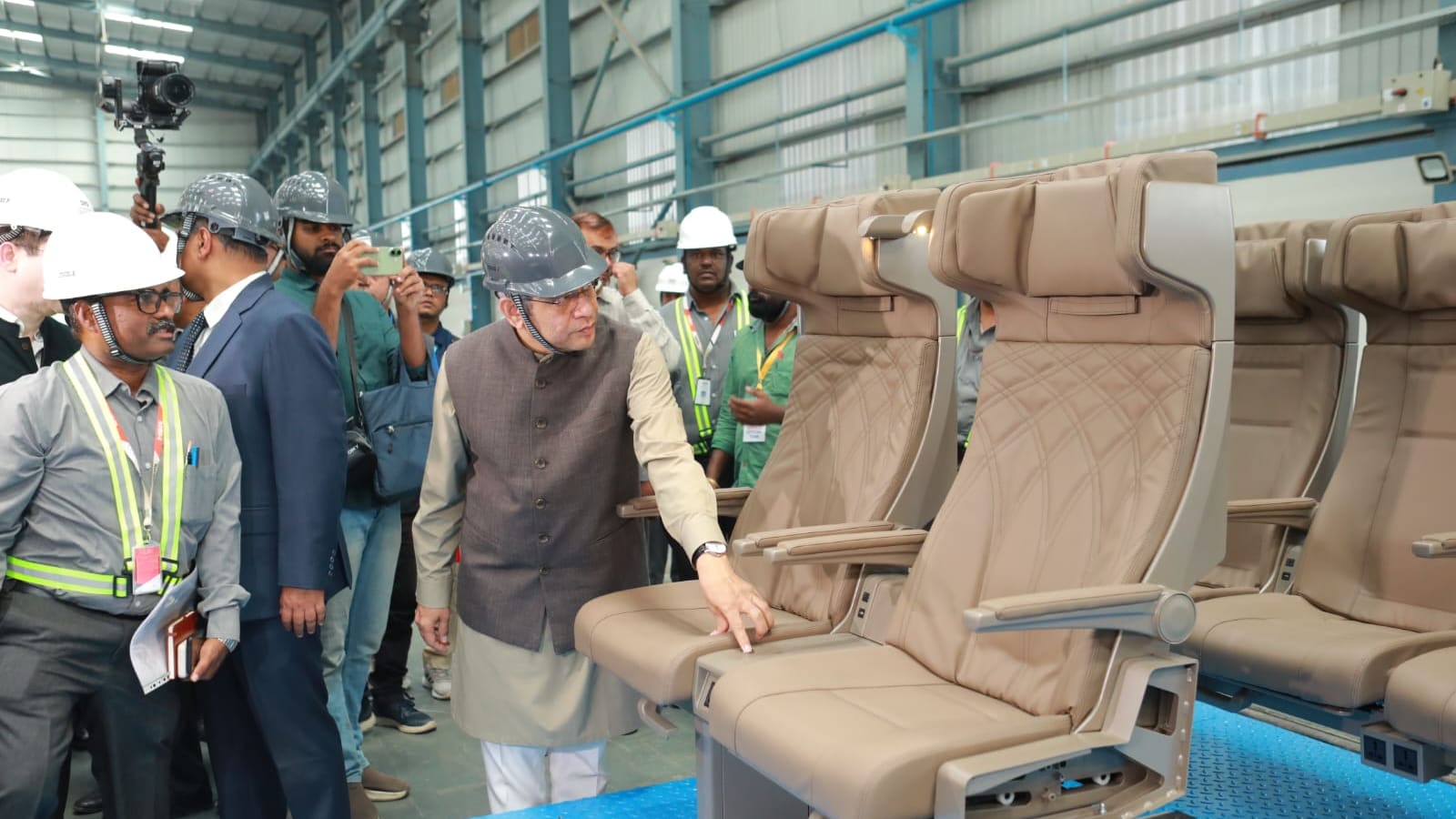
In a historic infrastructural milestone, India is set to roll out its first-ever high-speed Bullet Train, which is being designed and built indigenously for the Mumbai-Ahmedabad High-Speed Rail (MAHSR) corridor.The manufacturing process is currently underway at the BEML (Bharat Earth Movers Limited) facility in Bengaluru. Breaking away from complete reliance on foreign technology transfers, Indian engineers have designed this train specifically to withstand the country's unique climatic and operational conditions.READ | Tired Of Showing Your Passport At Airports? Digi Yatra To Go InternationalA Look At The TrainThe bullet train is designed to achieve a maximum test speed of 280 km per hour but will run at an operational speed of 249 km per hour. The total length of the train will be 202 metres, with eight coaches including four motor cars and four trailer cars. The train will be able to carry 557 passengers, including two seats designated for Divyangjan or Persons with Reduced Mobility.The train will have seven standard-class cars with 3x2 seating and one executive-class car with 2x2 seating. The driver's cabs will be on each side of the train and will be equipped with an intelligent on-board control system to support prompt decision-making and coordination with the operation control centre.Two eight-car trains can also be coupled to form a 16-car train for future operations.READ | PM Modi Approves Northern Bullet Train Corridor: Delhi To Agra In 59 MinutesTrain Designed For ComfortThe train is designed for the comfort of passengers, with its interiors ergonomically tailored to align with Indian anthropometric requirements, featuring spacious seats and generous legroom. The train will also offer level boarding and dedicated seating for passengers with reduced mobility (Divyangjan/PRM), while a single-piece, sealed gangway allows commuters to walk smoothly and comfortably between coaches.Passengers can enjoy scenic views through wide windows located at every seat row. The train will be lit with modern LED interior lighting and will have ample storage with overhead racks alongside dedicated floor-mounted stands for oversized luggage. Passengers will be kept connected on the go with individual power outlets for laptops and mobile devices.The train will be equipped with modern bio-digester toilets designed to minimize effluent impact.Passengers Information And AccessibilityThe train will feature a comprehensive passenger information system to keep travellers informed throughout the journey. It will be equipped with LCD displays inside the cabin which will provide information in English, Hindi and regional languages.To help passengers, it will also have a public address and automatic announcement systems to keep them updated. For continuous connectivity, a high-speed Wi-Fi-based infotainment system will allow travellers to stream preloaded entertainment on the go. Additionally, there will be emergency talk-back units installed in both the passenger cabins and vestibules, enabling communication with the train crew in case of emergency.To make the train accessible for everyone, its floor is aligned with the platform height to facilitate level boarding and will come with retractable footsteps integrated into the doors to help minimise the horizontal gap between the train and platform. It will have doors and toilets designed for persons with reduced mobility and a Braille-enabled information signage for visually impaired people.To make sure that the journey is pleasant throughout the year, the train will be equipped with a dual-unit HVAC system in each coach to maintain comfortable temperature and humidity year-round.The train will also incorporate multiple measures to reduce noise, including sound insulation in the car body and floor structure and noise-damping coatings.The train will run on a powerful 25 kV AC overhead electrical system. To save energy, it will use a smart regenerative braking system that captures power when the train slows down and feeds it back into the electrical grid, making the entire journey energy-efficient.To help the train cut through the air smoothly, engineers have used advanced computer simulations to design its shape. The aerodynamic nose and body are sculpted to reduce wind resistance, prevent turbulence, and stop loud "sonic boom" noises when the train goes through tunnels.
280 kmph, 8 Coaches, 557 Passengers: What Will India's 1st Bullet Train Offer
Full Article
Original Source
Read the full article at Ndtv →KhanList aggregates and links to publicly available news content. We do not host full articles from third-party sources. Always verify important information with original sources.