
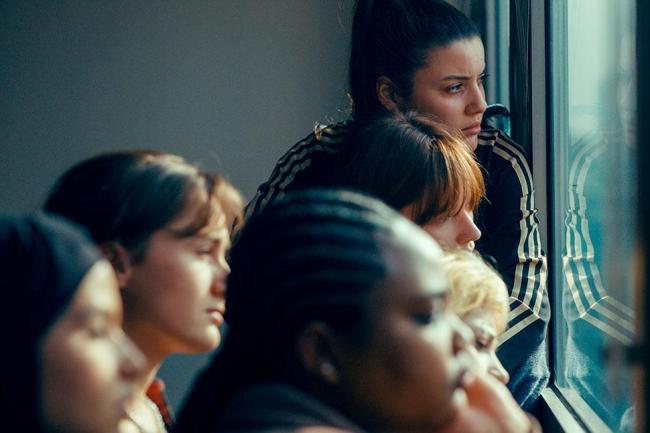
So-called “troubled” teens – and the brutal question of what to do with them – is a thorny subject being tackled by a growing number of filmmakers. Though set in the 1990s, last year’s “Steve” chillingly showed nothing has really changed in terms of understaffed and underfunded public services for youngsters in need of support. Cédric Kahn’s “15/18 (A Place to Heal)” is the latest addition to this bleak sub-genre, but one that mercifully lives up to its title — expertly tempering murkier topics with a much-needed sense of hope. The French director is no stranger to darker terrain: he’s turned his lens to drug abuse (“La prière”), child kidnapping (“Vie sauvage”) and, most recently, antisemitism (courtroom drama “The Goldman Case”). But with his latest feature, Kahn makes a significant change of tack. His unflinching gaze and penchant for stark realism — which, in the likes of “The Goldman Case,” effectively exposed the shortcomings of a flawed system — melt away here, giving over to a lighter, sprightlier, and blindsidingly funny tone. Co-written by Khan and fellow former actor Kahina Le Querrec, “A Place to Heal” will certainly not be what you expect from a film taking place mostly within a French hospital’s psychiatric ward for those aged between 15 and 18. Though coming with a hefty armful of trigger warnings, it’s less polemical than Kahn’s previous work and more brash, brisk, and sassy. All the while, it treats its characters with an impressive even-handedness, just as it treats its very serious subject matter with the sensitivity and thoughtfulness it demands. From the start, Khan lets us know that life inside the ward is no picnic. His story begins with 17-year-old Lucia (Malou Khebizi), a runaway to Belgium who, in the first queasily close-up shot, we see being unceremoniously dragged through the ward’s security door. It soon becomes clear she knows the crowd already, bantering with the nurses about her “vintage prison break” get-up and jibing the other teenage patients about their conditions. Among the 12 adolescents, these non-comprehensively include eating disorders, domestic abuse, underage sex work, gender dysmorphia, suicidal ideation and schizophrenia, to name a few. Crucially, from the first scene through to the film’s final chapter, cinematographer Patrick Ghiringhelli’s camera never strays beyond the ward’s walls — not even out of the window which the youngsters regularly peer out of rosy-eyed, dreaming about a life outside. That, and the at-arm’s-length care of the staff (who are sometimes comedically cold), makes existence within the ward feel like a close cousin to incarceration. Khan himself stars as the outwardly stern but inwardly soft-hearted Etienne, who heads up the dozen-strong medical team. The youngsters are subjected to constant “assessments”, aka grillings akin to police interrogations, concerning their home life and current mental state. Under the constant surveillance of staff, each of the young cast members movingly and valiantly hold their own. The mysterious particulars of Lucia’s escape loom over the rest of the film, leaving the door open to new possibilities and pivotal plot points later on. However, in one of the film’s boldest decisions, Lucia does not stay the main character for long. It’s Eloïse, Lucia’s ride or die, who becomes increasingly significant as the drama progresses, especially when a swaggering, tough newcomer Enzo (Kenji Peyran) rocks up at the ward. This fire-starter personality threatens the two young women’s friendship as well as upsetting the fragile balance within the ward – without which, it becomes apparent, there would be endless chaos, brawls and bust-ups. Scenes with the ward’s young women are where the film truly excels, undeniably a result of Khan and Le Querec’s months-long immersion inside real-life psychiatric wards. In two especially poignant scenes, the depressive youngster Charline (Patience Munchenbach) attempts to relay her experience to clinicians, only to get drowned out (seemingly once again) by the rowing of her split-up parents who are sat in on the meeting. Eloïse has her own secret – core to her journey towards a sense of closure – which she is able to disclose to a staff member but never to her family. Though it shows undertrained staff, a lack of resources, and poor parenting are part of the problem, “A Place to Heal” manages to take a holistic view and treat every single character – no matter how minor, in all senses – with fairness and empathy. A lesser film with a similarly taboo-busting approach would risk exploiting its themes for unwarranted provocation. There are a couple of rare moments where the film crosses the line into territory too uncomfortable, perhaps, to add significantly to the story. But that hardly detracts from what is a masterfully handled, deeply moving journey in and out of this meticulously rendered place of healing. Grade: A “15/18 (A Place to Heal)” premiered at the 2026 Venice Film Festival. It is currently seeking U.S. distribution.
‘15/18 (A Place to Heal)’ Review: A Taboo-Busting Dramedy Set Inside a Psychiatric Ward for Teens
Full Article
Original Source
Read the full article at Indiewire →KhanList aggregates and links to publicly available news content. We do not host full articles from third-party sources. Always verify important information with original sources.