
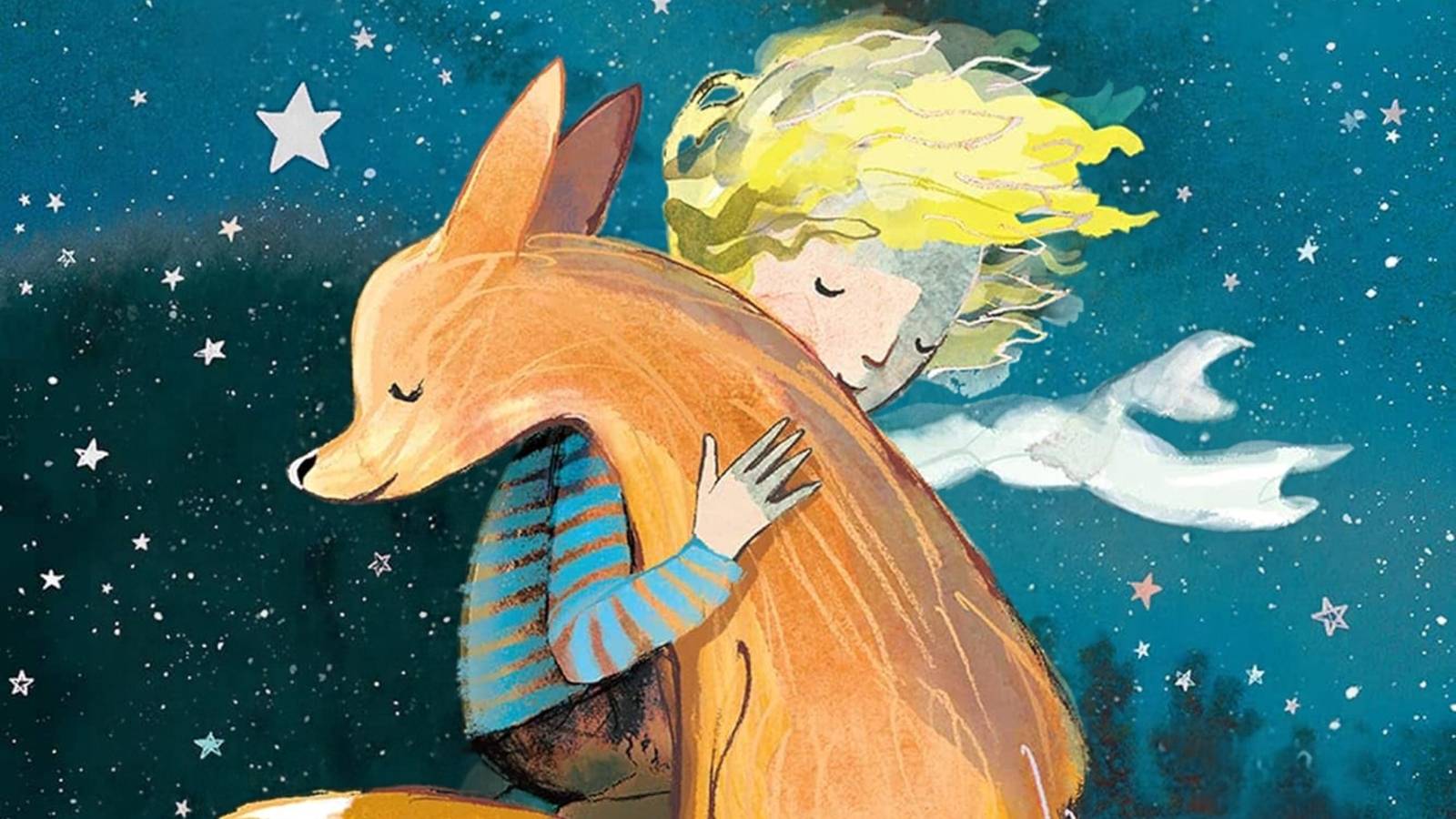
Image via HarperCollins Publishers Published Nov 16, 2026, 6:11 AM EST Diego Pineda has been a devout storyteller his whole life. He has self-published a fantasy novel and a book of short stories, and is actively working on publishing his second novel. A lifelong fan of watching movies and talking about them endlessly, he writes reviews and analyses on his Instagram page dedicated to cinema, and occasionally on his blog. His favorite filmmakers are Andrei Tarkovsky and Charlie Chaplin. He loves modern Mexican cinema and thinks it's tragically underappreciated. Other interests of Diego's include reading, gaming, roller coasters, writing reviews on his Letterboxd account (username: DPP_reviews), and going down rabbit holes of whatever topic he's interested in at any given point. Sign in to your Collider account Many of history's greatest books are one-and-done experiences. After all, a book doesn't necessarily have to be re-readable in order to be great. However, there are ten particular standout titles from throughout history that are very much worth reading over and over again. Whether it's because of their entertainment value, their philosophical depth, or the fact that every reading seems to offer something new, these books demand multiple revisits. Whether we're talking about a generation-defining classic like The Great Gatsby or a more modern masterpiece like House of Leaves, these books, for one reason or another, offer the largest amount of value to bookworms willing to dive into them multiple times rather than just once. Many books unlock multiple different layers of interpretation the more you read them, and these masterpieces are the most noteworthy cases. 'The Myth of Sisyphus' (1942) Image via Knopf Doubleday Publishing Group Though many call him an existentialist, French-Algerian philosopher and writer Albert Camus rejected the label, instead characterizing his works as dealing with absurdism. Camus didn't technically coin the philosophical concept of the absurd, but he developed and popularized absurdism like no other thinker before him in The Myth of Sisyphus, an essay where he studies the friction between humanity's desire for meaning and the cold indifference of a universe that offers none. Needless to say, people who exclusively read fiction are perhaps better off looking at Camus' prominent novels and short stories. However, those interested in reading philosophy are bound to draw infinite amounts of value from reading and re-reading The Myth of Sisyphus. Depending on where the reader is in their life when they visit the book at any given point, they may find a vastly different kind of philosophical depth. 'The Great Gatsby' (1925) Image via Scribner The debate on what "The Great American Novel" is may be one that's destined to never have a single, fully satisfying answer, which is probably for the best. There is one masterful novel, however, that's brought up far more often than most when having this conversation: F. Scott Fitzgerald's The Great Gatsby, one of those classic books that are perfect from start to finish. It's an absolute tragedy that the book was a commercial disappointment upon publication, leading Fitzgerald to die in 1940 thinking that he was a failure and that his work was bound to be forgotten. Little did he know, Gatsby would go on to become one of the most widely acclaimed and re-read classics in all of American literature. Thanks to its brevity, intricate prose, and thematic core so layered that every re-reading reveals something new, it's impossible to get tired of experiencing it. 'Fahrenheit 451' (1953) Image via Ballantine Books Dystopian science fiction saw a tremendous boom throughout the mid-20th century, all thanks to works as brilliant as Ray Bradbury's Fahrenheit 451. It's one of the most essential sci-fi books to read before kicking the bucket, a story strongly inspired by the Nazi book burnings and ideological repression in the Soviet Union. In essence, it's a scathing critique of anti-intellectualism and the suppression of freedom of speech. But aside from being thematically rich, Fahrenheit 451 is also endlessly re-readable because its depiction of a dystopian future hits so close to home all these many years later, much of it feeling eerily prophetic. As if that weren't enough, Bradbury's wonderfully poetic and romantic prose carries a vivid intensity that elevates the narrative enormously, rewarding readers willing to take the time to appreciate the craftsmanship on display here. 'And Then There Were None' (1939) Image via Collins Crime Club Agatha Christie is the best-selling and most translated fiction author of all time, so it's only fitting that her magnum opus, And Then There Were None, is also one of the best-selling and most translated works of fiction in history. It wasn't the first locked-room murder mystery ever written, but Christie absolutely broke new ground in this very particular subgenre of the whodunnit, offering an experience that still feels delectably fresh and original today. A lot of times, murder mysteries lose much of their re-readability after you learn the answers to their mysteries. Not this one. And Then There Were None is still one of those classics worth reading again and again, so impeccably written and brilliantly structured that every subsequent re-visit seems to reveal something new about the genius of how Christie manufactured this mystery. It all feels like a puzzle that you just don't get tired of disassembling and rebuilding time and time again. 'The Hitchhiker's Guide to the Galaxy' (1979) Image via Pan Books Based on the first four parts of his radio comedy series of the same name, Douglas Adams' The Hitchhiker's Guide to the Galaxy is one of the best sci-fi books to read over one weekend. As incredible and important as serious, weighty, and dramatic science fiction is, there's also a unique importance and irreplaceable charm to comedic sci-fi, as perfectly demonstrated by this must-read novel. The main reason why The Hitchhiker's Guide to the Galaxy is worth reading over and over again is quite straightforward: It's so irresistibly hilarious that its best gags still earn solid belly laughs even after several re-reads. The sheer density of jokes makes it so that re-visits make it easier to appreciate Adams' absurdist sense of humor, and the profound philosophical satire dealing with existential anxiety certainly doesn't hurt. 'Pride and Prejudice' (1813) Image via Modern Library Jane Austen was one of the most important and influential figures in the history of English literature, her most prominent novels having fundamentally shaped how stories were told in the medium of the modern novel. As far as the title of her magnum opus goes, most would point to Pride and Prejudice, a must-read classic so perfect that it doesn't feel dated in the slightest. What follows one of the best opening paragraphs in book history is the most re-readable romance in the history of literature. A brilliant character study, a sharp social satire, and a psychologically deep study of themes of marriage and class — it is a truth universally acknowledged that Pride and Prejudice operates on so many different levels that there's no re-read that doesn't reveal at least a few new layers of interpretation. 'House of Leaves' (2000) Image via Pantheon Books The term "ergodic literature" is quite a young one, having been coined in 1997 by Norwegian scholar Espen Aarseth to describe works where intentional effort is required to allow the reader to traverse the text, beyond just mindlessly turning pages. There is perhaps no better—or more re-readable—masterpiece to understand ergodic literature than Mark Z. Danielewski's House of Leaves, one of those thriller books more intense than any movie. With its color-coded text, use of different typefaces, and creative physical arrangement of words (which sometimes requires physically rotating the book to follow the text), House of Leaves is the epitome of an ergodic novel. However, that makes it all the more tempting to constantly pick back up. It's about as physically and narratively multi-layered as books come, full of hidden symbols and psychological puzzles that make it feel different every single time you read it. 'Pedro Páramo' (1955) Image via Editorial RM The so-called Latin American Boom made this region of the Americas the epicenter of world literature between the 1960s and 1970s, but many authors and landmark works were vital in building the foundations that allowed that boom to happen. Case in point: Juan Rulfo and his masterpiece, Pedro Páramo, probably the greatest and most influential piece of Mexican literature of all time. Pedro Páramo was an essential pioneer of Latin American magical realism, and the way Rulfo imbues the ghost town of Comala with such subtle magical elements makes this one of the most atmospheric fantasy books of all time. This is the kind of novel so magical and complex that it makes you wish you could wipe your memory and read it again by the time it's over. In the absence of such an ability, it's more than enough to re-read the novel every so often to discover new fragments of artistry in its non-linear plot. 'The Lord of the Rings' (1954–1955) Image via HarperCollins Published in three volumes between 1954 and 1955, J. R. R. Tolkien's The Lord of the Rings is nevertheless technically all one huge heroic fantasy epic, almost universally recognized as the most important piece of fantasy literature of the 20th century. The story began in Tolkien's mind as a much simpler sequel to 1937's The Hobbit, but soon evolved into a masterpiece much more vast, sprawling, and imaginative. Indeed, The Lord of the Rings is the best fantasy book of the 20th century, and it's not even particularly close. Tolkien's elaborate, highly detailed prose may be challenging to some, but that only makes it so that on every subsequent revisit of Middle-earth, a new layer of the narrative appears to reveal itself. You start paying more attention to the songs, the casual references to The Silmarillion, the underappreciated sense of humor, or Tolkien's description of a particular location or object. It never stops feeling magical. COLLIDER Middle-earth Personality Quiz Collider/ Movies/ The Lord of the Rings/ Which Race Do You Belong To Ten Questions · Five Peoples Which Lord of the Rings Race Do You Belong To? Hobbit · Elf · Dwarf · Man · Orc Middle-earth is home to many peoples: the courageous, the ancient, the stubborn, the ambitious and the wretched. Ten questions will determine which race truly claims your soul. The answer may surprise you, or it may confirm what you already suspected. The Five Peoples 🌿Hobbit 🌟Elf 🪓Dwarf ⚔Man 💀Orc Find Your Race Stage 1 of 10Comfort What does your ideal day look like? How we rest reveals as much as how we fight. AA long meal with good company, a pipe, and absolutely no unexpected adventures. BWalking through ancient forests, composing verse, watching the stars emerge. CDeep underground, the clang of hammer on anvil, crafting something that will outlast me. DTraining, planning, preparing. There is always something that needs defending. ETaking what I want and making sure nobody tries to take it back. Press 1 to 5 to chooseNext Stage 2 of 10Time How do you feel about the passing of time? Our relationship with mortality shapes everything we value. AI have watched ages come and go. Time is a river I observe, not chase. BThe days blur pleasantly. I do not think about it much, and there is always second breakfast. CLife is short. I want to leave something behind: a name, a legacy, a deed worth singing. DTime means little underground. What matters is the work, and the work is never done. ETime is something stronger things take from weaker ones. I intend to be the stronger one. Press 1 to 5 to chooseNext Stage 3 of 10Instinct Danger is approaching. Your first instinct is to: Fight, flight, or something in between. AHide, and hope it passes. I am no hero, and I am fine with that. BStand your ground. Someone has to, and it might as well be me. CFade into the background and observe. Knowledge before action. DCharge straight at it. Hesitation is just fear wearing a sensible hat. EDig in, fortify, and wait. Ground is everything, and you never cede ground. Press 1 to 5 to chooseNext Stage 4 of 10Treasure You stumble upon a great treasure. What do you feel? What we desire, and what we do about it, is the true test. AMy heart swells. This is the work of my kin, and it belongs in my hands. BExcited, but nervous. I would rather it not cause trouble. Can I just leave it? CMine. Obviously mine. Why is this even a question? DBeautiful. Something this ancient deserves to be preserved and admired, not hoarded. EA resource, and resources should serve those with the vision to use them. Press 1 to 5 to chooseNext Stage 5 of 10Community How important is community and belonging to you? No race of Middle-earth is truly alone, but some prefer it that way. AEverything. My neighbours, my village, my people. They are the point of it all. BI cherish my kin deeply, but I feel connected to all living things, not just my own kind. CI will protect my people with everything I have, but I do not need anyone else’s approval. DI prefer a tight-knit clan bound by loyalty and shared toil over any grand fellowship. ECommunity is a pack. You are either dominant or you are used. I know which I prefer. Press 1 to 5 to chooseNext Stage 6 of 10Ambition How ambitious are you, honestly? Ambition is neither virtue nor vice. It depends entirely on what you want. ADeeply. I want to build something great, reclaim something lost, or leave a mark on history. BI seek mastery and perfection, not power over others but excellence in all I do. CHonestly? I mostly just want a quiet life and for things to not go wrong. DCompletely. I want to dominate, and I see no point in pretending otherwise. EAmbitious within my craft. I want to make the finest thing ever made by my people’s hands. Press 1 to 5 to chooseNext Stage 7 of 10Nature Where do you feel most at home in the natural world? Middle-earth is vast, and every race has its place within it. AAncient forests, still pools, places where the world feels oldest and wisest. BRolling green hills, good soil, somewhere you can grow things and watch them thrive. CUnderground. Caves, mines, tunnels. The dark does not bother me. It is where things are made. DOpen plains, mountains, the kind of landscape that makes you feel the weight of history. EBlasted wastelands, smoke, ash. Somewhere harsh enough to keep soft things away. Press 1 to 5 to chooseNext Stage 8 of 10Strength What kind of strength do you most respect? Every race defines strength differently, and they are all at least a little right. AThe strength to carry on when everything is telling you to stop. BThe strength of stone. Immovable, reliable, tested by pressure and time. CThe strength to lead others and bear the cost of that responsibility. DGrace under pressure. Calm, precise, and lethal when it needs to be. EBrute force. Everything else is just philosophy for those who lost. Press 1 to 5 to chooseNext Stage 9 of 10Legacy What do you want to leave behind when you are gone? Legacy is the story we tell ourselves about why any of this matters. ASongs, poetry, beauty. Something that outlasts the memory of who made it. BThe knowledge that my corner of the world was a little safer and kinder because of me. CFear. A reputation that means nobody ever dares come for mine. DA name remembered. A deed that made a difference at a moment that mattered. EA masterwork. Something crafted so perfectly it becomes the standard all others are judged by. Press 1 to 5 to chooseNext Stage 10 of 10Truth Be honest. What do you want most out of life? The truest question always comes last. APeace. Safety. Good food, good friends, and nobody asking me to save anything. BTo matter. To be part of something larger than myself, even at great cost. CEternity. To witness all ages, to remember everything, and never be forgotten. DDominance. To never again be at the mercy of anyone or anything. EMastery of my craft and the respect of those who know great work from good work. Press 1 to 5 to chooseReveal My Race Middle-earth Has Spoken You Belong To A tie. You walk between two peoples. 🌿 The Hobbits The Shire-folk Heroism does not require ambition, and you are the proof. You are, at your core, a creature of comfort, community and quiet joy, and there is nothing small about that. Hobbits are proof that heroism does not require ambition, that the bravest heart can beat inside the most unassuming chest. You value good food, warm hearths, close friends and a world that stays largely untroubled by dark lords and quests. When adventure does find you, and it will, you rise to it not because you sought it but because the people you love needed you to. That is not ordinary. That is the rarest kind of courage in all of Middle-earth.LoyalGroundedUnassumingBraver Than You Look 🌟 The Elves The Firstborn They mistake your depth for distance. Ancient, graceful, and carrying a weight of memory most mortals cannot fathom, you are one of the Elves. You see the world in its fullness: its beauty, its impermanence, the unbearable ache of watching everything you love eventually fade. You pursue perfection not from pride but because excellence is how you honour the time you have been given. Others may see you as remote or melancholy. They are not wrong, exactly. But they mistake depth for distance. You feel everything, which is precisely why you have learned to carry it so quietly.AncientExactingObservantMelancholy 🪓 The Dwarves The Stone-born Anything worth doing is worth doing properly. Stubborn, proud, fiercely loyal and possessed of a work ethic that would exhaust most other races before breakfast, you are Dwarf-kind through and through. You do not ask for approval and you do not offer it cheaply. Your loyalty, once given, is given for life. Your grudges last longer. You love deeply and defend ferociously, and the things you build, with your hands and your sweat and generations of accumulated craft, are made to last. Not for glory. Because anything worth doing is worth doing properly, and you have never once done anything by half measures.StubbornLoyalExactingImmovable ⚔ The Race of Men The Mortal Kind You fall, and you rise, and the rising is what defines you. Mortal, ambitious, flawed and magnificent, you belong to the most complicated race in Middle-earth, and that complexity is your greatest strength. Men are capable of cowardice and extraordinary bravery, of cruelty and breathtaking sacrifice, sometimes within the same breath. You feel the urgency of your finite years and it drives you. You want to matter. You want to leave something behind. You fall, and you rise, and the rising is what defines you. Tolkien called mortality the Gift of Men, not a curse but a fire that burns bright precisely because it does not burn forever. That fire is you.AmbitiousMortalDrivenUnfinished 💀 The Orcs The Broken Kind You have made your peace with a world that is not kind. Brutal, survivalist and contemptuous of anything that cannot defend itself, you answered with the instincts of an Orc, and there is a certain savage honesty in that. You do not dress up your desires in polite language or pretend you want things you do not. You want power, survival, and to never be at the bottom of any hierarchy again. Orcs are not evil by nature. They were made from something that was once good and broken into this shape by forces they did not choose. What remains is fierce, territorial, and deeply aware that the world is not kind. You have made your peace with that. The question is what you do with it.TerritorialBluntRelentlessUnsentimental Your Closest Matches 1 2 3 ↻ Retake the Quiz Copied to clipboard Quest recorded by COLLIDER Collider.com · Middle-earth 'The Little Prince' (1943) Image via Reynal & Hitchcock To this day, Antoine De Saint-Exupéry's The Little Prince is still the best-selling fantasy book of all time, and it will take a true commercial juggernaut to ever dethrone its more than 200 million copies sold. It's one of those fantasy books that are perfect from the first page to the last, a children's classic so universally endearing and so full of beautiful messages for readers of all ages that even the oldest, most cynical of grown-ups should consider it essential reading. Unlike many other of history's greatest and most iconic masterpieces, The Little Prince is not a sprawling epic nor a particularly complex psychological puzzle, but rather a refreshingly short and deceptively simple novella that seems to grow up alongside the reader. Children, young adults, and grown-ups will all inevitably draw vastly different lessons and philosophical learnings from its story, and that's what makes it the most endlessly re-readable book of all time.
10 Classic Books Worth Reading Over and Over
Full Article
Original Source
Read the full article at Collider →KhanList aggregates and links to publicly available news content. We do not host full articles from third-party sources. Always verify important information with original sources.