
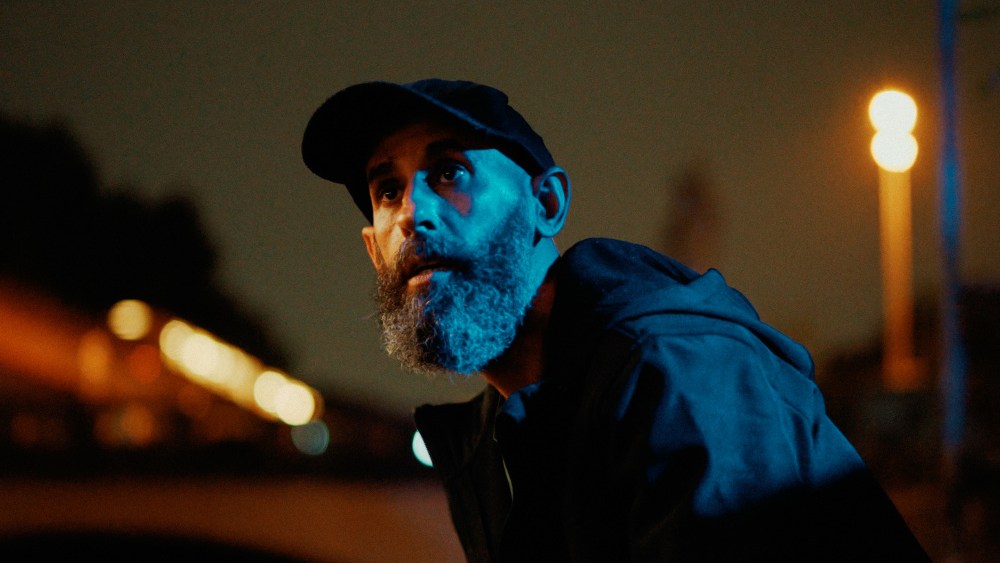
For Egyptian filmmaker Ahmad Abdalla, the idea for “BerleeN_” grew out of stories shared by friends and relatives who had left their homes across the Arab world to build new lives in the German capital. During his visits to Berlin, their experiences, which he describes as often stranger than fiction, offered the basis for a film about memory, belonging and starting over in a new city. “With every visit, I keep hearing stories, and for me, the stories were extremely surreal,” Abdalla tells Variety following the film’s world premiere at the Cairo Film Festival. Rather than build the film around a single protagonist, Abdalla drew on these encounters to weave together three stories that unfold over one day in Berlin, blending drama, crime and mystery. The characters’ experiences are shaped as much by the lives they left behind as by the city in which they’re building new ones. “Those people behave this way because they are in Berlin,” he explains. “BerleeN_” Courtesy of Seera Films “BerleeN_” marks Abdalla’s return to Cairo Film Festival, where his previous feature, “19B,” premiered in the International Competition in 2022. The filmmaker’s credits also include “Microphone” (2010), “Rags and Tatters” (2013) and “EXT/Night” (2018). As Abdalla developed the screenplay, he realized that beneath the characters’ different circumstances lay a common thread: fear. “The main thing I terribly wanted to speak about was fear,” he explains. “How we deal with fear, and how we deal with our existence on a philosophical level.” He points to the rapid changes shaping the world around us as a major source of that emotion. His approach was partly informed by his reading of 1970s writings on Afro-surrealism, whose reflections on the surreal nature of the Black American experience resonated with what he had observed among Arab migrants in Europe. The film also explores how memories of home shape the experience of living somewhere new. “There’s something magical about mixing your memories, your relationship with the past, and with the very existing moment,” Abdalla reflects. “When you are living in Berlin right now, and you are very heavily loaded with your personal stories, with what happened to you in Cairo, what happened to you in Iraq, what happened to you in Aleppo, but you’re living in this new reality.” For Abdalla, there is something inherently cinematic about capturing the moment when those different realities meet. For lead producer Kesmat El Sayed, whose Berlin-based Seera Films produced the feature alongside veteran Egyptian producer Mohamed Hefzy’s Giza-based Film Clinic, the project coincided with her own move to the German capital. A longtime admirer of Abdalla’s work, she had been working primarily in documentary and “BerleeN_” became her first foray into fiction features. The experience also introduced her to a different way of working. “You have a certain time that you have to do this in, as well as a certain budget. So the pressure is immense,” she explains, contrasting the experience with documentary filmmaking, where productions can take much longer. Making the film also deepened El Sayed’s own connection to Berlin, a city she was still getting to know. “It just brought me so deeply into the city in a very fast way, in a very intense way,” she recalls. El Sayed and Abdalla also sought to involve as many Arab film professionals based in Berlin as possible, creating opportunities for artists who often struggle to find work. “We wanted to have the same representation behind the camera as we did in front of it,” she emphasizes. That shared sense of ownership proved invaluable when unexpected logistical issues arose, with crew members working together to quickly find solutions. For Hefzy, who has worked with Abdalla since 2008, the director’s attention to the relationship between people and their surroundings has long distinguished his filmmaking. “Even what might seem like random shots of streets or people adds another layer to the film,” Hefzy observes. “None of that is random.” Abdalla’s collaborative working style extends to his actors. “I don’t believe in writing a stiff script,” he says. Instead, he seeks out performers “willing to play and willing to change things for the film,” including improvising and contributing their own dialogue. His method was inspired in part by British filmmaker Mike Leigh. The veteran director’s approach to shooting also helps keep production costs down. “He shoots in a way that makes it not expensive. His films tend to stay under one million [dollars] and, sometimes, well under,” Hefzy notes. He estimates the budget for “BerleeN_” at around $600,000–$650,000, relatively modest for an international production. But financing independent cinema in Egypt remains difficult, Hefzy says, citing the lack of a national film fund, limited regional funding opportunities and intense competition for grants. Filmmakers frequently rely on European co-productions or pool their own resources to get projects made. “Ahmed Abdalla’s films are not made with money, they’re made with love,” Hefzy recalls telling the audience at the film’s Cairo festival premiere. But he believes independent filmmakers need more than resourcefulness to sustain their work. “I wish we had a clearer path to financing independent films,” Hefzy says, adding that even completed projects can struggle to secure distribution. “BerleeN_” has already sold its worldwide streaming rights to Shahid, the streaming platform owned by Saudi media conglomerate MBC Group, and is slated for an Egyptian theatrical release in early December. The producers are pursuing further festival appearances without a sales agent, but Hefzy is cautious about the film’s prospects for theatrical distribution outside the Arab world. He argues that even films selected for the world’s most prestigious festivals are not guaranteed international distribution. “It’s very competitive and very, very difficult for Arab films to reach global audiences,” he says. For Abdalla, the film’s reception in Cairo has reinforced his willingness to embrace uncertainty. He describes audiences responding to his work in wildly different ways, a pattern dating back to his earliest features. “With this kind of cinema, you can only gamble,” he says. “There’s no consensus. And you can only gamble on [a film] if the story was honest enough and true enough to resonate with people.” While he is not quite ready to move on from “BerleeN_,” Abdalla is considering several stories set in Toronto. The filmmaker, who regularly spends time in the Canadian city, says his only condition for future projects set outside Egypt is a personal connection to the place. “I cannot make a film about something I don’t know.”
‘BerleeN_’ Director Ahmad Abdalla on Telling the ‘Extremely Surreal’ Stories of Arab Migrants Living in Berlin and ‘How We Deal With Fear’
Full Article
Original Source
Read the full article at Variety →KhanList aggregates and links to publicly available news content. We do not host full articles from third-party sources. Always verify important information with original sources.