
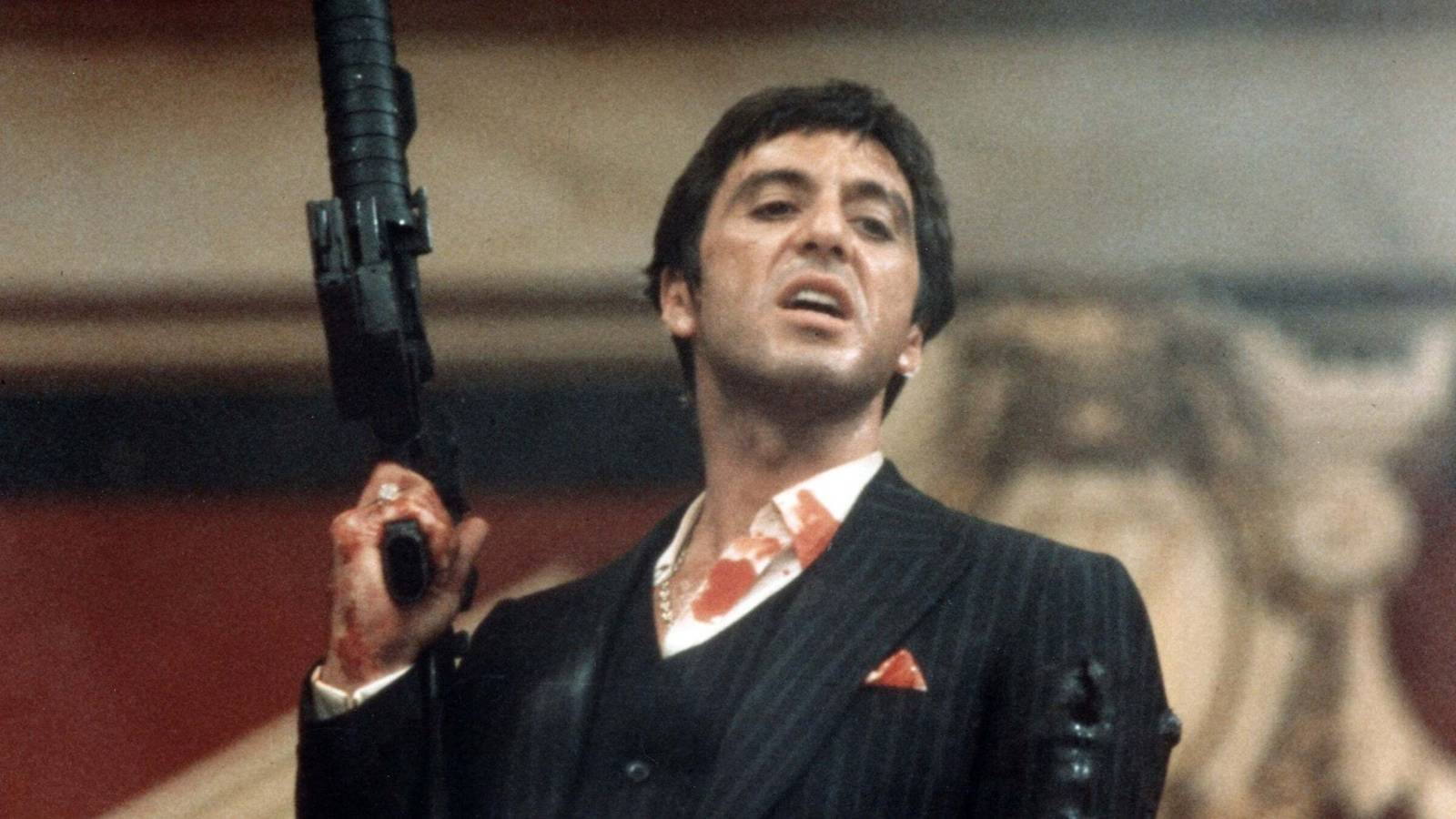
Everybody thinks they can do an Al Pacino impression. Most of them start by shouting, which might explain why the good impressions are so rare. There is a reason for that. Pacino has created some of cinema's most volatile characters, and the impressions begin with Tony Montana or the familiar roar of "Hoo-ah!" Yet watch closely and something more interesting emerges. He can make an ordinary conversation feel dangerous without moving from his chair. The shouting gets quoted; the quieter choices often make the performance. With Pacino recently named the recipient of the SAG-AFTRA Life Achievement Award, to be presented in February 2027, it's a particularly good time to revisit the work beyond The Godfather. Michael Corleone remains one of film's defining characters, but an actor who has played a struggling salesman and a dying political fixer deserves a wider look. His work in HBO's Angels in America belongs in the conversation, too, so this list includes both movies and television. Those roles deserve to be judged on their own terms. The ranking considers the complexity of each character, Pacino's emotional range, and the impression that remains long after the credits. These are Pacino's greatest performances, rather than necessarily his greatest films. An Oscar helps, but it doesn't settle the argument; neither does a movie's cultural footprint. Pacino is a fixture of the gangster-movie tradition that produced classics like Goodfellas, but his best acting sometimes happens when he has no power whatsoever. 9 Donnie Brasco (1997) — Benjamin "Lefty" Ruggiero There is something almost unbearably sad about watching Al Pacino play a gangster nobody respects. Lefty Ruggiero has spent years doing the Mafia's dirty work, only to find himself perpetually broke and overlooked. In Mike Newell's Donnie Brasco, he takes a young associate called Donnie (Johnny Depp) under his wing, unaware that his new friend is an undercover FBI agent. The premise promises a crime thriller. Pacino quietly turns it into a portrait of a man desperate to matter to someone. Lefty talks tough because toughness is practically all he has left. Notice how his swagger disappears around the powerful mobsters, or how he brightens when Donnie shows him the smallest sign of loyalty. Pacino allows the character to be irritating and vulnerable without begging the audience to pity him. The performance lands at No. 9 because its emotional scope is more contained than the roles ahead, but that restraint makes it special. For an actor synonymous with dangerous men, Lefty's greatest fear is being disposable. 8 Heat (1995) — Lt. Vincent Hanna ©Warner Bros. Pacino finally sharing the screen with Robert De Niro should have been enough to sell Heat by itself. Michael Mann had other ideas. De Niro's meticulous thief, Neil McCauley, faces Pacino's Vincent Hanna, a Los Angeles detective whose professional instincts are formidable and whose personal life is in ruins. Hanna operates at a frequency that would exhaust most people before breakfast, which makes Pacino's unpredictable line readings feel entirely appropriate. In the diner scene, De Niro barely moves while Pacino keeps Hanna alert and faintly amused by the possibility that his adversary understands him better than his own family. Their contrast gives the meeting its charge. The film's meticulously staged downtown shootout may be its biggest spectacle, but the acting makes the confrontation matter. Hanna's feverish obsession offers a narrower emotional range than Pacino's most layered roles. Still, few actors could make a man this exhausting so compelling to watch. Choose the movie with the higher Rotten Tomatoes score. 7 Scent Of A Woman (1992) — Lt. Col. Frank Slade Pacino's only Academy Award for acting came from playing a man who could clear a dining room with a single insult. Retired Army officer Frank Slade is blind, bitter, and determined to make everyone around him suffer for it, especially the prep-school student (Chris O'Donnell) hired to look after him. Scent of a Woman gives Pacino permission to go big, and he accepts with both hands. The catchphrases and that famous tango could have swallowed the character whole. But Slade's bravado masks the humiliation of depending on others, and Pacino lets that humiliation surface before the colonel covers it with another verbal assault. His wounded pride feels genuine even when the gestures invite imitation. The Oscar is part of the role's history, not a reason to place it first. At No. 7, it remains commanding star acting, even if the film sometimes gives Pacino speeches where a little silence might have served him better. 6 The Irishman (2019) — Jimmy Hoffa Among the cast of The Irishman, Pacino's Jimmy Hoffa is the one man who never believes he's losing an argument. Martin Scorsese's sprawling crime drama marked the director's first collaboration with Pacino, and the actor makes his union boss a foil for Robert De Niro's guarded Frank Sheeran. Hoffa can electrify a room, then ruin it by refusing to listen. The key is the warmth Pacino brings to Hoffa's friendship with Frank. This is a man who expects loyalty because he has convinced himself he's earned it. Watch him dismiss a warning with a flick of the hand: arrogance and genuine disbelief are impossible to separate. He's absurdly proud, but when that confidence turns into vulnerability, it happens without warning. Pacino received his ninth Oscar nomination for the part. That recognition matters, but Hoffa belongs here because the performance finds comedy and innocence inside a public bully. He lacks the psychological intricacy of Serpico or Sonny Wortzik, but gives Scorsese's epic a pulse that De Niro's restraint cannot supply alone. Hoffa regards approaching disaster as an insult to his dignity. 5 Glengarry Glen Ross (1992) — Ricky Roma Forget the famous Alec Baldwin sales speech for a moment. The truly frightening salesman in Glengarry Glen Ross is Ricky Roma, and Pacino barely needs to raise his voice to make the sale. David Mamet's dialogue is a minefield of intimidation, but Roma moves through it like a man who has forgotten there is any other way to speak. He sidles up to a stranger in a restaurant, begins talking about life, and gradually makes the stranger believe that buying a dubious piece of real estate was his own idea. Roma knows exactly how long to let another man feel clever before taking his money. His eruption when the deal collapses reveals the desperation that the charm concealed. Pacino received a supporting-actor Oscar nomination for Roma in the same year he won Best Actor for Scent of a Woman. The sleight of hand here is more exacting than Slade's grandstanding: the audience can see the manipulation happening and still understands why somebody would fall for it. 4 Scarface (1983) — Tony Montana Tony Montana has been quoted, parodied, and copied for more than four decades. Separating Pacino's performance from the character's enormous pop-cultural afterlife takes a little effort. Brian De Palma's Scarface follows a Cuban immigrant's violent climb through Miami's drug trade, and Pacino plays Tony with the appetite of someone who has decided the entire world owes him a living. Every insult sounds personal. Every victory convinces him that he deserves more. It's tempting to dismiss the performance as pure excess, especially considering how frequently Tony appears in discussions of Pacino's most villainous roles. But his aggression is inseparable from his insecurity; the self-destruction begins long before the final shootout. An actor who approached this material cautiously might have made the movie impossible to believe. Pacino makes it impossible to ignore. The role's influence earns it a high position, although Tony's limited capacity for change keeps him below characters whose inner lives demand more complicated acting. 3 Serpico (1973) — Frank Serpico In Serpico, Pacino plays an honest New York City police officer in a department where honesty can get a man killed. That sounds like a straightforward hero's journey until Sidney Lumet's film wears its protagonist down. Based on the real Frank Serpico, it follows a cop whose integrity makes him an outsider among colleagues who are supposed to protect him. Pacino begins with a young man's stubborn idealism. Little by little, that certainty curdles into suspicion. The physical changes are striking, from Serpico's evolving clothes and facial hair to the way he carries each betrayal. More impressive is the emotional progression. His rage feels earned rather than theatrical. The role secured one of Pacino's early Best Actor Oscar nominations and established that Michael Corleone was no lucky accident. Compared with Tony Montana's eruption, Serpico's disillusionment is largely internal—and harder to fake. Every change in the character registers, even when Pacino is standing perfectly still. 2 Angels In America (2003) — Roy Cohn "I wish I was an octopus, a f**king octopus. Eight loving arms and all those suckers." Roy Cohn introduces himself with that line in HBO's Angels in America, and Pacino says it like eight arms would barely suffice. Now here is a man who could give Tony Montana lessons in being unpleasant. In Tony Kushner's Pulitzer Prize-winning adaptation, the real-life political lawyer is diagnosed with AIDS and insists he has liver cancer, treating the truth as another adversary he can bully into submission. His influence cannot save him from his own body, and Pacino understands that the bluster is only half the performance. His scenes with Meryl Streep's Ethel Rosenberg, whose ghost confronts Cohn, are revealing. Even his exchanges with the doctor become an argument over who gets to define the truth. Cohn wants to control the name of his illness because admitting what he has would destroy the story he tells about himself. Pacino finds black comedy in Cohn's arrogance without letting us forget the damage he has done. The role earned him an Emmy and belongs near the top because he gives a monstrous man a recognizable fear of death without asking us to forgive him. Television gave Pacino the room to let Cohn unravel slowly. He uses every minute. 1 Dog Day Afternoon (1975) — Sonny Wortzik Nobody in Dog Day Afternoon looks like they are having a particularly good day, least of all Sonny Wortzik. A bank robbery goes wrong almost immediately, leaving Sonny and his accomplice Sal (John Cazale) trapped inside with hostages while the police and an increasingly excited crowd gather outside. What should be a straightforward crime story becomes something stranger and more human. Sonny hopes the robbery will pay for his partner Leon's gender-affirming surgery, complicating any easy judgment about his motives. He is impulsive, terrified, occasionally hilarious, and forever trying to regain control of a situation that slipped away from him hours ago. This is the role that best demonstrates everything Pacino can do. He can whip the crowd into a frenzy with a shout of "Attica!" and then make a phone call feel painfully intimate. His exchanges with Cazale reveal tenderness beneath the panic, while his conversations with the hostages expose an awkward compassion Sonny can barely afford. Sidney Lumet lets the camera stay close, trusting Pacino to find the contradictions without explaining them. Unlike Tony Montana's theatrical downfall or Frank Serpico's principled defiance, Sonny has no heroic identity to cling to. He is simply a frightened man trying to finish a terrible day. More than 50 years later, it's still Pacino at his most astonishingly alive.
9 Greatest Al Pacino Movie And TV Performances (Besides The Godfather), Ranked
Full Article
Original Source
Read the full article at Screenrant →KhanList aggregates and links to publicly available news content. We do not host full articles from third-party sources. Always verify important information with original sources.