
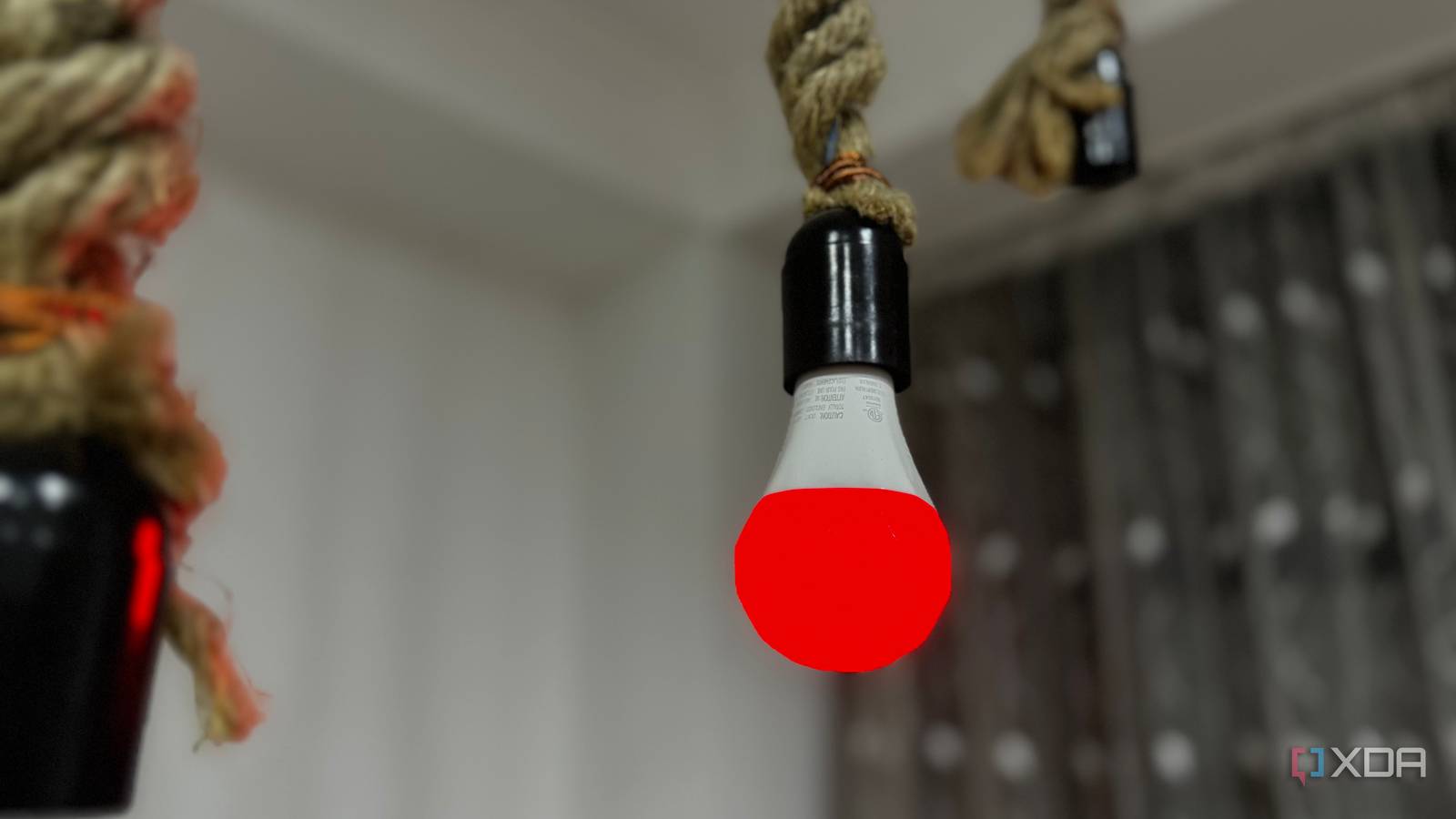
Published Aug 25, 2026, 1:00 PM EDT Jasmine is Software and PC Hardware Author at XDA with years of tech reporting experience ranging from AI chatbots right down to gaming hardware, she's covered just about everything. Whether it's breaking news about the latest AMD NPUs or creating video tutorials on social media platforms, Jasmine has contributed to the world of AI and tech in a variety of ways including interviewing the CEO of Razer, AMD's Director of Product Marketing and the VP of Lenovo. Passionate about gaming and PC technology, she has built countless computers, keyboards and other peripherals - knowing them inside and out. For most people, the gateway into smart homes is likely a smart light bulb. Being able to change the color of the lights in your room brings in so many people, and then you can switch the lights on from your phone and trigger voice commands to dim them for movie night. However, that honeymoon phase likely leads to the inevitable embarrassing compromises that every enthusiast has to make. Putting plastic switch guards or blue painter's tape over physical wall switches to stop partners, family members, or guests from cutting the power interface in human history. If it's essentially illegal to touch, your smart home has failed the basic usability test. The biggest mistake in smart home design is prioritizing flashy cloud-connected endpoints over fundamental physical interactions. Making your home harder to use for non-technical household members and guests isn't smart. It's a regression. Transitioning from smart bulbs at the socket to smart relays and switches behind the wall is the single fix that restores peace to your household. Smart bulbs don't feel smart Guests face friction When you rely on smart bulbs exclusively for primary room lighting, it creates an architectural floor that's cut power. This is because when someone leaves the room, they will instinctively flip the wall switch, leading to the physical mains power being cut. As a result, the smart bulb goes offline in Home Assistant, Google Home, or whatever other smart home operating system you use. Then automations fail, motion sensors trigger dead air, and voice commands return annoying errors like "Sorry, three lights are unreachable right now." Unfortunately, asking people in your home to stop flicking the switch doesn't resolve the issue, as it's a behavior that is not easy to unlearn. When setting up a smart home, the main factor you should consider is whether other people in your home and guests will face friction. Guests shouldn't have to install an app, memorize custom voice prompts, or walk across a dark room in confusion just to turn on a light. If a visitor needs a tutorial to get a glass of water at 2 am, the automation isn't smart. It's an obstacle. Also, you might be introducing app fatigue because reaching into your pocket, unlocking your phone, finding a widget, or barking a voice command is far slower than the 0.1-second physical flick of a switch. Shift to smart relays or switches No more smart bulbs The best solution is to shift the structure. Move the intelligence from the light bulb to the wall junction box, and you can solve 100% of the problem. This can be in the form of smart switches or even in-wall relays. With in-wall relays, tiny modules are wired behind your existing dumb wall switch faceplates. The physical rocker switch continues to work mechanically, but instead of cutting high-voltage mains power directly, it acts as a digital trigger/state toggle. That way, people in your home still have the exact same feeling of hitting a switch, but they don't actually cut the power. An alternative is smart wall switches or dimmers. These are clean tactile wall plates that look and feel like standard hardware to anyone visiting your home but act as a smart trigger themselves. These give you the best of both worlds: physical input and instant mechanical control that works 100% of the time, even if your Wi-Fi, home assistant server, or the internet goes down completely. You still have the digital input for remote schedules, motion triggers, and phone toggles that remain fully functional because the main power to the ceiling fixture isn't severed. Don't get rid of your smart bulbs, though They still serve a purpose Smart bulbs aren't all bad, and don't throw them away because there are some situations where it's worth using them. The first is accent and ambient lighting. Color-changing smart bulbs are great for secondary lighting situations like bedside reading lamps, TV bias backlighting, and decorative corner lamps. These devices are the type you would normally switch on yourself with a built-in power toggle, so you don't have to worry about automations being interrupted. You can also use them in conjunction with a smart relay. Wiring an in-wall relay with decoupled mode enabled allows the switch to send software toggles to the smart bulb without cutting line power, allowing both physical control and adaptive RGB color temperature shifting. Home automation should make your life easier Get rid of friction The gold standard of home automation isn't flashiness; it's invisibility. The best smart home behaves like a normal, intuitive home when you want it to and quietly anticipates your needs in the background without getting in the way. Remove the tape and plastic guards from your wall switches and stop treating physical buttons like enemies. Instead, put smart relays behind the switch plate, restore natural muscle memory to your household, and build an automation setup for your family that they'll actually love instead of creating friction.
Your smart home is harder to use than a dumb one — here's why smart relays solve the problem
Full Article
Original Source
Read the full article at Xda-developers →KhanList aggregates and links to publicly available news content. We do not host full articles from third-party sources. Always verify important information with original sources.