
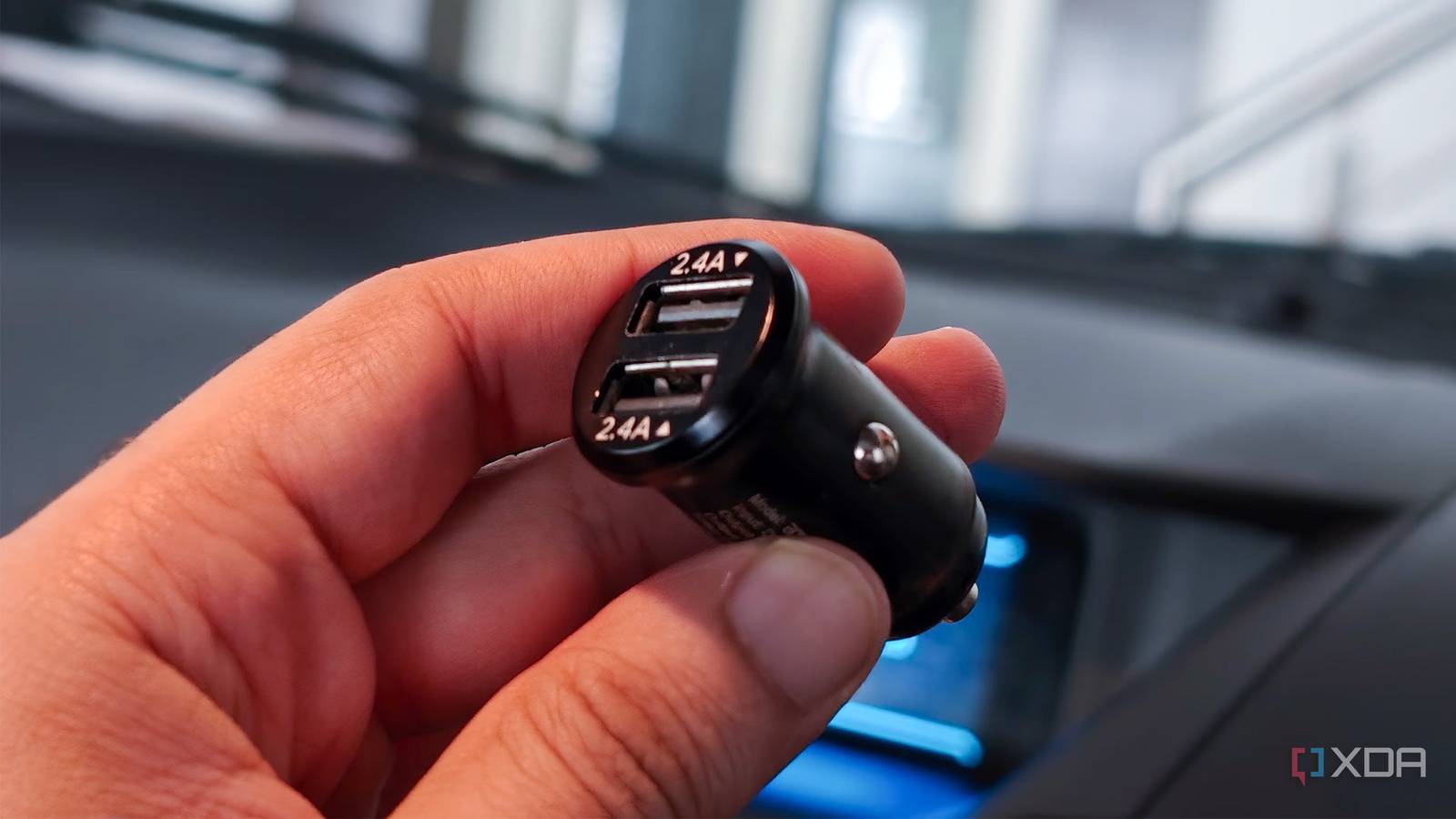
Published Aug 25, 2026, 8:30 AM EDT Dhruv Bhutani has been writing about consumer technology since 2008, offering deep insights into the personal technology landscape through features and opinion pieces. He writes for XDA-Developers, where he focuses on topics like productivity, networking, self-hosting, and more. Over the years, his work has also appeared in leading publications such as Android Police, Android Authority, CNET, PCMag, and more. Outside of his professional work, Dhruv is an avid fan of horror media spanning films and literature, enjoys fitness activities, collects vinyl records, and plays the guitar. My car has plenty of USB ports, but ironically, the USB port is not what I use most days. Instead, I more often than not find myself reaching for the 12V socket in my car. Sounds surprising? Trust me, I was astonished too. However, the reason is simple. For one, my car's USB port just doesn't charge fast enough to keep up with my phone's demands while I'm using it for navigation, streaming, and cellular data. But more than that, the 12V socket in the car unlocks a whole range of possibilities for running things from the car's electrical system. And that difference becomes immediately obvious when I actually need to use accessories. Instead of working around the limitations of the USB port, I can plug in my device straight to the 12V socket and get on with my day. It's brilliant. The 12V socket is my power outlet on the road Much more power than a USB port can provide Look, I've talked about using my car's 12V socket before. It's an indispensable tool for eking out more power for my phone than the USB socket can provide. I use it with a USB charger that can top up my phone significantly faster than the car's built-in socket. But that's only part of the story. That 12V socket enables the use of accessories like car inverters. For the last decade or so, this is one accessory I've had in my car no matter what. Be it long road trips or just a jaunt across the city for a meeting. A car inverter lets me charge up every single device or accessory that I have. I've got an old Belkin inverter rated for 200W. Modern inverters can go much further than that, but even the 200W inverter is more than capable of charging a powerful MacBook Pro straight from your car's 12V socket. And you know what? I have used that functionality more times than I can count. But a car inverter is just one example. Low tire pressure when you're out on the expressway with no rest stop in sight is something nobody wants to deal with. Neither did I. But what could've turned into a disaster was a situation easily solved with my 12V tire inflator. I just pulled it out of the trunk, connected it to the 12V socket, and started filling up. Yes, I'm aware that battery-powered tire inflators are the new news. However, that's another battery that I need to top up and keep an eye on. That said, if you do find yourself in a situation where your battery-powered tire inflator is low on charge, the 12V socket is what you'll want to turn to again. The fact is that these are the kind of high-powered tasks a 12V socket was always designed for. It can tap into your car's high-power bus and give you way more juice than a USB port ever could. The 12V socket is more than just a charging port From kettles to car vacuums, there are plenty of car accessories worth picking up Elsewhere, I use that same 12V socket to power up my dashcam as well. I'm aware that dashcams don't consume much power. But I didn't want to use up my car's USB port for an always-on gadget. I use the car's USB port for wired Android Auto if I'm facing connectivity issues. Switching the dashcam to the 12V socket means I get an extra USB port free for pairing up straight with the car's infotainment system. Looking to charge multiple devices simultaneously at full speed? That's another use case easily served by the 12V socket. My second car is an older model without built-in Android Auto. Nor does it have a high-power USB port. So, I've just plugged a split USB charger into the 12V socket that can power two phones or my phone and a dashcam simultaneously at a much faster rate. Look, if you want to get inventive, there's no dearth of accessories to use with that one magical socket in your car. Car vacuum cleaner to pick up all the crumbs after your last McDonald's drive-through? No hassle. I've even used a car kettle to boil up water and make some instant noodles while out car camping. Is it something I need every day? Of course, not. But I sure do love the flexibility. That said, there's one thing worth paying attention to. A 12V socket and a combination of inverters or gadgets don't mean you can plug in absolutely anything to the car's electrical system. It's best to check the manufacturer-provided safe rating to know just how hard you can push the system. If you're running high-powered accessories, it's not a bad idea to keep the engine running either. Prolonged use can drain the car's battery, blow a fuse, or even damage a circuit. It's a very flexible system, but it's a good idea to exercise moderation. Why I still use the 12V socket in my car I wouldn't go so far as to say that I've ditched my car's USB port entirely. I haven't, and the USB port certainly has its place. Be it for smaller top-ups or wired Android Auto, it gets decent use. But when I need to power something that needs a bit more juice, or something that the USB can't handle at all, there's no replacement for the 12V socket. Dewalt Car Inverter Dewalt's car inverter supports 140W charging through its full-size AC socket while adding an extra USB port to the mix.
Your car's 12V socket is better than its USB port for one specific reason
Full Article
Original Source
Read the full article at Xda-developers →KhanList aggregates and links to publicly available news content. We do not host full articles from third-party sources. Always verify important information with original sources.