
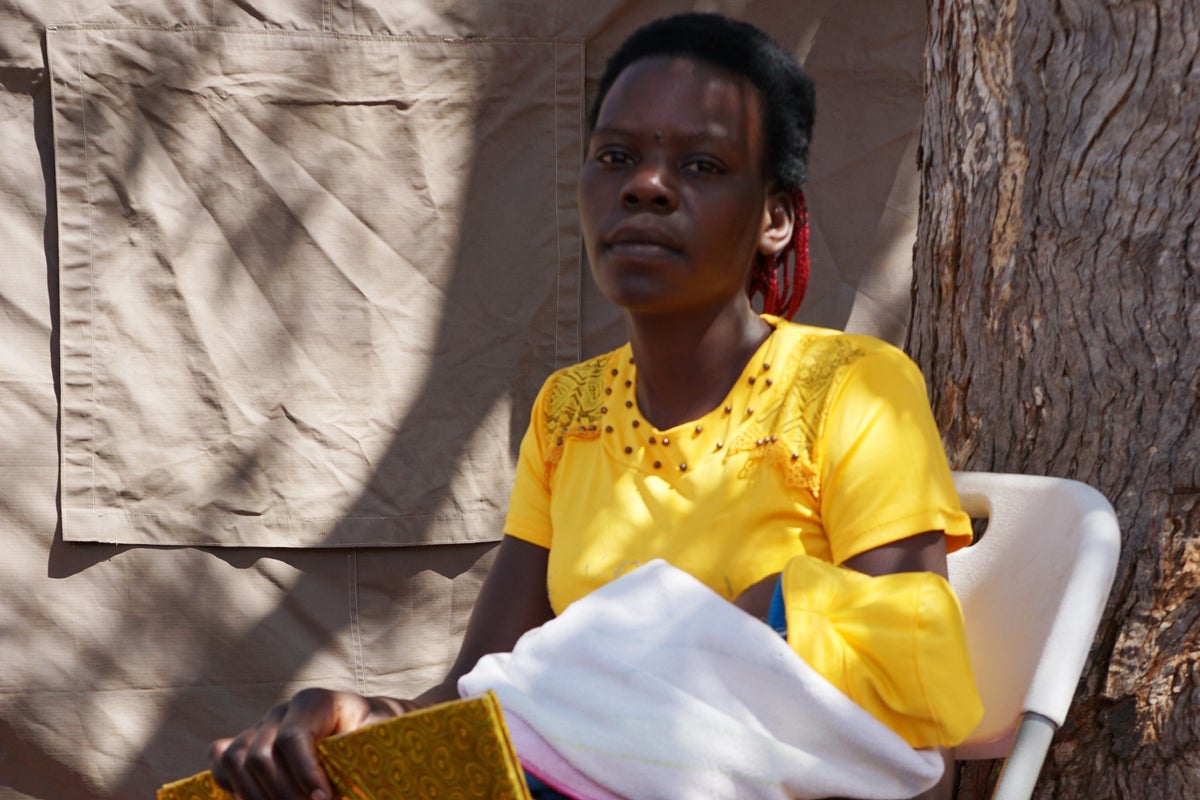
It may only be the beginning of the dry season in Zimbabwe, but the midday sun is still brutally hot as Reason Muchegwa, a nurse from the local government-run clinic, sits on a repurposed leather saddle. He is speaking to 19-year-old Ruth, who holds the second child she has given birth to in the last 14 months in her arms. Muchegwa is trying to convince the teenager why it would be sensible for her to have a long-acting contraceptive implant inserted to give her much-needed rest before another pregnancy. Although 10 months apart in age, Ruth’s two babies appear similar in size and weight and she is visibly exhausted from trying to breastfeed them both. Ruth lives with her husband in a modest homestead in Matabeleland North, one of Zimbabwe’s poorest and least developed provinces where low rainfall, poor soils and extreme heat make daily life a battle. Despite taking oral contraceptive pills after the birth of her first child, Ruth explains she must have accidentally missed a dose because she soon became pregnant again. Desperate not to have another child, Ruth tried unsuccessfully to end the pregnancy herself. Abortion is only legal in very limited circumstances in Zimbabwe, including threats to the woman’s life, with harsh criminal penalties for those who break the law.When she then tried to seek “post-abortion care” at the clinic where Muchegwa works, more than 15km away, a trained nurse wasn’t available and she was forced to continue the pregnancy. “We are no longer giving post-abortive care because of interruptions to the [family planning] services”, Muchegwa explains,“so some of them end up doing it [abortions] themselves, which is unsafe and can cause death and other complications in the community”. A session with Population Services Zimbabwe (Phoebe Davis)But Ruth is lucky. The country’s only family planning outreach programme has set up camp for the afternoon only a couple of kilometres down the road. The service is provided by Population Services Zimbabwe (PSZ), an affiliate of the international organisation MSI Reproductive Choices.More than 30 women from the community have gathered in the limited shade of a large tree to receive free contraceptives and sexual and reproductive healthcare advice from the PSZ team. After speaking with the nurses, Ruth agrees to have the implant inserted into her arm, which will be 99 per cent effective at preventing pregnancy for up to five years. But following sweeping cuts to international aid for sexual and reproductive healthcare in Africa, The Independent has learned this vital outreach programme is now at risk of shutting down, potentially leaving hundreds of thousands of women in the hardest-to-reach regions of Zimbabwe without access to free contraception.Frontline healthcare workers in the country have also warned that funding cuts to the programme are already “drastically reversing” a decade of progress in reducing teenage pregnancies, unsafe abortions, malnutrition and maternal mortality. In January 2025, following President Trump’s re-election, and his decision to effectively shutter United States Agency for International Development (USAID), MSI Reproductive Choices lost $9 million (£6.8m) in funding from for contraception and sexual health services in Zimbabwe, the largest funding cut the organisation experienced in any of the 36 countries in which it operates.According to PSZ, that funding would have supported 1.3 million women and girls with free contraception and helped avert around 1,400 maternal deaths in the country. Workers with Population Services Zimbabwe (Phoebe Davis)Then, in December 2025, the organisation learned it would lose an additional $4 million grant from Sweden’s international aid body, SIDA, before the end of the year, as the country redirected spending towards the war in Ukraine and domestic priorities.For 27-year-old Salom, having access to the family planning services provided by PSZ meant she could have time off from childcare and work to provide for herself. “I was also able to go and look for other work, which can help my family”, she explains. Following the USAID cuts, PSZ was forced to cut the number of outreach teams from eleven to eight. At the same time, they have seen an increase in demand from women as other family planning services funded by the United States have closed entirely. Now, with Sweden cutting its aid, only five of PSZ’s outreach teams remain operational. A spokesman for the US State Department said: “The Department of State is defining the next phase of US foreign assistance in a way that prioritizes greater efficiency, transparency, country self-reliance, and American innovation, and is an integrated part of the Department’s broader America First foreign policy. Our focus is on implementing life-saving care, including in HIV/AIDS, tuberculosis, malaria, and maternal and child health, through new, landmark bilateral global health Memoranda of Understanding (MOUs).In 2024 and 2025, the Matabeleland North outreach team, made up of four people, managed to see more than 7,000 clients annually. By July 2026, they had only reached 586 clients. A decline which PSZ says reflects “the operational challenges associated with reduced funding”. The interruption to the outreach visits meant Salom ran out of contraceptives before the team could return again to her village. Like Ruth, she also tried and failed to seek post-abortion care at the local clinic and is now pregnant with her second child. Family planning clinics also provide maternal health care which is at risk with USAID cuts in Zimbabwe (Bel Trew/The Independent)“We really need help in this community, especially with family planning services. We are poor and don't have enough resources to care for the children”, she says, while comforting her toddler. Sindisiwe Mpofu, 47, a nurse provider with the Matabeleland North PSZ outreach team since 2018, says they are now “overwhelmed” as staff. Her biggest concern in this district is an increase in teenage pregnancies, which she says could lead to more girls suffering from complications in childbirth and being forced to leave education early. “With teenage pregnancy, even if they go to the clinics, they are not given adequate information… We are adolescent-friendly. When they come to us, we don't judge them”, Mpofu says. “So due to the fact that we are taking more time in between providing these services, they get pregnant. Then they don't want those pregnancies, so they do backyard abortions, which are very risky”“You will find a 16-year-old girl having had an unsafe abortion, going to the clinic for post abortion care, and it's already too late for them. You find that their uteruses are being removed”.Research conducted by the Ministry of Health and Child Care (MoHCC) and the Guttmacher Institute in 2016-17 estimated that 65,000 to 80,000 induced abortions occur annually in Zimbabwe, with approximately 25,000 women treated each year for complications resulting from unsafe abortions. The MoHCC also estimated that illegal abortions caused 16 per cent of maternal deaths, with the majority of the illegal abortions being obtained by adolescent girls in rural areas.“Unwanted pregnancies and abortion are the third cause of maternal mortality [in Zimbabwe]. But we were changing it. It was going down. Even the total maternal mortality ratio was going down”, says Engeline Mawere, Operations Director for PSZ, who was also involved in the 2016 MoHCC study.“But with this fluid donor environment, it might be even worse now. Not only that, the gains that had been made, they are being reversed - and drastically”, she says. “Imagine if we hadn't gone to her [Ruth’s] house. Maybe she would have missed the service. That’s the situation we have right now on the ground”. This article has been produced as part of The Independent’s Rethinking Global Aid project
Young women pay a terrible price as aid cuts strip Zimbabwe of vital contraceptives
Full Article
Original Source
Read the full article at Independent →KhanList aggregates and links to publicly available news content. We do not host full articles from third-party sources. Always verify important information with original sources.