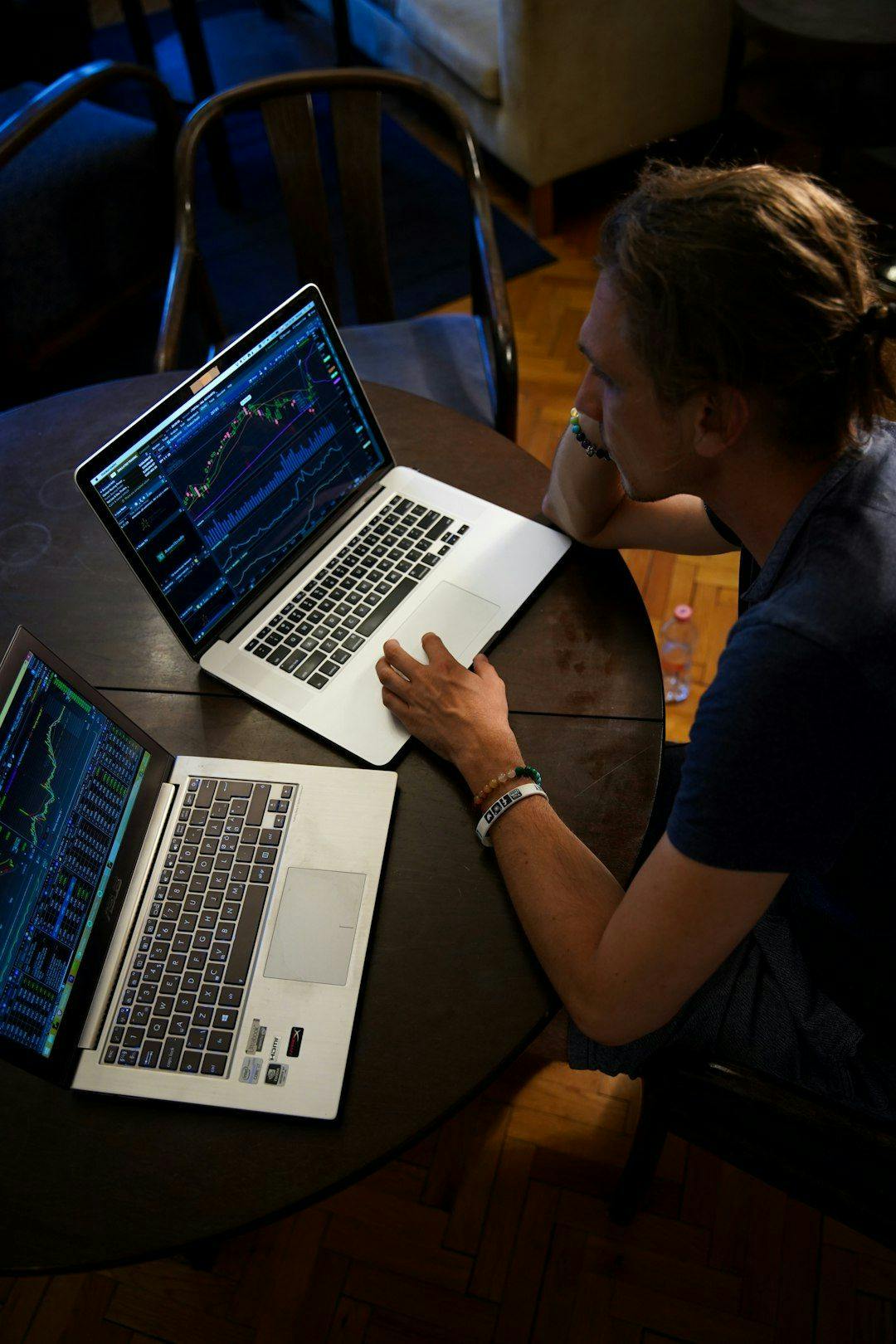
A latency arbitrage race on the London Stock Exchange lasts between five and ten millionths of a second. That's the entire event. A signal fires, a handful of firms sprint for the same stale quote, one of them wins, and the whole thing is over before a human being registers that anything happened. Your reaction time is roughly 250 milliseconds. That's 250,000 microseconds. You're about thirty thousand times too slow to be in that race, and nobody ever invited you. Matteo Aquilina, Eric Budish and Peter O'Neill got hold of message-level data from the London Stock Exchange — not just the trades that printed, but every order and cancellation, so they could see the losers of each race and not only the winner. These races happen about once a minute per stock. They account for roughly 20% of all trading volume. Six firms win more than 80% of them. The profit on each one is tiny: 0.42 basis points of volume. Scale that across global equities and it's about $5 billion a year, and it makes up 33% of the effective spread you pay every time you cross it. Crypto isn't a different world here. It's just a younger one. Estimates of how much crypto volume is automated run from 65% to 80% depending on who's counting and what they choose to count, and the direction of travel is obvious to anyone who's watched an order book at 3am. A market maker colocated in the same data center as the matching engine round-trips an order in 50 to 200 microseconds. On home internet, you're at 50 to 200 milliseconds. Same numbers. Different unit. A factor of a thousand. So when you refresh the chart and see a wick you didn't catch, that wasn't a missed opportunity. It was a private conversation between machines that finished before your screen finished drawing it. Here's the mistake I made for the better part of two years, and I see it everywhere. People find out about the speed gap and respond by trying to close it. Faster charts. One-minute candles. Price alerts on the phone. Sitting at the desk through the US open so they don't miss the move. That's precisely backwards. You've identified the one arena where your disadvantage is measured in orders of magnitude, and your response is to compete harder in it. What almost nobody points out is that the firms winning those races aren't predicting anything. Latency arbitrage isn't a view on where Bitcoin trades next month. It's a mechanical sprint to reach a quote that hasn't updated yet — closer to a plumbing business than an opinion business. Those six firms have no idea whether BTC ends the year higher. They have no reason to care. Which leaves an entire category of question sitting there unclaimed. Is this a trend or is it chop? Should I still be in this position three weeks from now? Is my size right for how much this thing actually moves? Nobody with a microwave tower is competing with you on those. A three-week move isn't decided in five microseconds — it gets decided by flows and positioning that unfold across days, on a clock where being a hundred milliseconds late costs you precisely nothing. I'd go further. On that timeframe, speed is actively harmful. Every fast decision you make is a decision made under time pressure, and time pressure is where your worst instincts live. So the practical move is to stop trying to be faster and pick a timeframe where speed never enters the equation. Then automate the thing that's genuinely costing you money — which isn't your reaction time, it's your consistency. A system running on a weekly trend signal doesn't need a microsecond of edge. What it needs is for the rule you wrote on a calm Tuesday to still execute on a panicked Sunday, when you'd have talked yourself out of it. That's the whole value, and it has nothing to do with hardware. You will never win the microsecond. You can own the month, and almost nobody is fighting you for it. If you're competing on speed right now and losing, ask whether your strategy ever needed it in the first place.
You’ll Never Win the Microsecond. Own the Month Instead
Full Article
Original Source
Read the full article at Hackernoon →KhanList aggregates and links to publicly available news content. We do not host full articles from third-party sources. Always verify important information with original sources.