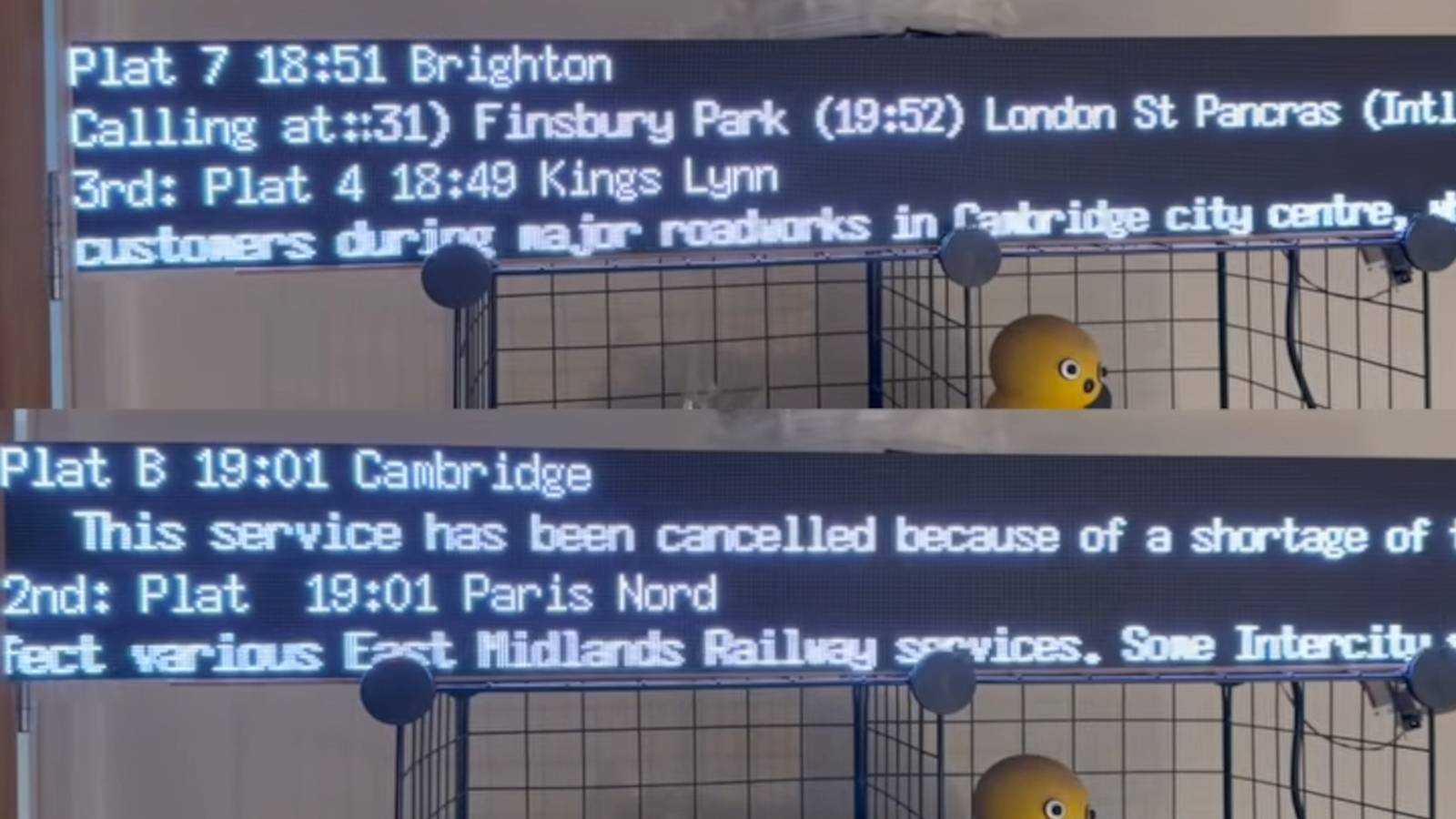
Credit: Jon Morris Smith Published Jul 24, 2026, 2:49 AM EDT Simon is a Computer Science BSc graduate who has been writing about technology since 2014, and using Windows machines since 3.1. After working for an indie game studio and acting as the family's go-to technician for all computer issues, he found his passion for writing and decided to use his skill set to write about all things tech. Since beginning his writing career, he has written for many different publications such as WorldStart, Listverse, and MakeTechEasier. However, after finding his home at MakeUseOf in February 2019, he would eventually move on to its sister site, XDA, to bring the latest and greatest in Windows, Linux, and DIY electronics. Sign in to your XDA account Summary Bring the mesmerizing station departures board home with a Raspberry Pi and RGB matrix. It can pull live departures from Rail Data Marketplace or local transit APIs into the Pi. The full build guide and code are available on the maker's website and GitHub. There's something about train departure boards that can be mesmerizing while you're waiting for your train. But why not bring that experience outside the station and make your own board at home? Well, one smart tinkerer hooked up a Pi to their train network's live departure times, and honestly, I could watch it all day. This Raspberry Pi project turns your SBC into a departures board For the train lovers out there As spotted by Hackaday, Jon Morris Smith, much like myself, loves the humble departure board at their local station. It was to the point where he wanted one in his own home, and one day, he pulled up his sleeves and got to work: Over the years I’ve looked at flip-dot displays and various other types and saw LED dot-matrix displays become available for purchase. These look amazing… however the price is offputting, as is the monthly-subscription some require. My thought – “How hard can it be”. And here we are. To get the job done, Jon Morris Smith gathered a few 128x64 pixel color modules with a HUB75E interface, a Raspberry Pi 4 with at least 1GB of memory, either an Adafruit RGB Matrix Bonnet or an Electrodragon 3-port RGB Matrix board, and a 5V power supply. Once everything was set up, he grabbed the departure data for his train network and fed it into the Pi. Jon Morris Smith is from the UK, so he grabbed data from the Rail Data Marketplace; however, if your local transit system broadcasts its own departures over an API, you could tweak the code to get it working for your train network. If you'd like to learn how to build your own, you can either head over to Jon Morris Smith's website, Another Partial Success, or check out the project's GitHub repo.
You, too, can build this live train departures board with a Raspberry Pi
Full Article
Original Source
Read the full article at Xda-developers →KhanList aggregates and links to publicly available news content. We do not host full articles from third-party sources. Always verify important information with original sources.