
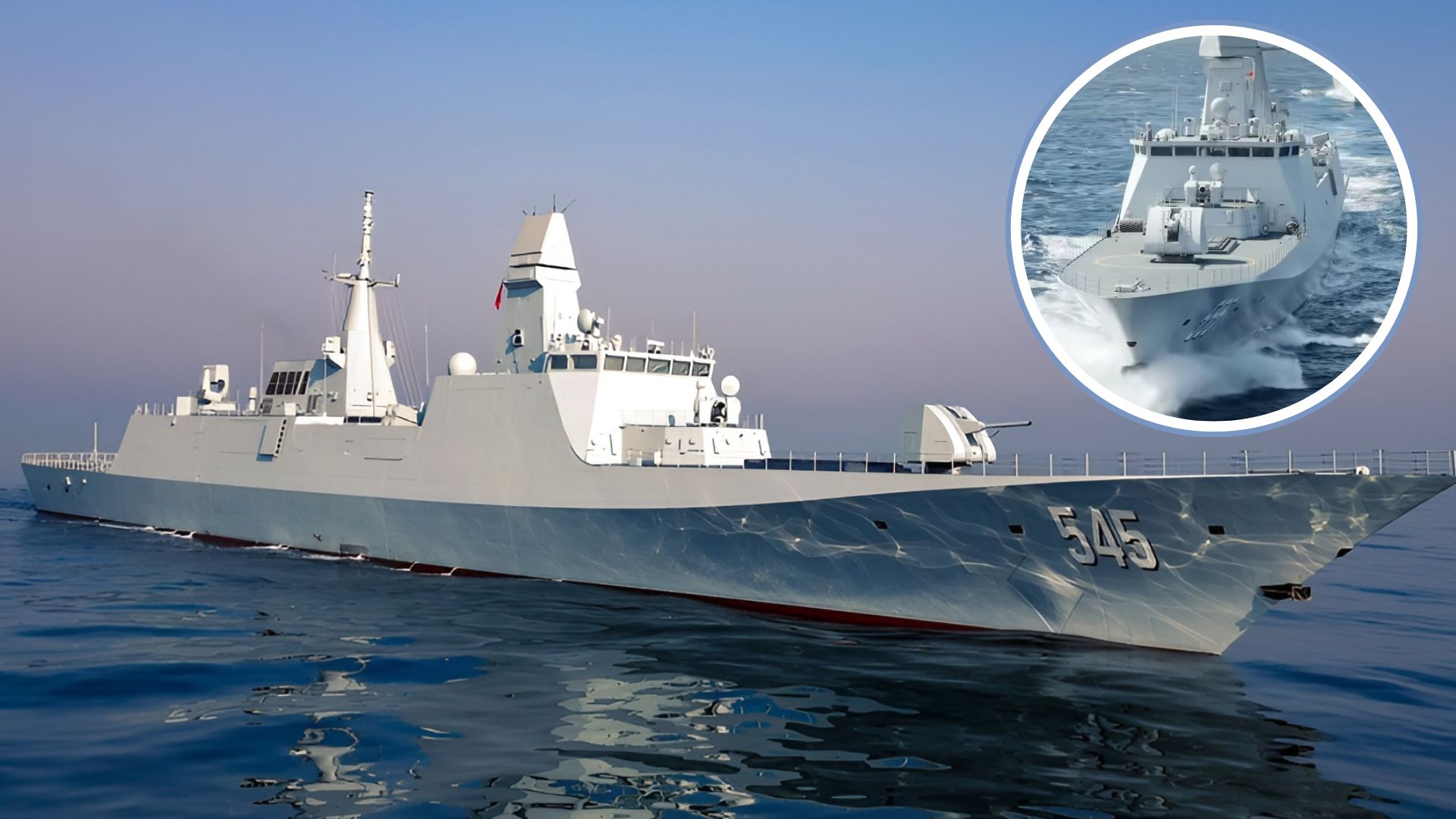
China may be preparing a more heavily armed version of its Type 054B frigate, potentially giving the warship 50 percent more missile launch capacity than the first ships in the class. The change would raise the vessel’s vertical launch system capacity from 32 cells to as many as 48. That could give the frigate greater staying power during missile attacks and more flexibility when carrying different weapons. Satellite imagery from US intelligence company Vantor provides the clearest indication of the possible upgrade. A June 28 image shows a Type 054B being fitted out at Shanghai’s Hudong Zhonghua shipyard with a different VLS arrangement near its bow. Larger missile battery The first two Type 054B frigates have four eight-cell VLS units. The unfinished ship appears to have six units, suggesting a possible total of 48 cells if the same configuration applies. Song Zhongping, a Chinese military commentator and former PLA instructor, said the increase would address a potential limitation in the existing design. He argued that 32 cells could restrict the weapons available during sustained combat. A larger battery would give the frigate more opportunities to engage incoming threats before exhausting its ready ammunition. It could also allow commanders to balance air-defense weapons against anti-submarine systems more effectively. The Type 054B’s VLS supports the HHQ-16 surface-to-air missile and the rocket-assisted Yu-8 anti-submarine weapon. More cells would therefore increase the number of weapons the ship can carry for different missions. The imagery does not establish the final weapon load, however. China has not publicly confirmed that the unfinished frigate will receive a 48-cell system. Designed for wider deployments The Type 054B is a larger successor to China’s Type 054A frigate, with an estimated displacement of about 5,000 tonnes. Its armament includes eight anti-ship missiles and a 100mm main gun, while its expanded flight deck supports the Z-20 naval helicopter. The ship also incorporates changes intended to improve survivability and detection. Chinese state media has highlighted automated air-defense functions, including artificial intelligence algorithms designed to reduce potential gaps in coverage. A redesigned hull reduces the ship’s radar signature compared with older frigates. Those changes support a role that increasingly extends beyond China’s immediate coastal waters. The first two Type 054Bs, Luohe and Qinzhou, entered service last year. Luohe joined the Liaoning aircraft carrier during live-fire exercises in the western Pacific in May. Qinzhou later took part in naval and air patrols around the disputed Scarborough Shoal. The deployments demonstrate the class’s growing role in China’s operations across contested and distant waters. More firepower The additional launch cells could matter most when Type 054Bs operate with smaller task groups or without major destroyer support. Frigates often provide escort and screening duties while larger warships handle heavier offensive missions. Song said the Type 054B needs enough ammunition to remain effective during both group operations and independent deployments. More launch capacity would extend that combat endurance without requiring a much larger hull. For the US Navy, the possible redesign offers another example of China incrementally increasing the firepower of its surface fleet. The Type 054B remains smaller than China’s major destroyers, but a larger missile battery could make it a more capable escort. Adding 16 cells would amount to a substantial weapons increase within essentially the same frigate concept. If confirmed, the change could make later Type 054Bs noticeably more capable than the first two ships. Get the latest in engineering, tech, space & science - delivered daily to your inbox.Aamir is a seasoned tech journalist with experience at Exhibit Magazine, Republic World, and PR Newswire. With a deep love for all things tech and science, he has spent years decoding the latest innovations and exploring how they shape industries, lifestyles, and the future of humanity.
China may have quietly supercharged its new naval frigate with 50% more missiles
Full Article
Original Source
Read the full article at Interestingengineering →KhanList aggregates and links to publicly available news content. We do not host full articles from third-party sources. Always verify important information with original sources.