
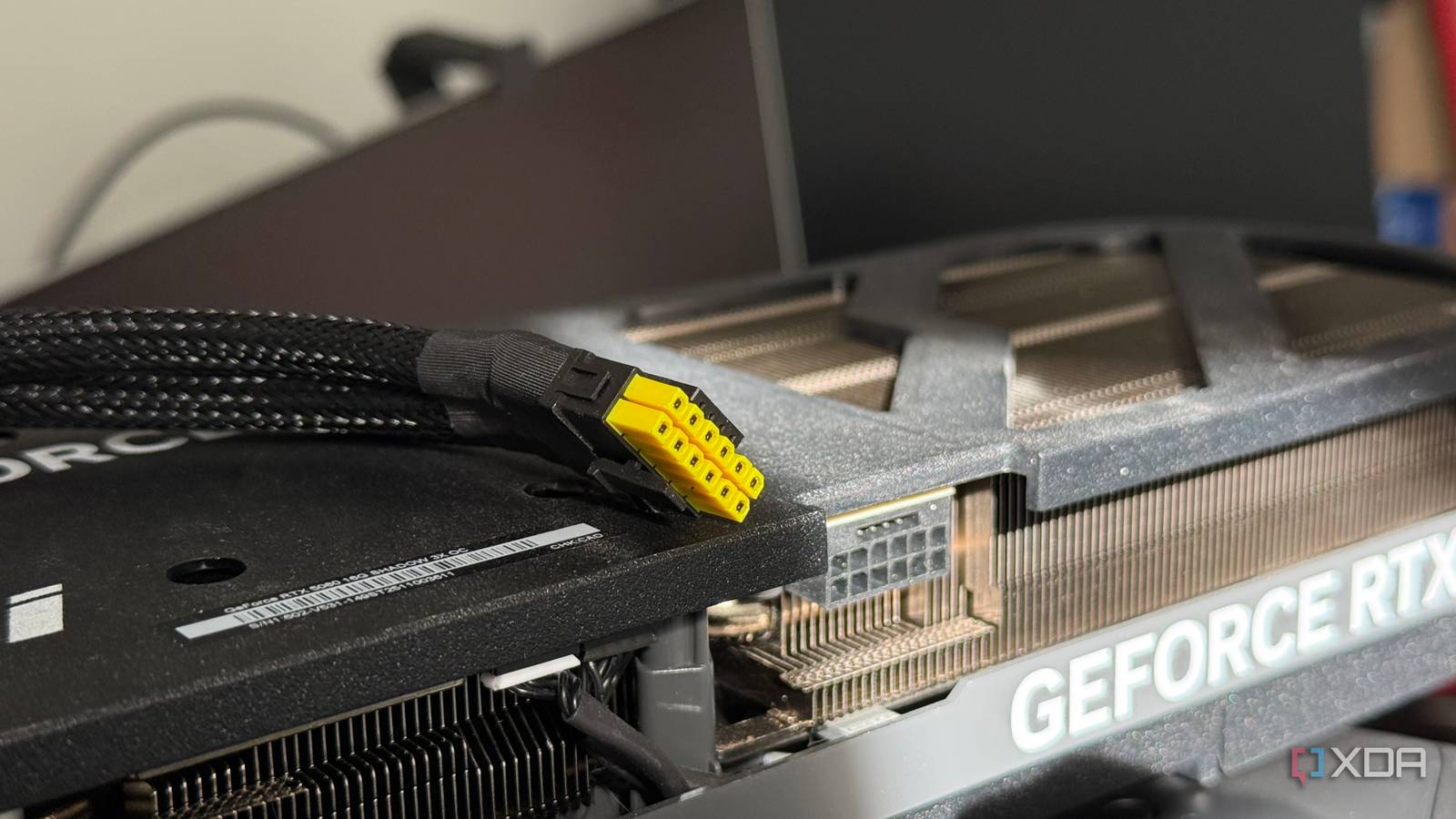
Published Nov 10, 2026, 4:30 PM EST His love of PCs and their components was born out of trying to squeeze every ounce of performance out of the family computer. Tinkering with his own build at age 10 turned into building PCs for friends and family, fostering a passion that would ultimately take shape as a career path. Besides being the first call for tech support for those close to him, Ty is a computer science student, with his focus being cloud computing and networking. He also competed in semi-pro Counter-Strike for 8 years, making him intimately familiar with everything to do with peripherals. Graphics cards are more than just the big silicon GPU die on them, and while that makes up a huge part of the performance, there are lots of other factors that determine how far your card can go. Somewhere on your card lives a little flash chip that holds the VBIOS, and for the vast majority of GPU owners, this goes untouched, and that's mostly because of the inherent risk of flashing it and potentially bricking the card. When the reward is a few more points in a benchmark score, that risk-reward ratio doesn't make much sense, but with the help of some clever modders, RTX 50 series cards can now be loaded with a modified VBIOS without the need to flash anything. Skipping the flash takes the classic bricked-card scenario off the table, but the limits being edited exist to protect the hardware, and the method only works for as long as NVIDIA’s drivers allow it. What a VBIOS controls, and why people want to change it at all It's like your motherboard's BIOS, only just for the GPU Every graphics card carries firmware known as the VBIOS, and it's responsible for dictating how your card behaves. It sets the card's ceilings: power draw, voltage, clocks, fan speed, and other numbers live there. Board partners ship different values, which is a big reason a premium model can run a higher power target than a budget model with the same GPU. Some premium cards are known to ship multiple VBIOS options on the same card, allowing enthusiast users to use a physical switch to tap into a version of the firmware with even higher limits. Familiar tuning apps like MSI Afterburner, EVGA Precision X1, or nvidia-smi on Linux, all work inside of those limits set by the VBIOS. They can't push the ceiling any higher than the firmware allows. Editing the VBIOS moves the limits themselves, and that cuts both ways. Overclockers want higher ceilings, but plenty of owners want lower floors for quieter, cooler, or more power-efficient machines. Why flashing has progressively become more difficult Nvidia wants to lock things down Since the GeForce 900 series, Nvidia has been signing their firmware and using an on-board security processor to ensure no unauthorized images can be booted on the card. There have been tools released that could bypass the signature cards on older cards, but on anything newer than around the RTX 20-series, the most realistic option was cross-flashing another vendor's VBIOS that's signed, but that, of course, comes with significant risk. How loading without flashing works A breakthrough for overclockers and tinkerers The new approach for modifying the limits on a GPU skips the VBIOS chip entirely. In Windows, the edited image sits in the GPU’s driver settings within the registry, and the driver reads it in place of the chip’s copy when the card starts. On Linux, a loader patches Nvidia’s open-source kernel modules so the GSP, an onboard processor Nvidia GPUs have included since the RTX 20 series, starts the card with the edited image instead. Either way, if the image is rejected, the card falls back to its stock VBIOS. Removing the override returns everything to normal, and that override can also persist across reboots, though a driver update can wipe it. Some settings will always stay out of reach, like memory timings. The tools that enable users to do these softmods have been popping up all over GitHub, but the most complete toolkit comes from a developer known as Panchovix, who built on an earlier override mod done by overclock.net user pantsoftime. It has three parts, all now open source: an editor that changes values in a copy of your own card’s VBIOS, plus separate loaders for Windows and Linux. Editing goes deepest on RTX 50 cards, covering power, voltage, clock, current, and fan settings. RTX 40 and 30 cards are more limited, and RTX 20 support is experimental at this time. The other big name is mVolt+, which made headlines back in August for pushing RTX 50 series cards far beyond their rated power. It, too, now has a BIOS override, which writes the same registry values as Panchovix's Windows loader. Nvidia still controls the cat-and-mouse game Driver updates can break these tools, and they have As you'd expect, none of this is supported by Nvidia, and driver updates have already broken parts of these tools. Not long after mVolt+ unlocked higher power on RTX 50 cards, a driver update made that control black-screen the card, and a later update restricted some of its voltage and current controls, even through the BIOS override. mVolt+ has since found new routes through its own override to restore them, though the situation is very active. From one driver version to the next, there's no guarantee that these tools keep working in their entirety. Who should probably leave this alone The limits within the VBIOS are there for a reason Skipping the flashing part does eliminate the risk of bricking the card due to a bad flash, but it doesn't remove the risk of doing irreversible damage to the card itself. Power, current, and voltage limits protect components like the voltage regulators and the power connector. The 12V-2x6 connector on high-end cards is rated for 600W, and an RTX 5090 is already rated at 575W, which leaves very little headroom for a raised limit at the high-end. Even for cards like the RTX 5080 and under, the limits set by Nvidia are likely as high as made sense to begin with, since the payoff in games is modest. Testing of mVolt+ found small gains from raised power limits on some cards, and lower frame rates when voltage was pinned at its maximum. These tools are primarily going to be for the tinkerers and overclockers that like to drag race their cards in benchmarks, not necessarily those who want a few extra frames while gaming. These tools are still invaluable The real breakthrough is the reversibility that these tools offer. Previously, testing a VBIOS meant having to touch the chip every time you wanted to make a change, and now, it can be edited, tested, and removed without needing to roll the dice every time. The process is safer, but these tweaks are still niche for a reason, and the limits are there to protect the average user who doesn't really need that extra few percent. That's what tools like MSI Afterburner are for, and plenty can be done with those to squeeze more performance out of your card without the risk of hardware damage. ASUS Prime GeForce RTX 5080 OC $1355 $1500 Save $145
You can now run a modified RTX VBIOS without flashing it, but not everyone should
Full Article
Original Source
Read the full article at Xda-developers →KhanList aggregates and links to publicly available news content. We do not host full articles from third-party sources. Always verify important information with original sources.