
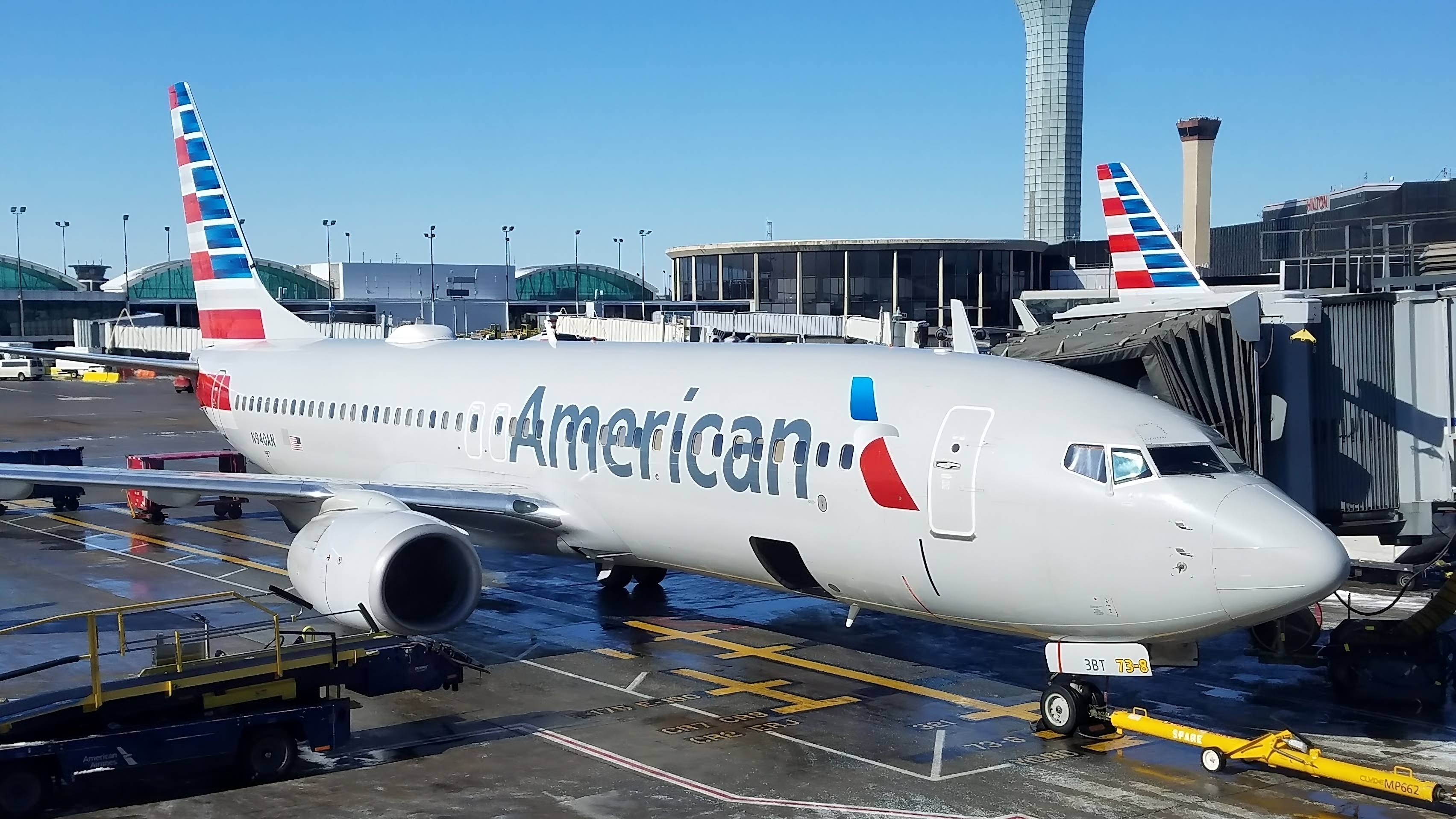
Around midnight Thursday night into Friday morning, August 13 – 14, two American Airlines flights with the same flight number were in air at the same time. They were both near Phoenix. They were both talking to air traffic control on the same frequency. The flight that was landing accepted the clearance that was given to the flight that was taking off. The planes crossed less than a mile apart from each other. American used flight number AA2482 in both directions between Chicago and Phoenix. The flight to Phoenix was 90 minutes late. American used a different aircraft for the flight back to Chicago, so two “American 2482s” were airborne on the same Phoenix frequency. The controller assigned the departing flight 9,000 feet. The arriving flight mistakenly accepted that clearance. Fortunately, the actual departure using that call sign alerted the controller to the error, air traffic control stopped the arrival at 10,000 and stopped the departure at 9,000, and the two planes crossed less than a mile apart horizontally while retaining at least 1,000 feet vertically. So they had the required separation. American Airlines Boeing 737 This wasn’t a near-collision or loss of separation, but it was a serious communications close call. Without the correction, both aircraft could have converged at 9,000 feet. The controller and crews recovered well, and the controller filed a Mandatory Occurrence Report. (HT: One Mile at a Time) There’s an interesting issue here, though, and that’s airlines are running out of flight numbers. It’s such a strange, unexpected reason to have a close call. Airlines use up to four digits for flight numbers. That means they can have up to 9,999 flights (since there’s no flight zero), and no one comes close. American Airlines operates 6,500 – 7,000 flights per day during peak summer periods. Its busiest scheduled day in summer 2026 was July 17, with 6,995 flights. But American Airlines, Delta, and United are running out of flight numbers, and nobody knows what to do about it. The biggest reason for this is codeshares with other airlines. A couple of years ago American’s Senior Vice President of Network Planning Brian Znotins addressed this issue directly in an employee meeting, a recording of which was reviewed at the time by View From The Wing. The airline’s Senior Vice President or Network Planning Brian Znotins laid out the challenge and what they’re doing about it. American actually has more than 9,999 flights that they want to put their flight number on That’s because they have partners where they codeshare. They want to sell American Airlines ‘flights’ from Doha to cities in India and Pakistan, for instance. They want to sell American Airlines flights that are operated by Alaska Airlines. These limits are why American and other airlines assign the same flight number to more than one flight a day, for instance to an ‘out and back’ flight like this Chicago – Phoenix – Chicago flights. ZI wrote a the time two years ago this means needing to do this only with flights that would never both be in the air at the same time, like what happened here. Basically, they deem the technology issue “too great” to solve while working in “systems that originated in the 60s” as Znotins put it. We have two-letter airline codes and we have four-digit flight numbers. You think of this as like a Y2K issue if you remember that. It is immensely difficult to find ways to add another digit to this field, and it’s really only a problem for three airlines in the world. The remaining airlines don’t run into this issue. American 2482 appears to normally be a same-aircraft turn, so conflicting planes in the air with the same callsign wouldn’t ordinarily be an issue. In this case, however, American should have changed the Phoenix – Chicago flight’s identification. The inbound was already airborne as AAL2482 and had been handed through multiple air traffic control facilities. Changing it inflight would have required flight plan and controller-to-controller coordination. The outbound was still at Phoenix and could have been refiled cleanly to something like “American 8248” before pushback. Or, at least, they could have warned the affected sectors that there would be two planes with the same callsign. Air traffic control could even temporarily assign one plane a different callsign. Topics on this page
Yikes: American Airlines Is Running Out Of Flight Numbers — So One Flight 2482 Followed ATC Instructions Meant For Another
Full Article
Original Source
Read the full article at Viewfromthewing →KhanList aggregates and links to publicly available news content. We do not host full articles from third-party sources. Always verify important information with original sources.