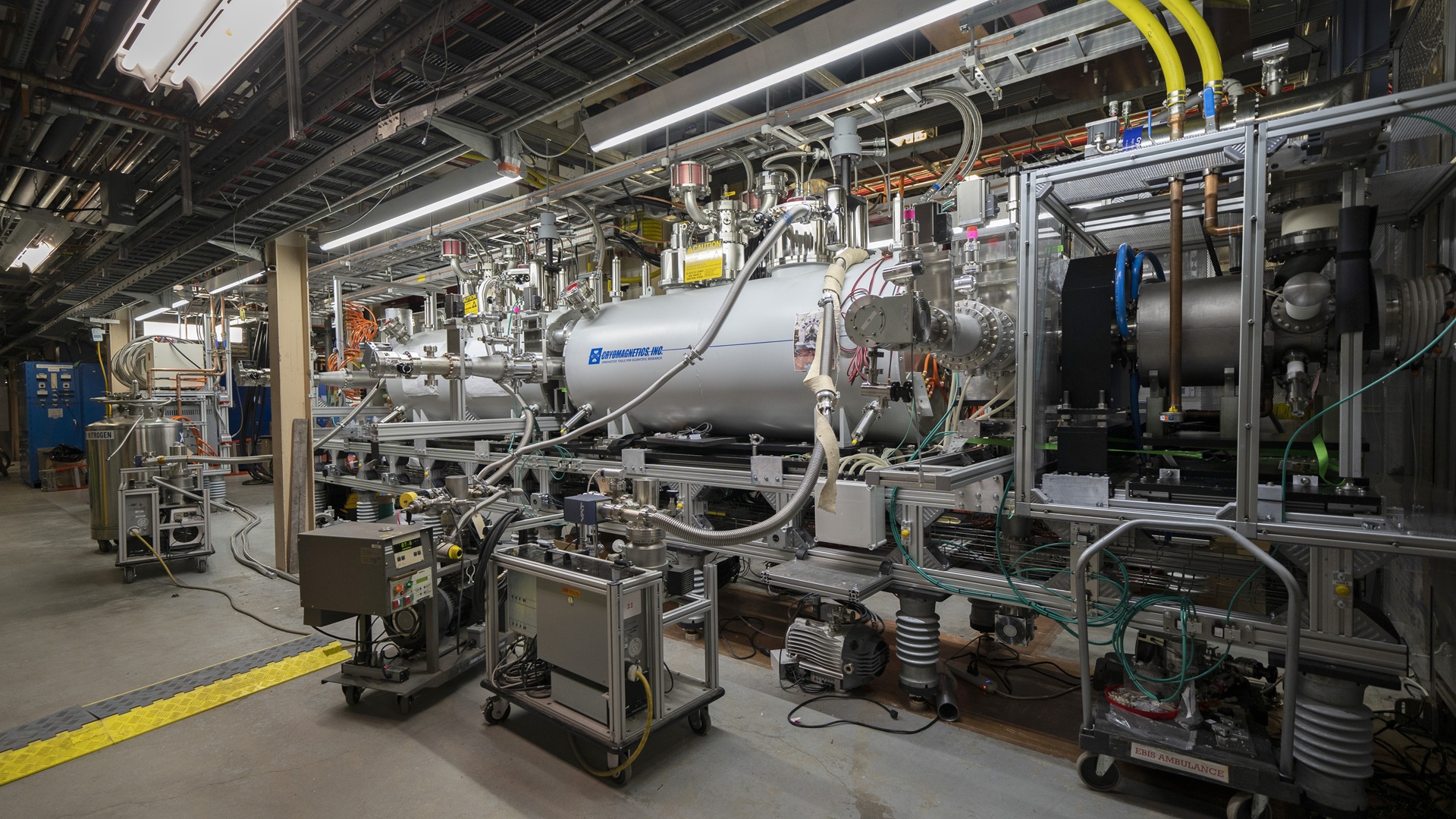
US scientists working on the world’s first polarized electron-ion collider (EIC) that will investigate some of the most fundamental questions in nuclear physics, have expanded their international collaboration with CERN ahead of construction. The EIC will be built at the US Department of Energy’s (DOE) Brookhaven National Laboratory in partnership with the Thomas Jefferson National Accelerator Facility (Jefferson Lab). The site will probe the internal structure of protons, neutrons and atomic nuclei with unprecedented precision. The research team hopes that the measurements will help answer fundamental questions about the building blocks of visible matter. “The CERN community is extremely interested in the EIC’s scientific program,” Luisella Lari, PhD, a senior scientist who has led the EIC project as project manager since 2022, said. The initiative was only recently presented to the international physics community at CERN, where the researchers also explored opportunities for deeper scientific and technical collaboration between major collider programs. Growing interest at CERN At the CERN Colloquium on May 28, Lari presented “The Path to the Electron-Ion Collider.” She provided an overview of the project’s current status, scientific goals, and expected impact. The presentation covered the EIC’s current status, scientific goals, and potential impact. It also introduced the project to scientists working across different fields at CERN. “Physicists look forward to having new and different data to play with. They want the EIC,” Lari stated. According to BNL, the presentation led to discussions about collider operations, future scientific opportunities, and the potential role of artificial intelligence in physics research. At the same time, CERN and the EIC already have a history of working together. Their collaboration includes technical expertise, resource contributions, as well as shared research and development efforts that help advance technologies critical to the future EIC. Probing visible matter The EIC is set to collide polarized electrons with polarized protons and ions. These collisions will be used to examine how fundamental particles and forces produce the properties of protons, neutrons and nuclei. Moreover, the project has already attracted contributions from researchers and engineers at institutions around the world. This makes international collaboration an important part of its development. Earlier in 2026, Lari hosted an EIC Accelerator Collaboration satellite meeting at the 17th International Particle Accelerator Conference. At the event, the experts discussed the collider’s technical progress, accelerator design, and opportunities for further international cooperation. The EIC was also featured at CERN’s Future Circular Collider (FCC) Week 2026. The team examined the technical similarities between the two collider programs and identified challenges that could benefit from shared research and development. The FCC is a proposed future collider program at CERN. In comparison, the EIC is being developed specifically to explore the structure of nuclear matter. Despite their different scientific objectives, both initiatives face complex accelerator engineering challenges.Lari noted that maintaining the international engagement will be important both for maximizing the facility’s scientific impact and preparing researchers to use the collider once it becomes operational. “These talks to the physics communities are important,” she concluded in a press release. “They maintain interest in the EIC.”Get the latest in engineering, tech, space & science - delivered daily to your inbox.Based in Skopje, North Macedonia. Her work has appeared in Daily Mail, Mirror, Daily Star, Yahoo, NationalWorld, Newsweek, Press Gazette and others. She covers stories on batteries, wind energy, sustainable shipping and new discoveries. When she's not chasing the next big science story, she's traveling, exploring new cultures, or enjoying good food with even better wine.
World’s first polarized electron-ion collider taps CERN expertise for future tech
Full Article
Original Source
Read the full article at Interestingengineering →KhanList aggregates and links to publicly available news content. We do not host full articles from third-party sources. Always verify important information with original sources.