
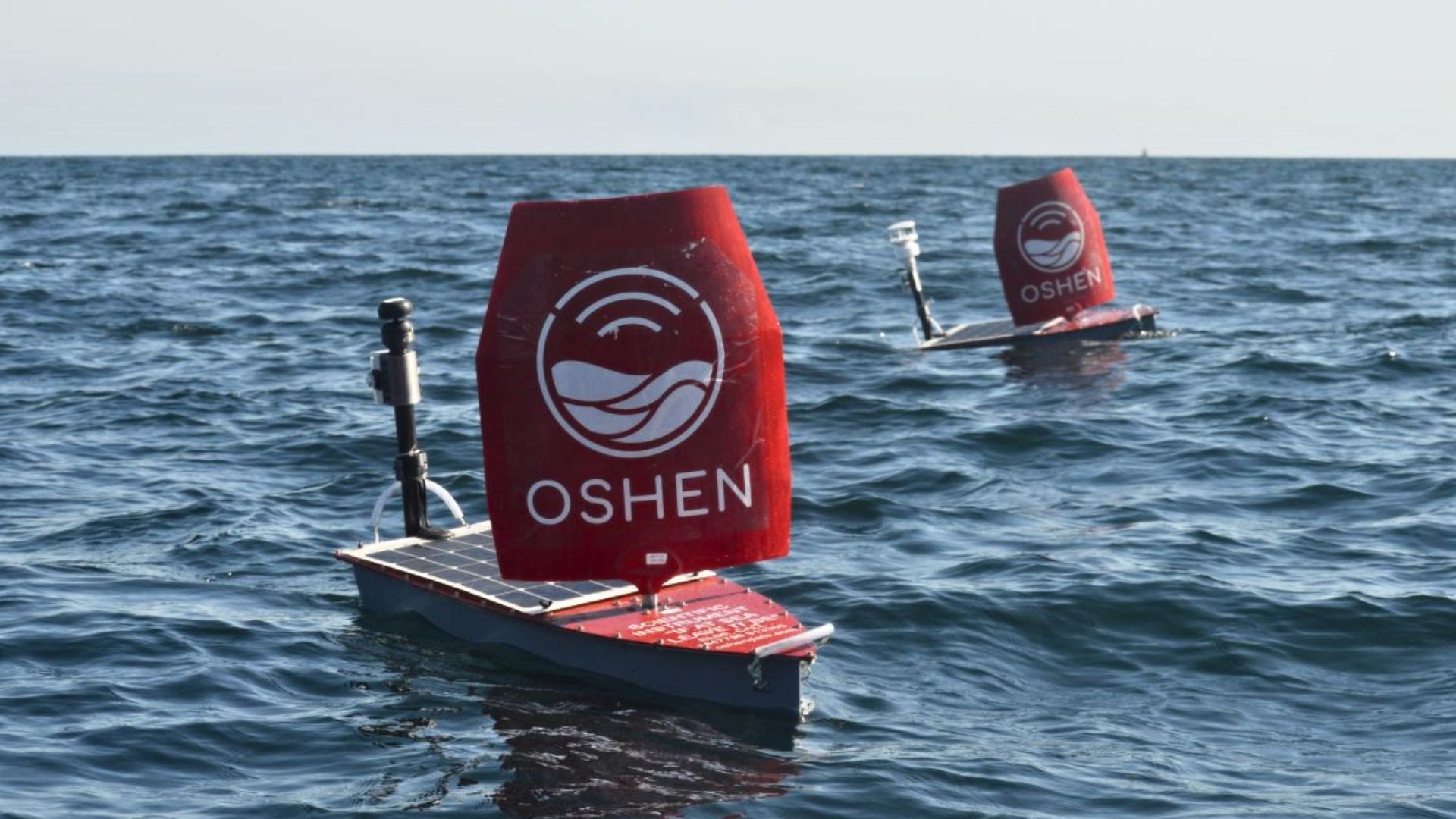
A four-foot autonomous sailboat has completed a 3,555-mile Atlantic crossing, becoming the first vessel to win the long-running Microtransat Challenge after more than 30 previous attempts. The Oshen C-Star PC13 departed Gran Canaria on May 7 and reached Barbados 127 days later. During the voyage, the tiny uncrewed vessel had to navigate busy shipping routes, changing weather, and waves reaching around 30 feet, including conditions associated with Tropical Storm Dolly. The achievement marks the first successful completion of the Microtransat, an autonomous sailing challenge established in 2010 to push the development of robotic boats. The competition’s rules require vessels to cross the Atlantic without outside assistance or human intervention in their decision-making once they are underway. A tiny boat with a long-distance mission The PC13 is designed around a deceptively simple idea: let the wind provide most of the propulsion while software handles navigation. Before departure, the boat’s waypoints were programmed into its onboard computer. From there, its autonomous navigation system determined how to reach them by continuously assessing conditions, including wind direction and speed, currents, and available battery power. The boat has a solar-powered thruster that can help it maneuver in light winds, but Microtransat rules prohibited its use during the crossing. That left the PC13 largely dependent on its sail and its ability to make good navigation decisions. According to reports, the journey was Oshen’s third attempt. Its 2023 attempt ended after about 20 days and just 6.2 miles. A second attempt in 2024 lasted 277 days and reached roughly three-quarters of the way across the Atlantic before heavy seas destroyed the sail. Those failures helped the company refine the design for longer deployments. During this year’s crossing, the PC13 developed erratic steering around the halfway point, which Oshen believes may have been caused by excessive friction in the rudder. The vessel eventually corrected itself and continued toward the Caribbean. From racing robot to ocean sensor The crossing is ultimately a demonstration of endurance rather than speed. Oshen’s C-Star vessels are intended primarily as autonomous sensor platforms that can operate in places where deploying and maintaining conventional monitoring equipment is difficult. The boats can collect measurements including sea-surface temperature, air temperature, atmospheric pressure, humidity, salinity and water density. That could make fleets of relatively inexpensive autonomous vessels useful for building persistent datasets across parts of the ocean that are poorly monitored today. Oshen has already demonstrated the concept in extreme conditions. In 2025, one of its C-Stars was deployed into Hurricane Humberto near the U.S. Virgin Islands for the National Oceanic and Atmospheric Administration and survived for hours inside the storm’s eyewall while transmitting environmental data. The company now wants to scale from individual vessels to autonomous constellations. It says C-Stars are already being used in the Caribbean for hurricane monitoring and that it plans a larger fleet for North Atlantic climate monitoring. That approach could eventually turn autonomous boats into something resembling a distributed network of floating weather stations, gathering measurements continuously without requiring a crewed vessel to remain at sea. The same endurance could have applications beyond environmental science. Oshen has said future C-Stars could carry hydrophones to listen for underwater activity. At the same time, their autonomous operation and ability to remain at sea could help monitor illegal fishing or vessels attempting to operate without transmitting their positions. The Microtransat achievement represents more than a tiny boat completing a very long journey. It shows that autonomous surface vessels can now combine renewable propulsion, onboard sensing, and navigation software to operate independently for months at a time. For ocean researchers, that could mean more persistent data. For maritime operators, it could eventually mean a much larger network of small robotic vessels watching over parts of the ocean that remain difficult and expensive to monitor.Get the latest in engineering, tech, space & science - delivered daily to your inbox.Kaif Shaikh is a journalist and writer passionate about turning complex information into clear, impactful stories. His writing covers technology, sustainability, geopolitics, and occasionally fiction. A graduate in Journalism and Mass Communication, his work has appeared in the Times of India and beyond. After a near-fatal experience, Kaif began seeing both stories and silences differently. Outside work, he juggles far too many projects and passions, but always makes time to read, reflect, and hold onto the thread of wonder.
World-first: Tiny autonomous boat completes 3,555-mile Atlantic crossing in 127 days
Full Article
Original Source
Read the full article at Interestingengineering →KhanList aggregates and links to publicly available news content. We do not host full articles from third-party sources. Always verify important information with original sources.