
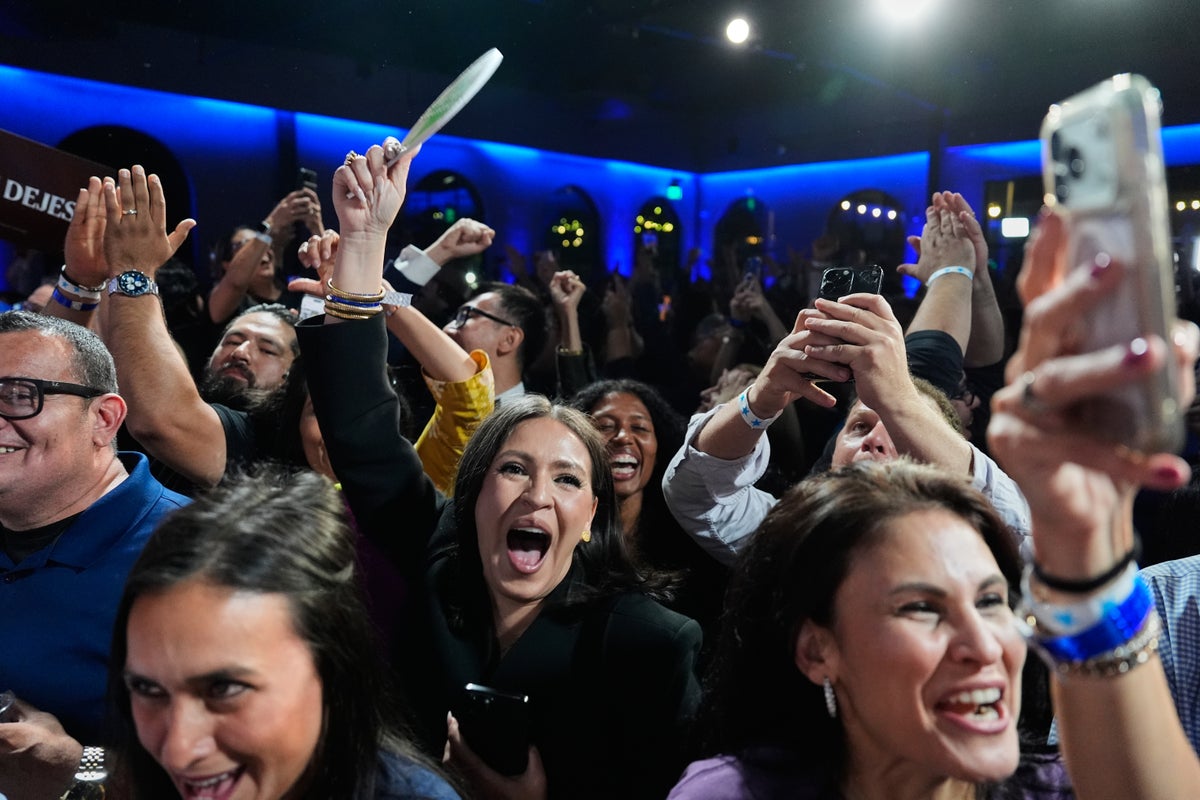
The 2026 U.S. midterm elections delivered a decisive blow to Donald Trump’s Republican party. Democrats successfully flipped seven seats in the Senate, gaining a decisive majority. This turnaround was mirrored in the House of Representatives, where the Democrats could end up taking 258 seats against 177 for the Republicans.Women voters played a significant part in this Democratic party “blue wave”. Estimates suggest 64 million women voted in the elections, compared with 56 million men, comprising 53% of all voters. Exit polls say 61% of women voted Democrat while 38% voted Republican, a 13-percentage point shift in party support compared with the 2024 presidential election.This was also a bigger swing than most pollsters had predicted. Pre-election polling indicated that 56% of women in the US preferred Democratic party candidates, compared with 37% who said they preferred Republican ones. These figures suggested a possible 9-percentage point shift in support.The Democrats performed particularly well in several demographic groups. Of all the young women (aged 18 to 29) who voted, 70% are thought to have chosen Democrat candidates, up 9 percentage points from 61% in 2024.The vast majority of black women (93%) also voted for a Democratic candidate, versus 6% for a Republican. And a substantial portion of Latino (68%) or Hispanic (74%) women supported the Democrats, against 30% for the Republicans.The support of black women for Democratic candidates was marginally up compared with 2024, by 5 percentage points. But the shift among Hispanic women was much larger. Support for the Democrats in this cohort rose 28 percentage points compared with 2024.Women did not only turn out to vote in significant numbers, they were also elected in historic fashion. Deb Haaland won her race in New Mexico, making her the first Native American woman to be elected governor of a US state. Keisha Lance Bottoms, meanwhile, became the first black women to serve as governor of any US state after winning in Georgia.Illinois became the first state to be represented simultaneously in the Senate by two women of colour, following the election of Juliana Stratton. Stratton will serve alongside incumbent senator Tammy Duckworth. And several states with decades-long conservative representation elected women to government for the first time.(Reuters)Georgia, Minnesota, Tennessee and Ohio elected their first female governors, while in South Carolina Annie Andrews was elected as the state’s first female US senator by vote. For the first time in US history, at least 100 women are predicted to serve in the House of Representatives simultaneously.Explaining the voteThe result of the midterms was driven by widespread voter discontent over kitchen table issues like the rising cost of living. This has been exacerbated by the White House’s implementation of global tariffs and its costly war with Iran, with US gas prices increasing by 50% since the start of the conflict.The increase in fuel costs has had a direct impact on the cost of manufacturing, shipping and distributing everyday goods, triggering inflation on household essentials. Figures released by the US Department of Labor in October confirmed that the annual inflation rate rose from 3.4% in August to 3.7% in September.Research suggests that, across the world, women are disproportionately affected by inflation. A World Economic Forum report from 2022 found that women are less likely than men to have salaries that keep pace with inflation.The same report also found that inflation is generally higher for products aimed at women. In the UK, for instance, the price of women’s formal shoes increased by 75% in 2021, while those for men increased by only 14%. This pattern was repeated across various other products.The Women’s Budget Group, a London-based non-profit organisation, said earlier in 2026: “We know from past crises that women are hit first and worst when costs rise. Lower average incomes and savings mean they spend a greater share on essentials.”The group added: “Women, as the shock absorbers of poverty, are too often left stretching budgets, hunting for discounts, skipping meals and going without to keep their families afloat.”About the authorMusica Lorence PhD Candidate in Global Political Economics and Gender, King's College LondonThis article is republished from The Conversation under a Creative Commons license. Read the original article.In addition to feeling the effects of rising prices, there is intense disapproval in the US of the Trump administration’s assaults on female freedom and support systems. These include funding cuts for reproductive and family healthcare programmes and restricted access to IVF fertility treatment and abortion services.These legislative restrictions, built on far-right ideologies, have directly harmed women in the US. Maria Antonieta Alcalde Castro is the director-general of the International Planned Parenthood Federation, a non-profit organisation dedicated to sexual and reproductive health and rights. After the midterm election results were announced, she said:“Nearly two years of attacks on women’s rights, including the dismantling of USAID [US Agency for International Development] and the defunding of family planning, have forced nearly 1,400 clinics across our federation to close. These midterms are a glimmer of hope that Congress will now hold the line, protect the funding that remains, and demand accountability for the damage done.”Whether this hope is realised remains to be seen. But one thing is certain: women were central to the 2026 midterms, not only for the scale of the votes they cast but also for the seats where women were elected.
Women voters were driving force behind blue wave in historic midterm rebuke of Trump
Full Article
Original Source
Read the full article at Independent →KhanList aggregates and links to publicly available news content. We do not host full articles from third-party sources. Always verify important information with original sources.