
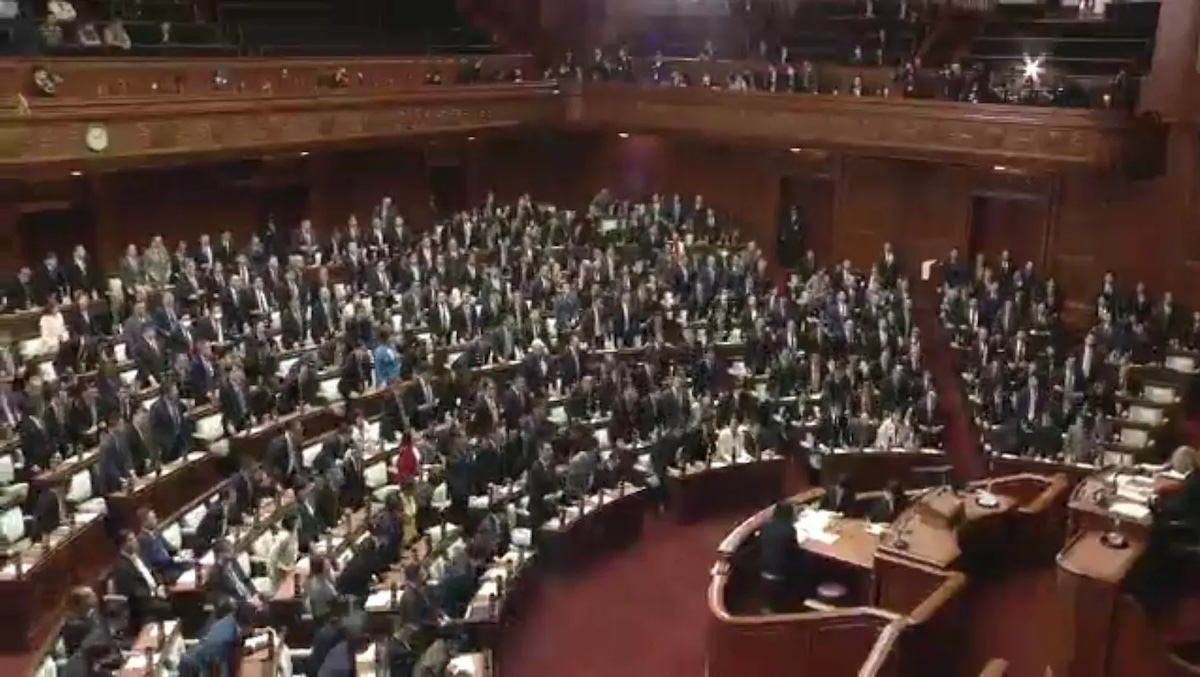
The Japan House of Representatives meets to vote on the consumption tax cut on November 6. Photo: @troffice_0401 on X Japan’s House of Representatives approved the consumption tax cut on Friday, November 6, but the government’s accomplishment was overshadowed by the decision by four senior Liberal Democratic Party lawmakers — most notably former prime minister Shigeru Ishiba — to absent themselves from the vote. The bill now heads to the upper house, where the opposition parties will use an ad hoc committee to press the government on the tax cut after what they felt was an inadequate debate in the lower house. Whatever sense of accomplishment Prime Minister Sanae Takaichi felt from moving the legislation through the lower house may have been soured when Ishiba and the three others didn’t stay for the vote. Besides Ishiba they are Yuko Obuchi, who quit the leadership of the LDP’s tax commission to protest the tax cut; Yoshihisa Furukawa; and Hajime Funada. They were conspicuous about it. “I cannot agree to something like this,” Ishiba told colleagues. “The source of funding is unclear. It will damage public finances. The currency will depreciate. Interest rates will rise. Prices will increase…. I cannot dispel these concerns.” All are fiscal hawks who have been vocal in their opposition to the tax cut, and their public show of non-support highlights that despite Takaichi’s work to push the tax cut forward through the LDP’s decision-making process and now the lower house, she still faces resistance within her own party. It seems there are other LDP lawmakers who share their views but were more constrained in actively opposing the tax cut. Takaichi declined to comment on the protest, but other LDP leaders are furious and even called for them to resign their seats. LDP policy chief Takayuki Kobayashi warned that they could face punishments for their failure to vote in accordance with party instructions. After the vote, the “rebels” reiterated their concerns about the bill’s impact on the government’s finances, the risk to the social security system and the reality that the expiration of the tax cut in two years could mean an effective tax increase for most taxpayers. The fiscal hawks’ rebellion adds to the problems that Takaichi faces as the legislation heads to the upper house, where the government lacks a majority. The government failed to convince any opposition party to back the tax cut in the lower house and has already conceded to the creation of the ad hoc committee to deliberate on the tax cut in the upper house, in which opposition parties outnumber the ruling parties twenty to nineteen (with the LDP’s Yoshifumi Matsumura chairing). The committee cannot stop the legislation from reaching the whole house, because legislation referred from the lower house has to go to a plenary session, giving the committee more of an advisory role. Shigeru Ishiba and Yuko Obuchi leave the legislative chamber on Friday to protest the consumption tax cut. Screenshot by author. But it will nevertheless hold a more extensive debate on the legislation that could air many of the grievances highlighted by Ishiba and the others – which will presumably get more attention in the coming days, given how unusual this kind of protest on a government bill is. Opposition parties have flagged other issues with the bill, including the lack of details about how additional subsidies will be distributed, the lack of details about how the tax cut will be financed, and the lack of details about support for businesses managing the costs and impact of implementing the tax cut. Takaichi’s suggestion in questioning Friday that additional payments could go to roughly 30% of workers will likely do little to sway her opponents. The Upper House’s deliberations will begin on 11 November. The prime minister is still likely to get her “cherished” tax cut, perhaps even without having to vote on the legislation a second time in the lower house, if the government can convince a few independents to back the bill. But the LDP rebels have made it even less likely that one of the main opposition parties works out a compromise with the government to support the legislation in the upper chamber and called public attention to the process by which the government has moved the legislation through the Diet while avoiding answering major questions about its plan. As was clear from the beginning, Takaichi would ultimately have the votes thanks to the government’s supermajority in the lower house, but the process could be more or less politically costly. The costs may already be mounting even before the upper house begins its deliberations. Japan politics analyst Tobias Harris is the author of The Iconoclast: Shinzo Abe and the New Japan and the founder and principal of Japan Foresight LLC. This article first appeared on his Substack Observing Japan. It is republished with permission.
Takaichi vs. the tax ‘rebels’
Full Article
Original Source
Read the full article at Asiatimes →KhanList aggregates and links to publicly available news content. We do not host full articles from third-party sources. Always verify important information with original sources.