
*Mehak Kapoor, 33, starts her day at 5.30 am. Before having her baby, she would wake up an hour later. But with a 10-month-old at home, mornings now begin with pumping breast milk so her baby has enough while she is at work. She then makes sure everything else is in place for the little one before getting ready for the day.Her husband wakes up at 6.30 am. The two go about their morning routine together, taking a walk, making juice and preparing breakfast. By the time the nanny and house help arrive, Mehak is getting ready for office.She is usually back by 7 pm, ready to spend time with her baby. Her husband returns home tired, too, but the day's responsibilities don't end there. He joins her in the kitchen, helps clear the table and wrap up household chores. He also takes charge of putting the baby to sleep.Sounds like a fairly ordinary household routine, doesn't it? Except that this kind of sharing of domestic responsibilities is still far from the norm in many Indian homes. A new report, The Participation Paradox, by the Indian Council for Research on International Economic Relations (ICRIER), highlights just how unequal that domestic arrangement remains, even as more women enter the workforce.The number of working women in India nearly doubled, from 10.4 crore in 2017-18 to 20.1 crore in 2025. But the increase in women's participation in paid work hasn't brought about a corresponding shift at home. Women spend an average of 464 minutes a day on domestic work, compared with 178 minutes for men. That's nearly five hours more every day. In other words, women may be bringing home the paycheque, but they're still shouldering a much larger share of the work at home. And that raises a rather uncomfortable question: as more Indian women join the workforce, why are men still not picking up their share of the household chores?Coming home to a second shiftFor many working women, the office day doesn't necessarily end when they log out or leave their workplace. There is another shift waiting at home.It could mean preparing dinner, checking on the children, coordinating with domestic help, organising groceries, planning the next day's meals or ensuring that everything is running smoothly. These tasks may appear small individually, but together they make up a substantial part of running a household.And then there is the work that often goes unnoticed: remembering when the child's vaccination is due, keeping track of school assignments, scheduling doctor's appointments, remembering birthdays and anniversaries, and making sure household supplies don't run out.This is what is increasingly being described as the 'mental load' of domestic work.A husband may cook dinner or wash the dishes, but who decided what needed to be cooked? Who checked whether the ingredients were available? Who remembered that the child needed something for school the next morning?Sushmita Marik, 35, a mother of a one-year-old girl, feels that men are often conditioned to see their role at home rather differently. They go to work, return home, get back to their laptops if needed, have dinner and call it a day. Much of this, she believes, comes from the traditional idea that men are the ones who 'wear the pants' in the household."Fortunately or unfortunately, women have started wearing the pants too. If they are contributing to household expenses, why can't men also learn to manage the home? Why does the conversation end with, 'I can't do it'? If possible, keep domestic help, or do it yourself," she says.Of course, there are households where men actively participate in domestic chores and childcare. But Sushmita feels these are still fewer than they should be. She believes much of this has to do with conditioning, which needs to change right from childhood."Boy moms need to start treating their sons differently and teaching them that household responsibilities are not just a woman's job," she adds.Marriage doesn’t mean ‘ghar ki nayi naukrani’Sushmita is right. Much of this imbalance may have roots in how Indian men and women grow up watching their parents run a household. In several traditional family setups, mothers take charge of cooking, cleaning, childcare and caregiving, while fathers are primarily seen as the breadwinners. Children grow up observing these roles, and without consciously questioning them, may carry the same expectations into their own marriages.For some couples, the division of household responsibilities is never really discussed. It is simply assumed that the woman will take care of the home, whether or not she has a full-time job.This also explains why a man cooking dinner or looking after his child can sometimes be seen as doing his wife a favour, rather than fulfilling a shared responsibility.There is a difference between helping your partner and taking ownership of the household. The former suggests that the responsibility belongs to one person, while the other steps in occasionally. The latter recognises that both partners are equally responsible for running the home.The expectations can become even more complicated in Indian marriages, where women may also be expected to manage family functions, festivals, guests and caregiving responsibilities towards ageing parents or in-laws.A working daughter-in-law may have a demanding professional life, but that does not necessarily mean traditional expectations around household work disappear after marriage.45-year-old Soundarya Mishra says festivities are truly enjoyable when women don't have to spend their evenings after work worrying about what to cook for the Diwali party the next morning or who will prepare the Karwa Chauth sargi in the wee hours.“If there is a clear division of responsibilities and expectations are understood, both partners can enjoy the festivities equally,” she says.When motherhood changes the rulesIf there is one phase that often exposes the unequal division of domestic work, it is parenthood.Before having children, couples may manage their household routines without too much friction. But a baby brings an entirely new set of responsibilities, from night feeds and doctor's appointments to vaccinations, school planning and childcare arrangements.And in many households, much of this additional responsibility falls on the mother.Who wakes up for night feeds? Who takes leave when the baby falls sick? Who coordinates with the nanny? Who remembers the next vaccination date? And if both parents have an important meeting, whose work takes a backseat?These everyday decisions can reveal a lot about whose career is considered more flexible and whose time is treated as more expendable.For working mothers, returning to work after childbirth can also mean managing an entirely new routine. Breastfeeding, pumping milk, arranging childcare and coordinating with caregivers become additional responsibilities alongside their professional commitments.The question is whether fathers are expected to make similar adjustments to their working lives after having a child.Does a man turn down a work trip because the baby needs him at home? Does he take leave when the child is unwell? Does he rearrange his schedule to attend a paediatrician's appointment?Or is the assumption still that the mother will figure it out?India Today spoke to Nishit Rana (name changed), who embraced fatherhood recently. He says, “The problem is not just with society, it is with our workplaces also. I remember, when I wanted to stay back because by 5 month old baby had fever, I can’t forget how my colleagues taunted me, ‘Kyun, biwi bhi bimar hai kya? Can’t she manage?’ While managers can be understanding sometimes, your male colleagues can sometime be the problem because of the lack of empathy and conditioning.”The domestic help illusionUrban Indian households have another layer to this conversation: domestic help.Having a cook, cleaner or nanny can certainly reduce the physical workload at home. But does it necessarily mean that women have less responsibility?Not always.In many households, even when domestic workers are employed, someone has to manage them. Someone needs to decide the menu, arrange groceries, coordinate leave, find a replacement when the cook doesn't turn up and ensure that the child's routine is followed.And quite often, that someone is the woman. This is another form of labour that may not be immediately visible. A household may have outsourced cooking and cleaning, but the planning and coordination can still remain with one person.The situation is even more demanding for women who cannot afford domestic help. They may have to return from a full working day and take up cooking, cleaning and childcare themselves.There is also a larger class dimension here. The convenience enjoyed by some urban households often depends on the paid domestic labour of other women, who have their own households and caregiving responsibilities to manage.So, while domestic help can ease the burden for a family, it does not automatically address the question of how responsibilities are divided between partners.“Not that I am ungrateful for the help I get from my cook and househelp but that doesn’t take away from the fact that I have to set what we at for the day, how many curries have to be cooked, what goes for laundry, what sent to dry cleaned, who gets the children back from school. There are so many layers to the labour we do and honestly, it is never enough,” says Manya Shah, who has been married for the last 10 years.Is earning the money enough?One argument that often surfaces in conversations about household responsibilities is the financial contribution.In some marriages, men may feel that because they earn more or contribute a larger share towards household expenses, their responsibilities at home are naturally smaller.But does being the primary breadwinner mean being exempt from domestic work?This is particularly relevant as more women enter paid employment and contribute to household incomes. The traditional idea of the man as the sole provider and the woman as the primary caregiver is no longer an accurate description of every Indian household.Yet, the expectations around who cooks, cleans, looks after children and manages family responsibilities may not have evolved at the same pace. The question is not necessarily whether every couple should divide every chore equally. Different households have different working hours, financial circumstances and arrangements. Some may divide responsibilities according to their schedules.But an equitable arrangement requires both partners to recognise that their time and work matter.A woman's career cannot automatically be considered secondary simply because her husband earns more. Equally, a man who earns less should not automatically be expected to take on all domestic responsibilities.Why won't men budge?It is easy to blame individual men for not doing enough at home. But the problem also has deeper social roots.Many men grow up in households where domestic work is largely performed by women. They may never be expected to cook, clean or look after younger siblings. When they eventually move into their own homes, they may not have the skills or the habit of taking responsibility for everyday household tasks.There is also a difference between being willing to help and knowing how to take ownership.A man may be happy to cook when asked, but does he independently decide what needs to be prepared? Does he notice when the laundry needs to be done? Does he know what the child needs for school the next day?And when women have to keep delegating these tasks, they remain the managers of the household, even when men participate.This is why the conversation needs to go beyond asking men to help their wives. It needs to examine why domestic responsibilities are still seen as something women are naturally better equipped to handle.It is also important to acknowledge that many men are actively challenging these expectations. There are fathers who take paternity leave, couples who consciously divide childcare and husbands who manage their homes without expecting their wives to supervise every task.Their experiences matter, too. They show that a different arrangement is possible.- Ends
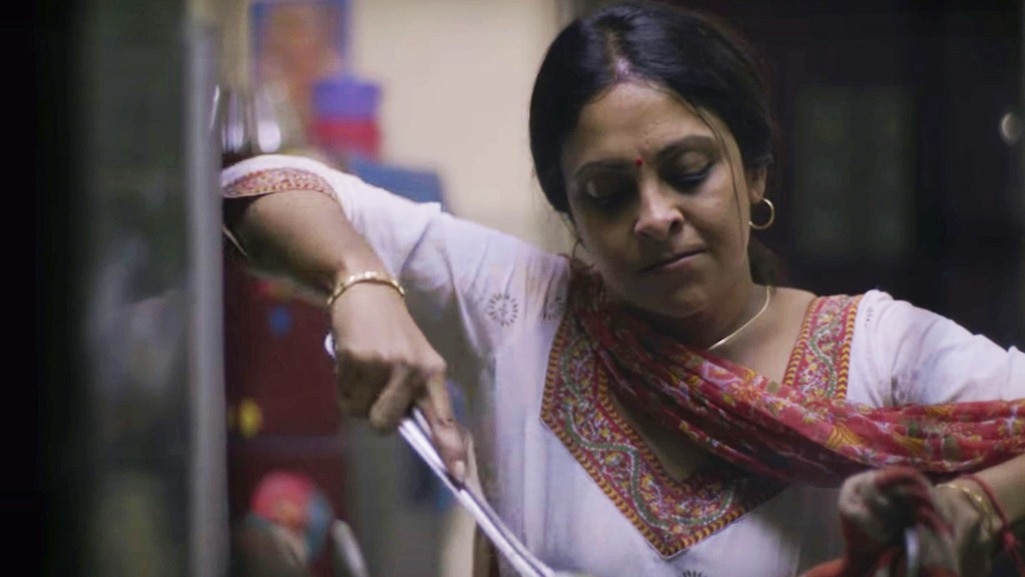
Women clock out of work, only to clock into housework. Why are men still missing?
Full Article
Original Source
Read the full article at Indiatoday →KhanList aggregates and links to publicly available news content. We do not host full articles from third-party sources. Always verify important information with original sources.