
Next Tuesday, October 27th, Israelis head to the polls in a vote that could herald the political demise of Binyamin Netanyahu, Israel’s longest-serving prime minister, who has led the country for all but 18 months since 2009.The polls show that neither the Netanyahu bloc of right-wing and religious parties nor the disparate “bloc of change” (the anti-Netanyahu bloc) will have a 61-seat majority in the 120-seat Knesset parliament. If the projected seats of the two Arab parties are included, then there is a clear majority for the opposition, but Avigdor Lieberman, head of the right-wing Yisrael Beiteinu - one of the four bloc of change parties - says he will not sit in a coalition which is dependent on Arab parties.However, campaign promises may be discarded after October 27th, and Netanyahu is convinced that his divided opponents will bury their differences and strike a deal to remove him from power during coalition negotiations.READ MOREIt remains to be seen what impact, if any, Sunday’s endorsement of Netanyahu by US president Trump will have on the polls.Gadi Eisenkot, leader of the centrist Yashar, predicted by almost all polls to emerge as the largest party, says he will aim to form a government even if the Zionist opposition parties fall short of a 61-seat majority.A banner featuring Gadi Eisenkot, leader of Yashar, is unveiled ahead of Israel's general elections. Photograph: Amir Levy/Getty Images Supporters of Gadi Eisenkot's Yashar party. Photograph: Jack Guez/AFP via Getty Images Next Tuesday’s election marks the first opportunity Israelis have had to pass judgment since the October 7th, 2023, Hamas attack on southern Israel, considered the biggest catastrophe in the country’s 78-year history, when 1,200 people were killed and another 250 taken captive in to Gaza.In the weeks immediately following the attack, Netanyahu’s political support plunged dramatically, with support for the Netanyahu coalition dropping from 65 to 43–44 seats. About 70-80 per cent of Israelis said they believed Netanyahu bore personal responsibility and a clear majority favoured his resignation.[ Can anyone end the Netanyahu era?Opens in new window ]His strategy for political survival was twofold: avoid an early election at all costs and prevent the formation of a state commission of inquiry to investigate the October 7th disaster. Avoiding an early election meant paying off his coalition partners - engaging in never-ending wars and delaying a hostage release deal to keep the far-right parties happy, and avoiding drafting the ultra-Orthodox into the army to appease the religious parties.Three years on, as Israelis prepare to vote, it’s clear that his strategy has worked. He likely won’t be able to clinch a majority, but the polls show he will be able to prevent his opponents from doing so, with a hung parliament the most likely outcome. Vehicles drive past an election billboard featuring images of Yashar party leader Gadi Eisenkot and Israeli prime minister Binyamin Netanyahu in Ramat Gan near Tel Aviv, Israel. Photograph: EPA Under such a scenario, Netanyahu will continue as caretaker prime minister and Israel will go to the polls again in the spring.President Yitzhak Herzog has vowed to do everything in his power to prevent Israel from heading into another round of elections if next week’s result fails to produce a clear winner.“I’m doing everything I can to ensure Israel has a stable government,” he said. “But I’ll go further than that: I will do absolutely everything I can to prevent repeat elections. We must do everything possible to avoid going through this again and again and again.”Between 2019 and 2021, Israel held four rounds of elections before a government led by Naftali Bennett and Yair Lapid was formed. But this only lasted 18 months before the current Netanyahu coalition was elected.[ Israel’s former spy chief sues Netanyahu for ‘blood libel’ over October 7th attacksOpens in new window ]After the final results are calculated, Herzog will task the candidate he believes has the best chance of forming government with cobbling together a coalition within 28 days (with a possible 14-day extension) - this isn’t necessarily the head of the largest party. The president can also mediate between factions if there is no clear majority, in an advisory role.The election may be determined by two interrelated factors: the fate of two parties hovering around the minimum threshold and voter turnout.A new right-wing party, Amcha Yisrael (People of Israel) led by former general Ofer Winter and the (IDF) Reservists, led by former centre-right lawmaker Yoaz Hendel, are both hovering close to the 3.25 per cent threshold required for a minimum of four Knesset seats.Winter has resisted intense pressure from Netanyahu’s Likud party to quit the race and the argument that if Amcha Yisrael ends up beneath the threshold, the result will be wasted right-wing votes. The Reservists could potentially join either a Netanyahu-led coalition or an Eisenkot government if there is a promise of legislation to draft the ultra-Orthodox.In such a close contest, much may depend on voter turnout.[ Sally Rooney’s novels are not easy to find in Israeli bookstores despite their popularityOpens in new window ]A high turnout will mean Amcha Yisrael and the Reservists will need more votes to cross the threshold.Arab Israelis make up 21 per cent of the population and traditionally voter participation is significantly lower in comparison to the majority Jewish population – around 53 per cent at the last election compared to 70 per cent overall.The current Arab parties have 10 seats between them, but polls indicate this could rise to 13 or 14 seats this time round, and both parties are stressing their priority is to replace Netanyahu as prime minister, even if they will be excluded from a governing coalition.
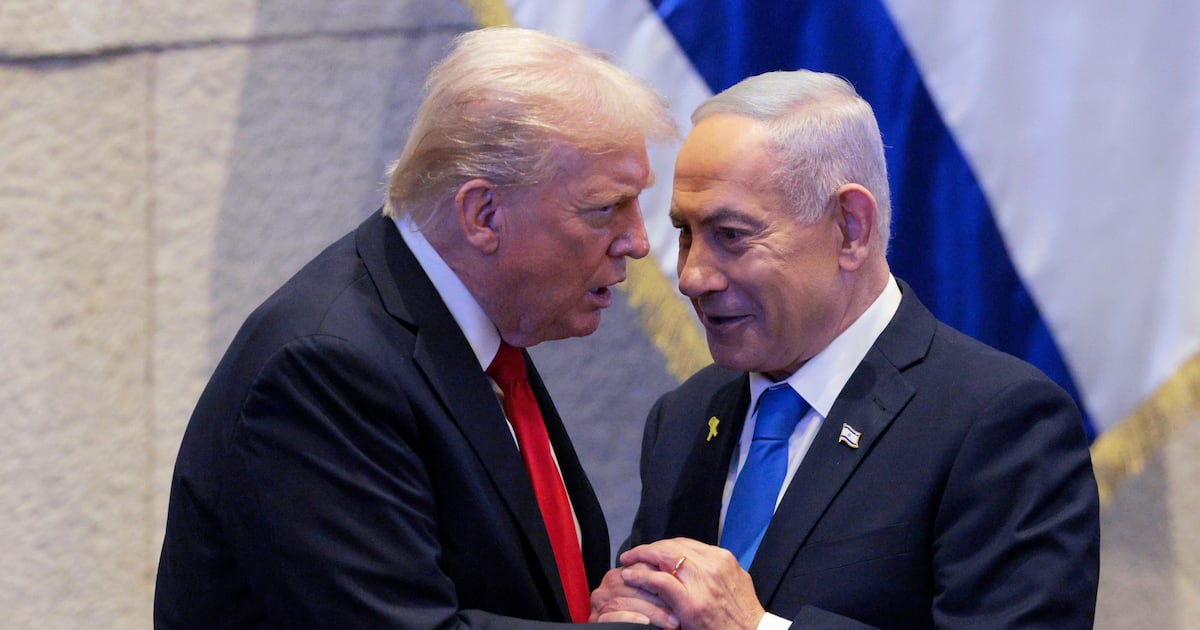
With Israel preparing for a defining election, can Trump save Netanyahu?
Full Article
Original Source
Read the full article at Irishtimes →KhanList aggregates and links to publicly available news content. We do not host full articles from third-party sources. Always verify important information with original sources.