
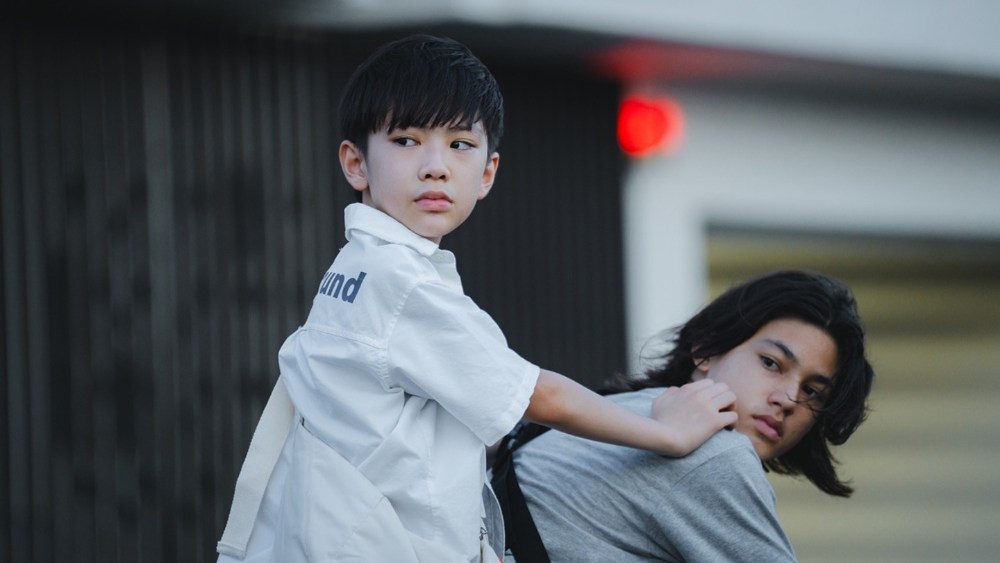
When Variety spoke with Taiwanese director Lu Po-Shun in March, he was seeking final financing for his debut feature, “Will You Still Be My Friend,” a coming-of-age drama weaving adolescent friendship with local politics and solar energy development. Now, following its San Sebastián premiere and two Golden Horse nominations, Lu is bringing the film to the Busan International Film Festival – where it is playing in the A Window on Asian Cinema strand – with renewed confidence in its ability to connect with international audiences. Set in Yunlin County on Taiwan’s southwest coast, the film follows two boys whose friendship comes under pressure as adult conflicts divide their community. It expands on Lu’s short “When Henge Meets Crescent,” part of the public broadcaster PTS’ pandemic anthology “Quarantini.” Popular on Variety Developing the short into a feature drew on Lu’s extensive field research in the area where he grew up, allowing him to develop a fuller portrait of local politics. The film has since earned Golden Horse nominations for adapted screenplay and new performer for Jaden Wang. “I built the feature out of the short by mapping out each character’s arc, giving everyone a clear beginning, development, turning point and resolution,” Lu said. “The key events then drove the story forward, bringing it together into a complete narrative.” The challenge, however, was deciding how much of the adults’ world to retain. “The adult storylines were actually more complicated and more explicit in the full script,” Lu said. “But in the edit, with limited running time, explaining those events too clearly would have sent the narrative in too many directions and risked taking the audience’s attention away from the two boys. So we chose to make those storylines less explicit, allowing them to emerge more through the changes in the children’s relationship.” Finding the right young actors was another crucial part of that process. Lu began searching about a year before filming, eventually discovering Wang, a boy of Taiwanese and Italian heritage, through a social media account run by his mother. He contacted her directly. “From our first meeting, I felt Jaden was the one,” Lu said. “He already played basketball and did lion dancing, which were exactly the skills the character needed. He also lived in Kaohsiung, the south of Taiwan, where we shot half the film. Everything lined up.” For Lu, directing the young cast meant working with their personalities while helping them understand how their characters differed from themselves. “When you work with children, you have to work with their personalities,” he said. “But a character in a feature also goes through changes, so the actors need to understand where the character differs from who they are. We arranged acting classes, mainly to read the script together and discuss the characters’ motivations – why they say a particular line or make a particular gesture. After that, we let them react to one another and allow the performances to happen naturally.” According to Lu, all four San Sebastián screenings sold out on the first day of ticket sales, and the film remained among the top three during voting for the festival’s youth award. Its general-audience classification in Taiwan, where it is scheduled to open theatrically on Dec. 4, has given him further encouragement. “At Busan, I hope to exchange ideas with audiences from different cultural backgrounds,” Lu said. “I hope everyone can understand the feelings between these two boys, or be reminded of an experience of their own. If that happens, then the cross-cultural connection I hoped the film could make will have been achieved.” Lu was also flattered by a festival website’s introduction linking the film to Taiwan’s New Wave. Hou Hsiao-hsien’s “The Boys From Fengkuei” and François Truffaut’s “The 400 Blows” left a particularly strong impression on Lu during his film-school years. “If you look at it as looking back at yourself and telling stories about the community you belong to, I think that connection makes sense,” Lu said. “It feels a little strange to talk about your own work’s place in film history. But I also think filmmakers need to consider these questions: Why am I doing it this way? In what context should the work be read? Does what I’m making have a relationship with Taiwanese films of the past?” On his fourth visit to Busan, Lu is approaching the festival as both director and executive producer. He has yet to settle on an idea for his next film, but is eager to hear audience responses and meet potential industry partners. “As a filmmaker, I want to hear Asian audiences’ immediate reactions,” he said. “As an executive producer, I hope more people in the industry will see the film, take an interest in it and believe in its market potential.” The experience has also brought the difficulty of securing distribution into sharper focus. Producer Yu-Hao Su will be working to sell the film at Busan’s market, Lu said. “Having been through this process, I’ve realized how difficult it is for a film to find distribution,” Lu said. “For directors and actors who aren’t yet well known, it takes more effort to get people to notice the work. But seeing the film reach more people is also one of the most rewarding things about making movies.” Moveria is handling sales on the title.
‘Will You Still Be My Friend’ Director Lu Po-Shun on Finding Common Ground From San Sebastian to Busan
Full Article
Original Source
Read the full article at Variety →KhanList aggregates and links to publicly available news content. We do not host full articles from third-party sources. Always verify important information with original sources.