
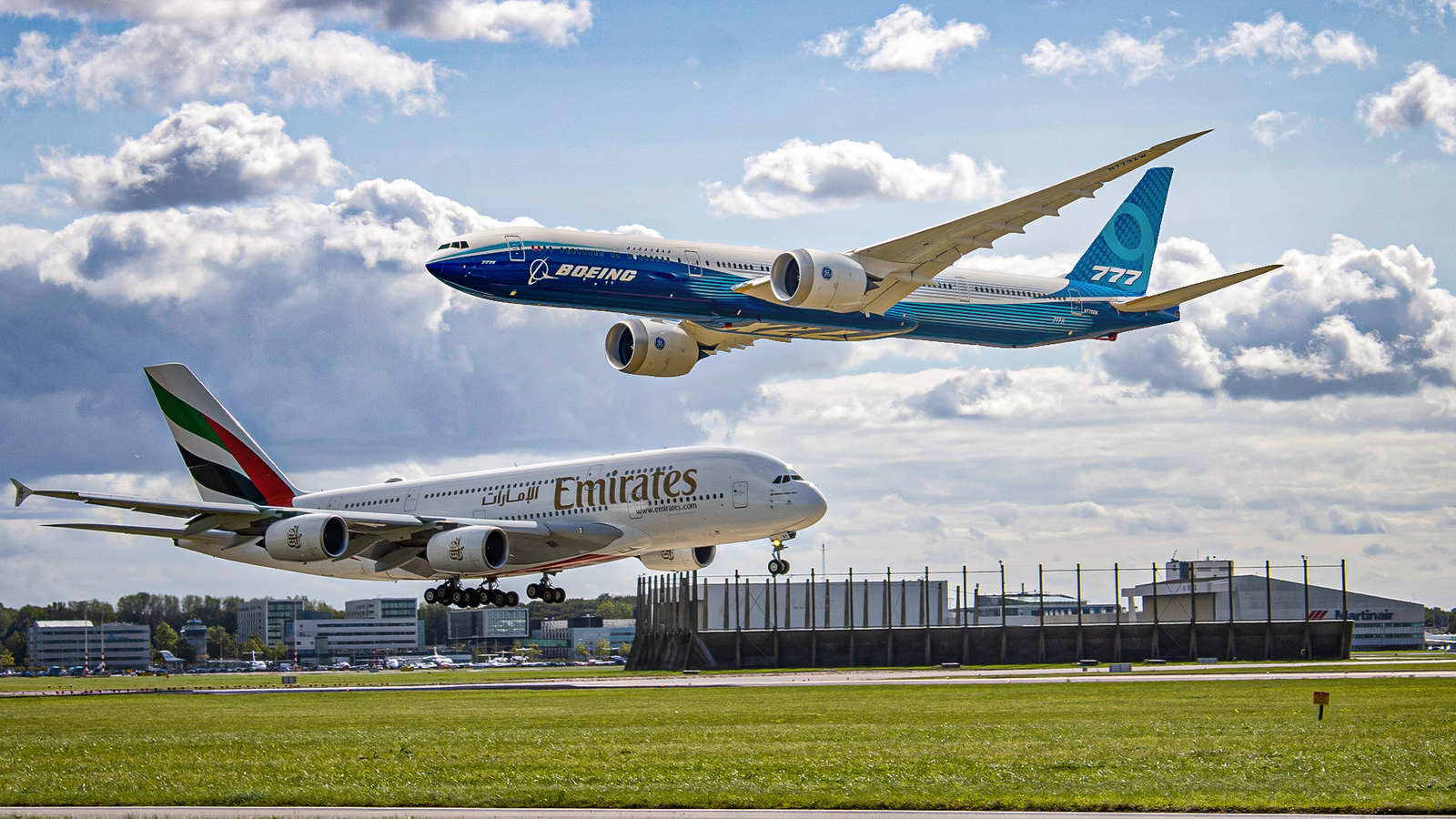
Published Aug 5, 2026, 12:00 PM EDT Experienced ICAO English Language Proficiency Instructor for pilots and ATCOs and conference interpreter who is passionate about facilitating effective communication within aviation-related businesses. Possess a deep understanding of the aviation industry, including aviation regulations, terminology, and industry-specific communication protocols. Has been working at numerous airshows across Europe since 2014. Being an ultralight pilot in her free time, she also promotes safety and efficiency in aviation operations. Based in Italy and Malta The Airbus A380's enormous size famously limited the number of airports it could serve without costly infrastructure upgrades that not all airports were willing to do. As Boeing prepares to introduce the 777X, many aviation enthusiasts have asked whether history could repeat itself here. After all, the new aircraft has an even greater wingspan than today's Boeing 777 family and technically falls into the same ICAO airport category as the A380 when its wings are fully extended. The short answer, however, is no, or at least, not in the same way. Boeing anticipated the infrastructure challenge years before the aircraft entered service and designed the 777X specifically to avoid the airport restrictions that ultimately became one of the A380's biggest operational disadvantages. Rather than forcing airports to adapt to the aircraft, Boeing engineered the aircraft to adapt to existing airports to be able to serve more destinations than the A380. Boeing Designed The 777X To Avoid The A380's Mistake Credit: Shutterstock Unlike the Airbus A380, the Boeing 777X is not expected to be banned from airports simply because of its size. While its fully extended wingspan reaches approximately 235.5 feet (71.8 meters), placing it within ICAO Code F dimensions, its unique folding wingtips reduce that span to just 212.8 feet (64.85 meters) while taxiing and parked. This allows it to use the same Code E gates currently occupied by aircraft such as the Boeing 777-300ER, 787 Dreamliner, and Airbus A350. Boeing explains this design philosophy in detail on its official 777X program pages dedicated to specs and design history. That single engineering decision fundamentally changes how airports accommodate the aircraft. Instead of requiring widespread terminal and hangar modifications, the 777X simply folds roughly 11.5 feet (3.5 meters) from each wingtip after landing, a technique that is similarly used on many military aircraft based on aircraft carriers, where space is limited, and ship modifications are impossible. Once the mighty 777x clears the runway, it effectively becomes a conventional large widebody from an airport infrastructure perspective. As previously explained by Simple Flying in Here's Why The Boeing 777X's Wingtips Are Different Than Other Widebodies, this innovation was specifically intended to preserve compatibility with existing airport infrastructure. The timing of Boeing's decision was hardly accidental. During the 2000s, airports around the world invested billions in upgrading taxiways, gates and pavements to accommodate the Airbus A380. While many major hubs embraced the superjumbo, countless secondary airports decided the investment simply wasn't worthwhile. Boeing observed those challenges and deliberately chose a different path to be able to land almost anywhere when developing the 777X. Why Airport Classifications Matter More Than Aircraft Size Credit: Shutterstock Airport compatibility depends on far more than an aircraft's weight or passenger capacity. The International Civil Aviation Organization (ICAO) categorizes aircraft according to wingspan and landing gear dimensions. Most long-haul aircraft, including popular widebodies such as Boeing 777-300ER, 787 Dreamliner, Airbus A330 and Airbus A350, all fall into Code E, which generally covers aircraft with wingspans up to around 213 feet (65 meters). Aircraft exceeding that limit enter Code F territory. This category includes the Airbus A380 and Boeing 747-8, both of which require wider taxiways, larger parking stands, and increased separation between aircraft. Many airports simply do not possess sufficient Code F infrastructure across their entire airfield, restricting where these aircraft can operate, leading to limited popularity among airlines for these two giants of the skies. The Boeing 777X technically belongs in both worlds. In flight, its enormous composite wing stretches approximately 235.5 feet (71.8 meters), maximizing aerodynamic efficiency and reducing fuel burn. On the ground, however, folding wingtips reduce the span below the critical Code E threshold, allowing airports to treat the aircraft much like today's existing Boeing 777 fleet. Simple Flying explored this concept while describing the Sydney Kingsford Smith Airport (SYD) airport limitations in the article titled "Why The Boeing 777X Has To Fold Its Wings Just To Reach The Gate In Sydney," highlighting how airports can accommodate the aircraft without extensive reconstruction. Folding Wingtips Are The Key To The Entire Concept Credit: Shutterstock The folding wingtip system represents one of the most innovative features ever installed on a commercial airliner. But unlike naval aircraft, which fold their entire wings to maximize carrier deck space, the 777X folds only the outermost section of each wing while on the ground. Each wingtip pivots upward approximately 90 degrees after landing and remains locked in that position during taxiing and parking. Before departure, pilots command the tips to unfold, where multiple redundant locking systems verify that both wings are fully extended before take-off clearance can continue. According to The Air Current's detailed technical analysis on how the 777X's folding wing tips work, the system includes numerous mechanical and electronic safeguards to ensure reliability. Safety was naturally one of Boeing's biggest design priorities. The aircraft is physically incapable of commencing take-off with folded wingtips. As explained in our previous article on why the Boeing 777X will physically refuse to take off if its wings are still folded, multiple independent systems monitor wingtip position, and the flight control computers prevent take-off if either wing remains unlocked or improperly deployed. This redundancy satisfies certification requirements while ensuring the folding mechanism never becomes a flight safety hazard. The concept may appear unusual to passengers, but from an airline perspective, it offers the best of both worlds. Operators gain the aerodynamic benefits of an exceptionally long, high-aspect-ratio composite wing during flight while retaining compatibility with the overwhelming majority of existing international airport gates. Boeing 777X Vs Airbus A380: Similar Size, Completely Different Airport Impact At first glance, the Boeing 777X and Airbus A380 appear to face the same airport infrastructure challenge. Both possess Code F wingspans in flight, both are among the world's largest passenger aircraft, and both require substantial runway performance. But operationally, the similarities largely end there. The Airbus A380 was designed before folding-wing technology became commercially practical. Its fixed 261.8-foot (79.8-meter) wingspan meant airports needed permanent Code F facilities everywhere the aircraft operated. That often required wider taxiways, specially designed gates, dual boarding bridges and reinforced pavement. Airports unable or unwilling to invest simply could not accommodate scheduled A380 operations. By contrast, Boeing designed the 777X specifically around airport compatibility. As Aerospace Global News explains in one of their articles, the folding mechanism allows airlines to utilize existing infrastructure while still benefiting from improved aerodynamic efficiency. Boeing 777X vs Airbus A380 Airport Compatibility Feature Boeing 777X Airbus A380 Wingspan in flight 235.5 feet (71.8 meters) 261.8 feet (79.8 meters) Wingspan on ground 212.8 feet (64.85 meters) 261.8 feet (79.8 meters) ICAO category while parked Code E Code F Folding wingtips Yes No Uses existing 777 gates Yes Generally no Major airport modifications required Usually not Frequently required Our comparison highlights why the 777X is unlikely to encounter the same operational limitations that affected the A380. Airlines can introduce the aircraft into existing Boeing 777 networks with relatively modest airport adjustments instead of requiring major infrastructure projects. That significantly reduces operating costs while expanding the number of destinations the aircraft can realistically serve. There Are Still Operational Limitations And Regulatory Hurdles Credit: Shutterstock Although the folding-wing concept solves the primary gate-access issue, it does not eliminate every operational consideration. Airports must still certify procedures for handling the aircraft, including wingtip folding operations, parking positions and ground movement. Air traffic controllers, ramp personnel and maintenance crews all require specific procedures for safely operating around the unique mechanism. Regulators have also devoted considerable attention to certifying the folding system itself. Because no previous commercial airliner has used folding wingtips in regular passenger service, authorities required Boeing to demonstrate exceptional reliability through extensive testing. Multiple mechanical locks, electronic sensors, and flight computer protections were incorporated to satisfy these certification requirements. Individual airports may also impose operational restrictions depending on local layouts. While the aircraft fits within Code E dimensions when taxiing, certain congested apron areas or older terminals could still require specific routing procedures or designated parking stands. These are operational considerations rather than outright restrictions, however, and differ significantly from the structural infrastructure limitations that constrained A380 deployment. The Verdict: The 777X Was Built Specifically To Avoid Airport Bans Credit: Shutterstock Whether the Boeing 777X will be banned from some airports, like the Airbus A380, has a simple and straightforward answer. Boeing recognized one of the A380 program's biggest commercial disadvantages and engineered a practical solution before the aircraft ever entered airline service. Rather than asking airports to rebuild their infrastructure, Boeing created an aircraft capable of transforming itself between two different airport categories. The large composite wing delivers impressive aerodynamic efficiency in flight, while the folding wingtips reduce the aircraft's footprint sufficiently to fit existing Code E airport infrastructure. That innovation expands the number of airports capable of handling the aircraft without significant investment. When 777X enters commercial service over the coming years, airports will undoubtedly continue refining operational procedures surrounding its unique wing mechanism. Nevertheless, widespread airport bans similar to those experienced by the Airbus A380 remain highly unlikely. In many respects, the folding wingtip system represents one of the clearest examples of Boeing designing an aircraft around the realities of modern airline economics and airport infrastructure rather than expecting airports to adapt to the aircraft itself.
Will The Boeing 777X Ever Be Banned From Some Airports Like The Airbus A380?
Full Article
Original Source
Read the full article at Simpleflying →KhanList aggregates and links to publicly available news content. We do not host full articles from third-party sources. Always verify important information with original sources.