
Published Sep 26, 2026, 2:00 PM EDT Daniel comes to Simple Flying with a business focused approach to the aviation world. Daniel enjoys analyzing strategy and how companies move against each other to gain a step ahead in the skies. Besides strategy, Daniel also has a passion for aircraft design and the history of aviation. Based in New York The ribbon is about to be cut at Western Sydney International (Nancy Bird Walton) Airport (WSI), as the new airfield is set to open its doors to passengers on October 25, 2026. WSI is already open to cargo flights, and five passenger airlines have announced new services from WSI to destinations like Auckland, Singapore, and Ho Chi Minh City. Meanwhile, on September 9, Fiji Airways announced new services between WSI and its hub at Nadi International Airport (NAN), which demonstrates the true value of WSI. The primary airport serving Sydney is Kingsford Smith Airport (SYD), which is one of the oldest airports in the world and the busiest in Australia. The airfield is slot-restricted, which makes it difficult for airlines to add flights. It's also near its maximum capacity while operating under a strict curfew due to noise. WSI is therefore necessary for Sydney to attract more flights and, therefore, more business from airlines. But the Fiji Airways route also highlights what WSI offers to the airlines. WSI & Fiji Airways' New Route Credit: Petr Podrouzek I Shutterstock WSI is Sydney's second major airport. Discussions around a new international airport in Sydney have been ongoing for decades, as SYD is bounded on three sides by urban development and on the fourth by Botany Bay. Further expanding SYD would prove difficult, expensive, and impractical. In 2014, the Australian government announced that the new airport would be constructed in Badgerys Creek, a suburb in western Sydney, and construction began in 2018. Cargo flights began in July 2026, while scheduled passenger services will commence in October. Stage One of the airport's opening will include a single passenger terminal, which features 14 gates and six remote stands, along with one 12,139-foot (3,700-meter) runway. The runway, taxiways, and gates will all be capable of handling the Airbus A380, while the airport is designed with an initial capacity of ten million passengers annually. In the future, it's expected that the airport will receive a second runway as well as a terminal expansion and possibly additional terminals. On September 9, Fiji Airways announced new nonstop services between NAN and WSI. Flights will begin on March 19, 2027, and will operate three times per week using a Boeing 737 MAX 8. This will complement the airline's 13 weekly frequencies between NAN and SYD, which use the 737 MAX 8 and the Airbus A350-900. This flight will leave NAN at 7:10 PM and arrive at 10:55 PM, while the returning flight will leave WSI at 11:55 PM to arrive in NAN at 5:05 AM the next morning. These last two numbers are key to understanding the appeal of WSI. Late-Night Departures & Overnight Flights Credit: Petr Podrouzek I Shutterstock Fiji Airways already operates a flight to SYD which, at the time of the WSI route's launch, departs NAN at 6:15 PM for an arrival at 10:05 PM. This schedule is very similar to that of the WSI route, but the returning flight departs SYD at 6:00 AM, whereas the return from WSI is an overnight flight. The reason for this is that SYD operates a curfew between 11:00 PM and 6:00 AM, during which flights are not permitted to operate. As such, Fiji Airways' overnight flight from WSI would not be permitted to depart from SYD. Overnight flights are generally quite valuable to airlines because early morning arrivals allow for excellent connection opportunities. Some airlines do operate overnight flights out of SYD, including Malaysia Airlines, China Airlines, Cathay Pacific, and Qantas, of course, but these flights operate to destinations that are further away than NAN, for example. Although airports are generally busiest during daylight hours, the curfew can be quite restrictive for airlines looking to add service to Sydney. WSI, however, has no curfew, giving airlines much more flexibility in scheduling flights. Fiji Airways' departure to WSI essentially duplicates its evening departure to SYD, but from Sydney the carrier now offers another distinctive departure time that creates new connecting options for customers. Singapore Airlines will also take advantage of this by operating a late-night departure out of WSI, and this will become a major benefit of serving WSI in addition to SYD as more carriers expand their Sydney operations. Local Population Demographics SYD is closer to Sydney's central business district, which means that it will remain the preferred airport for many major airlines compared to WSI. However, just because it's more convenient for many business travelers doesn't mean that it's more convenient for everyone. The area surrounding WSI is a major part of the Greater Sydney area, which means that it'll actually be more convenient for a significant portion of the region's population. While it won't overtake SYD anytime soon, it will earn its own place as a major hub to serve Sydney. As an example, Newark is arguably more convenient for travel to Midtown Manhattan than JFK. However, one of the reasons why JFK remains fundamentally larger is because it's the most convenient major airport for people living in Long Island, as well as parts of Queens and Brooklyn, which is a huge market in itself. At the same time, Newark is more convenient for customers living in the state of New Jersey, which is also a giant market. Both airports are generally thriving as a result. When the Fiji Airways route was announced, it was specifically noted by WSI's CEO that roughly 70% of the Fijian population in Greater Sydney actually lives in Western Sydney. Full-service carriers, of course, rely heavily on business travel, which means that airlines will favor SYD as long as the airport still has capacity. However, there are benefits to serving WSI in addition to SYD for certain carriers like Fiji Airways, where its target customer base might actually prefer WSI. The Opening Of WSI Credit: A Periam Photography I Shutterstock WSI is Australia's first new major airport in roughly 50 years, and it's also uncommon within the industry for a new major airport to open. Considering that SYD is practically at capacity, this paves the way for WSI to grow rapidly, and the Australian government intends for it to eventually supersede SYD as the city's primary international gateway. In addition, Western Sydney is one of the fastest-growing areas within Greater Sydney, and so WSI is well-positioned to take advantage of future growth. Jetstar will operate the first-ever commercial passenger flight out of WSI, flying to Gold Coast Airport (OOL) on October 25. Airlines Serving WSI Destinations Starting Frequency Aircraft Air New Zealand Auckland 3x weekly Airbus A320/A321 Fiji Airways Nadi 3x weekly Boeing 737 MAX 8 Jetstar Brisbane, Gold Coast, Melbourne 3x, 4x, 14x weekly Airbus A320 QantasLink Brisbane, Melbourne 4x weekly (both) Embraer E190 Singapore Airlines Singapore 7x weekly Airbus A350-900 VietJet Air Ho Chi Minh City 2x weekly Airbus A330-300 Air New Zealand will launch the first international service out of WSI the following day, flying to Auckland, while Singapore Airlines is set to operate WSI's first widebody flight on November 23, using an Airbus A350-900 to connect WSI with Singapore. In total, six airlines have announced plans to fly out of WSI: Air New Zealand, Fiji Airways, Jetstar, QantasLink, Singapore Airlines, and VietJet Air. The government is also currently working on constructing a new six-station rapid transit line. This will connect to the Sydney Trains commuter rail network at its northern terminus. Although this project was meant to be completed by the time WSI opens in October, delays have pushed back the line's completion to December 2027. In addition, new bus routes have already begun serving WSI. However, criticisms have emerged that the airport lacks thorough public transportation options and is quite far from the Sydney CBD to effectively serve the city. What To Expect From WSI Credit: Western Sydney International (Nancy Bird Walton) Airport As a new airport, WSI will feature a brand new terminal that will include high ceilings, floor-to-ceiling windows, modern visuals, and an abundance of natural light. It will be a small terminal with just 14 gates, but the experience shouldn't be worse than flying out of SYD for most passengers. For premium customers, meanwhile, the airport has yet to announce any lounge partners. This doesn't mean that WSI will never feature any large airline lounges, but it's interesting that no details have been released on potential lounge space. Many of the gates are designed to be 'swing gates' which can accommodate domestic and international flights. WSI has been built with sizeable capacity for international services, and the airport is set to actually have more international routes than domestic (four cities as opposed to three). Of course, this doesn't necessarily translate to scheduled capacity. In addition, while Qantas' subsidiaries Jetstar and QantasLink have both announced service to WSI, the mainline brand has not. WSI has been built with growth in mind, as the airport's land leaves significant space for a larger terminal or to build a new one altogether, while the airfield has also planned a second runway decades down the line. It's expected that WSI may accommodate as many as 82 million passengers by 2063, and while this goal is almost 40 years down the line, it demonstrates that WSI is not just for the airlines wanting late-night services to or from Sydney.
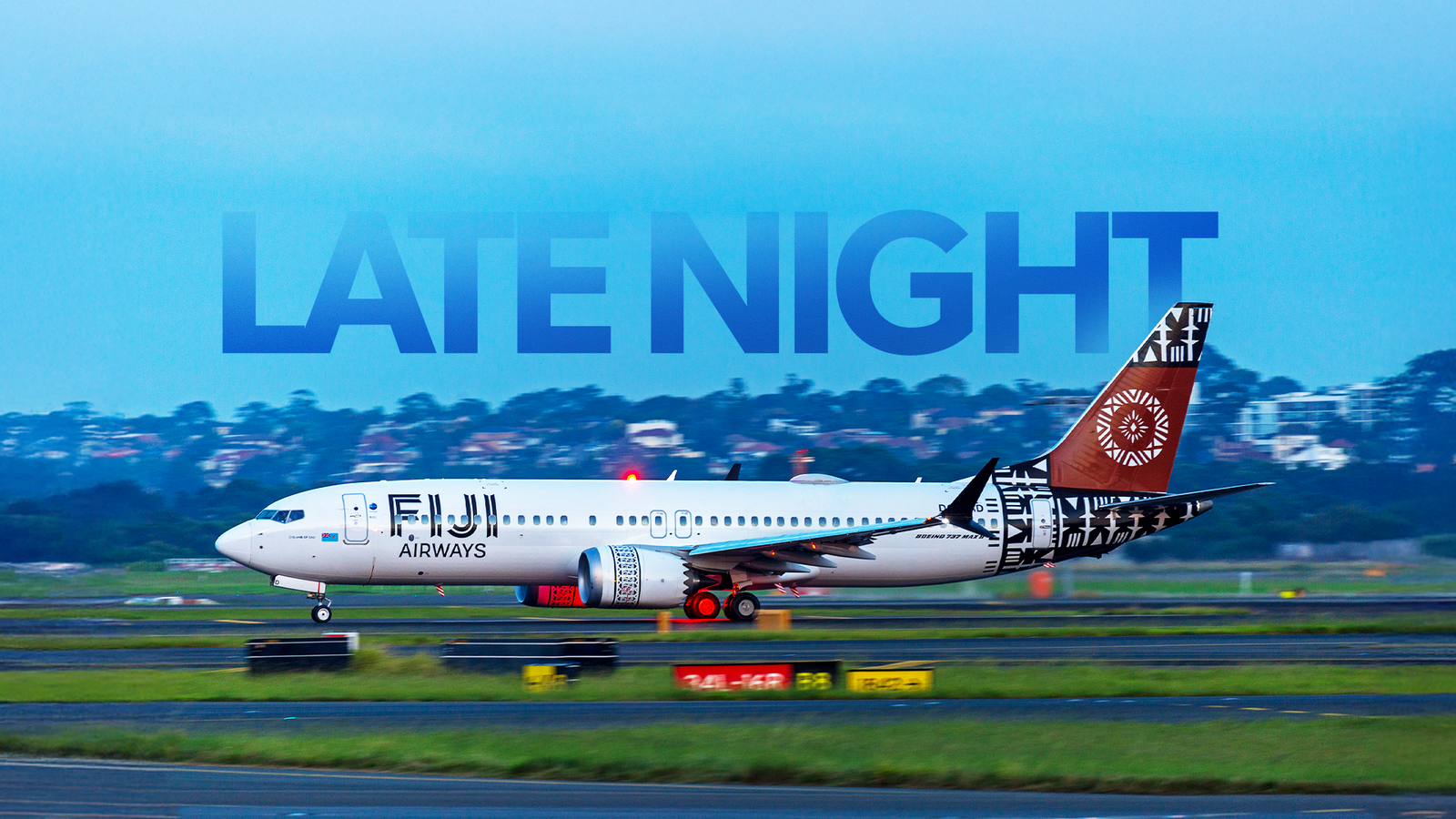
The Late Night Flight That Proves What Sydney's New $14 Billion Airport Is Actually For
Full Article
Original Source
Read the full article at Simpleflying →KhanList aggregates and links to publicly available news content. We do not host full articles from third-party sources. Always verify important information with original sources.