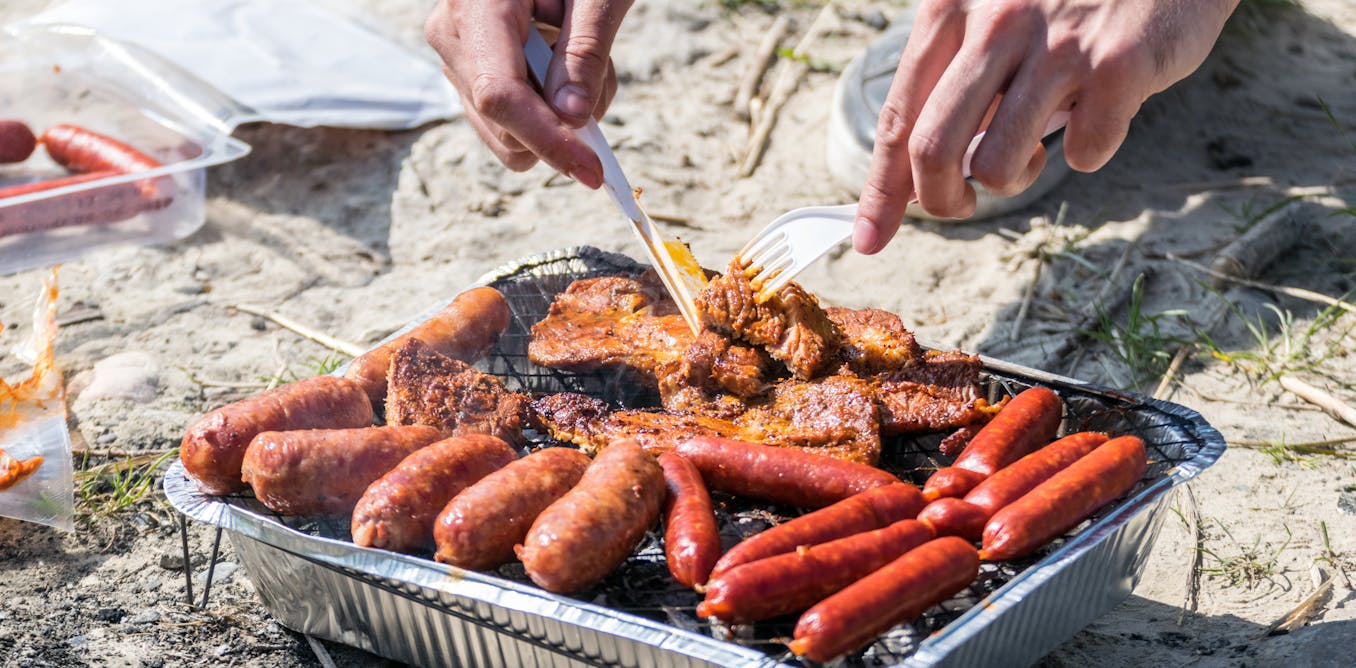
There’s something almost comic about the modern British summer ritual: as soon as the mercury climbs, we head to the nearest park, sit cross-legged on scorched grass, and hunch over a flimsy foil tray to sear sausages over an open flame. But these disposable BBQs are now active wildfire risks. This summer, the UK has been experiencing what some fire scientists are calling a “firewave” – when heatwaves create the perfect conditions for wildfires, especially within cities. As a result, some councils have banned the use of disposable BBQs on council-owned parks, beaches and other public spaces. It comes as London is on high alert for wildfires following four successive heatwaves so far this summer and minimal rainfall. The current fire danger forecast for the UK is set at “very extreme”. This coincides with record fires in France, Spain and Greece, forcing evacuations of major cities including Bordeaux. While wildfires are a common occurrence, their frequency and intensity is increasing with climate change. At any given moment, thousands are being recorded across the globe by satellites and can be viewed in real time. The devastating news of the fires in mainland Europe may make it seem like the problem is across the channel, but the UK statistics back up the unease. Over the weekend, the London Fire Brigade responded to over 1,300 incidents. With temperatures expected to remain high and the skies clear of rain, the risk is only increasing. Most of England currently classifies as very high risk under the Fire Safety Index. Meanwhile, South Wales Fire and Rescue has been battling flames in the Blaenavon area since July 20. This has been affecting air quality in the Cardiff area, despite the Welsh capital being 30km away from the blaze. Almost all UK wildfires are being started by people. So given the hot summer we’re in, wouldn’t a crisp salad and a piece of fresh fruit make more sense than crouching over hot coals? The BBQ risk Disposable BBQs are a major preventable ignition source. The coals inside them are separated from the surface by only a thin aluminium tray that becomes extremely hot. This directly heats the surface below, rather than dispersing into open air the way it might around a fixed barbecue stand. Charcoal embers can also easily blow from the BBQ onto the ground and ignite dry grass, leaf litter, heathland or peat in sustained dry conditions. On exposed coastlines, particularly where cliffs are capped with dry peat or gorse, wind can carry embers further and faster than on a still inland afternoon. Peat is exceptionally carbon rich. Found in bogs, fens and marshy uplands, it is formed very much the same way as coal and contains the partially decomposed remains of ancient plants and animals. This organic matter can smoulder underground for days and even weeks after it looks like a fire has been put out, presenting additional challenges for the fire services. Even after charcoal appears extinguished, BBQ trays can stay hot for hours after the last sausage comes off the grill. And binning a warm BBQ creates a second danger, since barbecues discarded before cooling have started bin fires. For these reasons, disposable BBQs are one of the first items that fire services request people avoid. For those at the throng, discarded cigarettes and vapes with faulty batteries add another source of ignition to the same dry conditions. Overflowing rubbish near the River Thames, London. LSP EM/Shutterstock Then there’s the rubbish. A disposable BBQ picnic doesn’t just leave behind food packaging. There is the packaging for the BBQ itself, as well as the spent grill and ash, plus disposable plates and cutlery: three waste streams where a carefully packed lunch can produce far less. Half-cooked meat and leftovers often end up in general rubbish bins rather than food waste bins, if they reach a bin at all. Often picnickers’ rubbish bags are too large to put in general park bins, and are often left beside an overflowing bin. Unfortunately it doesn’t necessarily stay there. Bagged waste is often scattered by foxes and gulls before collection crews arrive, turning good intentions into more litter on the ground. Here’s the reframe worth sitting with: if you think of yourself as a climate aware, nature-loving type, cooking over open flame on parched grassland isn’t actually a wholesome outdoorsy choice. It risks the landscape you’re claiming to enjoy, triples the rubbish of an ordinary picnic and burns fossil-fuel-derived charcoal to heat food you could just as happily eat cold. The simplest, healthiest and most environmental option is also the easiest one: pack a fresh, plant-based meal in a container that seals, and use that same container for anything you don’t finish. No flame, no ash, no coals, no fire risk and no extra rubbish. Skipping the disposable BBQ used to mean giving something up. But given the risk, the mess and the heat we’re now living with, packing a salad is simply the better option.
Wildfires: why disposable BBQs are being banned from some parks and beaches
Full Article
Original Source
Read the full article at Theconversation →KhanList aggregates and links to publicly available news content. We do not host full articles from third-party sources. Always verify important information with original sources.