
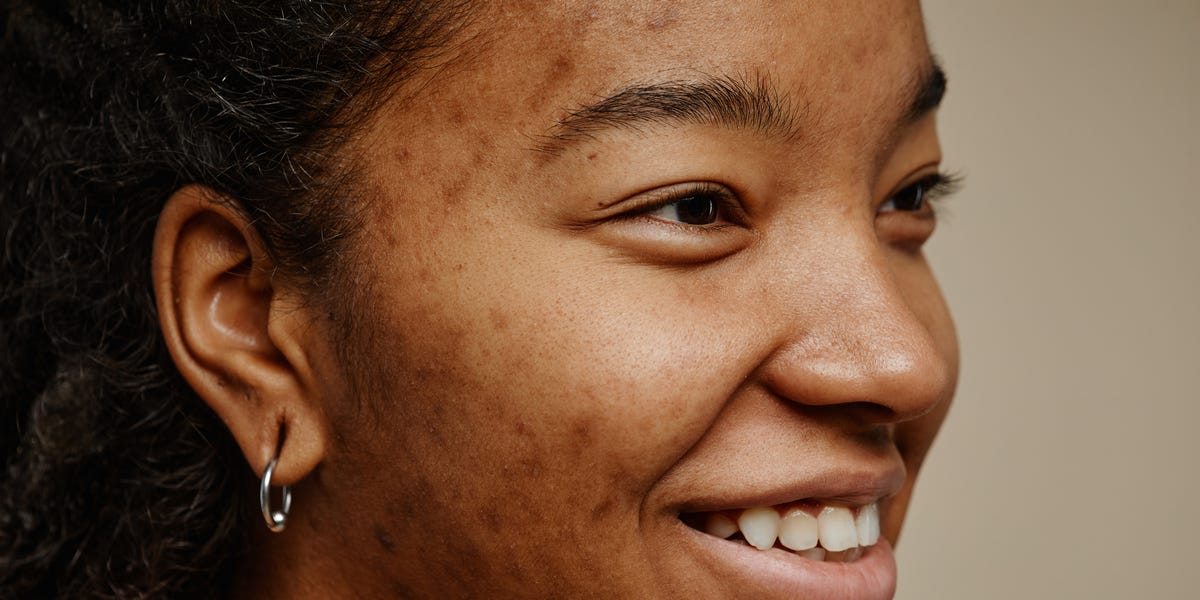
Throughout my teenage years, I was blessedly acne-free. I experienced severe eczema, and for that, I thought the trade-off for my dryness and rashes was the rarity of a pimple. Then, I turned 22 and my face became a hotbed for breakouts, so much so that I started taking oral spironolactone and underwent an entire skincare program with Face Reality to get everything under control.Now I’m 26, and while I’m off the daily meds and have the ability to be more liberal with my regimen, I still experience breakouts across my chin from time to time. When I spoke with friends and found out so many of them were also experiencing acne for the first time and going on Accutane and spironolactone, I concluded that adult acne is not nearly as addressed as teenage acne.Of course, for teenagers, breakouts can be difficult and stressful, but they’re common, and skincare brands like Starface and Hero Cosmetics have helped normalize pimple patches and mitigate the insecurity of having acne. But for adults in their 20s, 30s, and 40s who also experience breakouts, acne is far less discussed.“I think one of the biggest misconceptions about acne is that it's mostly a teenage skin condition,” says Stephanie Criscione, licensed esthetician and senior director of education at Face Reality. “Acne can show up at almost any stage of life, and someone who's 35 may need a very different approach than someone who's 15, even if their breakouts look similar.”Below, I chatted with board-certified dermatologist Dr. Karan Lal and licensed estheticians Samantha Susca and Criscione for all their insight on the different phases of acne and what treatment might look like throughout every age.The different phases of acnePuberty and adolescence (ages 10–19)“Teenage acne is often driven by the hormonal surge associated with puberty, which increases oil production and contributes to clogged follicles and inflammation,” Criscione explains. “We tend to see a combination of blackheads, whiteheads, and inflammatory lesions, often affecting larger areas of the face and sometimes the chest and back.”Susca adds, “the increase of certain androgen production and sebaceous activity, coupled with the lifestyle of a teenager, which is often not the most hygienic or knowledgeable about personal care,” can contribute to breakouts.Dr. Lal adds that teenage acne “tends to involve a broader distribution across the face, particularly the T-zone, and can also affect the chest and back.”Adulthood (ages 20–40)Unfortunately, leaving your teenage years doesn't always mean leaving acne behind. Our experts all agree that adult acne can be more complicated to treat because there isn't a one-size-fits-all solution, and the root causes can vary. “Acne that arises in your 20s and 30s is more likely to be due to hormonal fluctuations, which are not necessarily always hormonal imbalances,” Susca explains.“Fluctuations can occur from things like age and stress, pregnancies, stopping or starting contraceptives or other medications, as well as genetic and family history of perimenopause, which can happen as early as in the 30s age range,” Susca says. “Inflammation paired with stress, lifestyle, travel, and using an incorrect routine can be factors that contribute as well.”In terms of what these breakouts actually look like, “We tend to see more persistent inflammatory acne in some adults, particularly around the lower face,” says Criscione. This includes the jawline and the chin, which are areas most commonly associated with hormonal acne.Dr. Lal adds that, “These breakouts can be persistent, cyclical, and more likely to leave behind post-inflammatory hyperpigmentation or scarring.”And something that often gets overlooked is that adult skin has competing needs, which can further compromise the skin barrier and contribute to persistent acne. “Someone in their 30s may be dealing with breakouts while simultaneously experiencing dehydration, sensitivity, pigmentation, or early signs of aging,” Criscione says. “Unfortunately reaching for the strongest acne treatment on the shelf can end up compromising the skin barrier and making those other concerns worse.” So, it’s important to be selective about the products addressing other skin concerns if you’re also dealing with acne at this stage.Perimenopause and menopause (ages 40–55+)“Unfortunately, turning 40 or 50 doesn't automatically mean we're in the clear, pun intended,” Criscione says. Hormonal changes can continue to influence the skin well into midlife, and acne can take on a different appearance during this stage. “Perimenopausal and menopausal acne is often very red and inflamed, presenting as cystic in many cases,” Susca explains.“As estrogen levels fluctuate and eventually decline, the relative influence of androgens on the sebaceous glands may become more pronounced,” says Dr. Lal. “Some patients experience new or worsening acne despite having had relatively clear skin for years.”“In menopause the skin also often becomes drier, thinner, and more sensitive,” explains Dr. Lal. “This creates an interesting clinical challenge, where patients may simultaneously experience acne and reduced skin barrier function, so treatment must address breakouts without unnecessarily compromising hydration or skin integrity.”How to treat adult acneAccording to Dr. Lal, acne treatment should be individualized based on several factors, including age, acne severity, skin type, hormonal status, and risk of scarring.For teenagers, treatment often starts by addressing excess oil and clogged pores. “In teenagers, I often focus on establishing a simple, consistent routine,” explains Dr. Lal. Classic acne-fighting ingredients like “benzoyl peroxide can be particularly helpful for inflammatory acne, and salicylic acid may be useful for patients with predominantly clogged pores. More severe cases may require prescription therapies,” he adds.“In the 20s and 30s age range, treatment often needs to address both acne and the patient’s concerns about pigmentation, texture, and early photoaging,” says Dr. Lal. “Topical retinoids are valuable, while azelaic acid can be an excellent option for patients who experience both acne and post-inflammatory hyperpigmentation.” In some cases for women, he adds that hormonal prescriptions such as spironolactone or certain combined oral contraceptives may be beneficial.“For patients in their 40s and beyond, I place greater emphasis on balancing efficacy with tolerability,” says Dr. Lal. “The skin may be drier or more sensitive, so I may recommend a lower-strength retinoid, less frequent application, or a more supportive moisturizing regimen.”Dr. Lal also emphasizes that treatment should account for the specific type of acne someone is experiencing. “For comedonal acne, retinoids are particularly important; for inflammatory acne, benzoyl peroxide and prescription anti-inflammatory treatments may be needed, and for deep nodular or scarring acne, systemic treatment—including isotretinoin in appropriate patients—may be necessary.”FAQsWhy am I breaking out as an adult?“Androgens, which are present in both men and women, stimulate oil production in the skin,” says Dr. Lal. “During puberty, that increase in oil can contribute to clogged follicles and inflammatory breakouts, and as we move into adulthood, fluctuations associated with menstrual cycles, pregnancy, and perimenopause can influence oil production and inflammation, sometimes triggering acne in people who haven't experienced breakouts in years.”“Acne is not simply a teenage problem,” Dr. Lal assures. “It is a condition that can change in its presentation and treatment needs throughout adulthood.”What are the different types of acne?There are several different types of acne, ranging from clogged pores to deeper, more painful inflammatory breakouts. Here's how to tell them apart.Comedonal acne: “Comedonal acne is generally what we think of as blackheads and whiteheads,” explains Criscione. “These are caused by excess oil and dead skin cells.” Blackheads are open comedones, while whiteheads are closed comedones. Susca adds that comedonal acne typically “looks like skin-colored bumps under the skin and it’s often associated with hormonal acne in teenagers and in early 20s.”Inflammatory acne: “This includes papules and pustules, which can appear as red, raised bumps or lesions containing visible pus,” says Dr. Lal. “inflammatory breakouts can sometimes leave behind pigmentation or scarring.” Criscione adds that “More severe inflammatory acne can involve deeper nodules or cysts that are painful, persistent, appear like hardening lumps under the skin.”Nodular or cystic acne: Susca describes this category of acne as “deep, hardened, painful inflammatory lesions beneath the skin, often with a higher risk of scarring or pigmentation.” Dr. Lal says “the term ‘cystic acne’ is commonly used by patients, although many deep lesions are technically inflammatory nodules rather than true cysts.”Hormonal acne: Susca explains that “hormonal acne isn't actually a separate lesion type, it's a description of acne influenced by hormonal activity, and it can present as anything from clogged pores to deeper inflammatory breakouts.”“Hormonal acne is often associated with breakouts along the chin, jawline, and lower cheeks, particularly when breakouts are deep, tender, and tend to appear around the same time each month,” Criscione says.Final thoughts:If you're experiencing adult acne at any stage of life, know that you're not alone. Millions of people experience breakouts well beyond their teenage years, and acne can look different as your skin and hormones change over time.Consider speaking with a skincare professional who can help identify what's contributing to your breakouts and recommend the right ingredients, products, and treatments for your skin. Adult acne is common, treatable, and most importantly, nothing to be embarrassed about!Meet the expertsDr. Karan Lal is a double board-certified adult, pediatric, and cosmetic dermatologist at Affiliated Dermatology in Scottsdale, Arizona.Samantha Susca is a New York City-based licensed esthetician and founder of Refinery4.Stephanie Criscione is a licensed esthetician and the senior director of education and clinic at Face Reality.Why Trust Cosmopolitan?Jasmine Hyman is the assistant beauty editor at Cosmo who covers all things skincare and has dealt with acne for the last five years. For this story, she consulted acne experts for all their insight on addressing and treating acne at all stages of life.Jasmine Hyman is the Assistant Beauty Editor at Cosmopolitan, where she writes about the latest beauty trends and must-have products. Her most prized beauty possessions are a meticulous skincare routine and salon blowouts. You’ll also likely find her in bed reading a good book or endlessly scrolling TikTok (spoiler: it’s usually the latter) while listening to Harry Styles’ entire discography on repeat. Follow her on Insta to be inundated with pictures of her meals.
Why You're Still Getting Acne in Your 20s, 30s, and 40s, According to Dermatologists
Full Article
Original Source
Read the full article at Cosmopolitan →KhanList aggregates and links to publicly available news content. We do not host full articles from third-party sources. Always verify important information with original sources.