
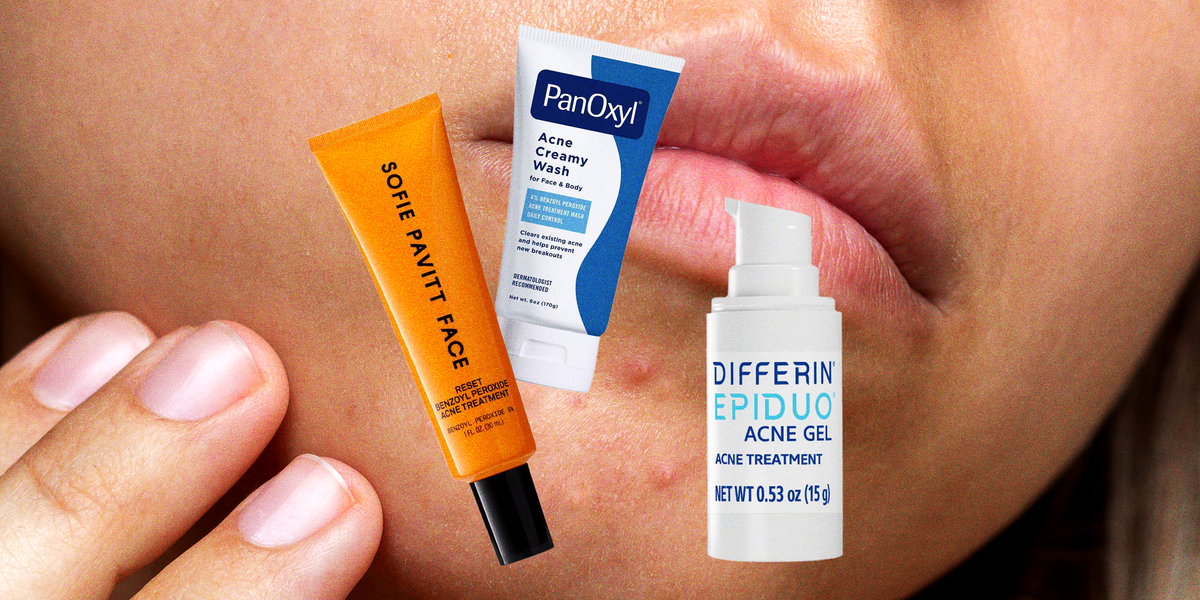
In the early aughts, the options for acne treatments were limited but surprisingly effective. When I got my first breakout, my mom dragged me to CVS, where I stocked up on salicylic acid washes, witch hazel toners, apricot scrubs (IYKYK), and benzoyl peroxide spot treatments. When all of that didn’t work, we moved on to Proactiv, the three-step infomercial darling allegedly loved by the likes of Kelly Clarkson and Jessica Simpson. It also featured a benzoyl peroxide–spiked wash and spot treatment plus an exfoliating toner. Back then, curing your acne was fairly simple. Kill bacteria with benzoyl peroxide, then exfoliate with salicylic acid. But as skincare has advanced, and consumers have wised up to what ingredients actually do, we left benzoyl peroxide by the wayside. Why?Earlier this year, still dealing with acne as I approached 30, I got a facial with aesthetician and self-proclaimed acne whisperer Sofie Pavitt. Her recommendation was simple: Wash four nights a week with a benzoyl peroxide cleanser (any drugstore option was fine, she told me), and pat on a mandelic acid serum every morning (she likes her own brand, of course). It sounded too good to be true. I’ve had hormonal acne since I was 11—something so simple couldn’t be the fix. But 10 months later, my skin has never been clearer, brighter, or more even.I almost entirely credit my lack of breakouts to benzoyl peroxide, which if you didn’t know, helps kill acne-causing bacteria on the surface of your skin. I’ll shout it from the rooftops and to anyone who will listen that benzoyl peroxide cured my acne. But as I scroll through my inbox at every new acne launch, I’m confused why so few brands ever launch any products with the magic ingredient. I can count on one hand, literally, how many products have come out this year highlighting benzoyl peroxide. The list is vast for the other famed acne treatments: salicylic acid, tea tree oil, azelaic acid, niacinamide, sulfur, glycolic acid, and lactic acid.But “dermatologists have never, never left,” dermatologist Heather Woolery-Lloyd, MD, tells me. “We always loved benzoyl peroxide because it works so well and is predictable,” she says. “It’s a hero when it comes to acne.” So where the heck did it go? And why is no one talking about it?What does benzoyl peroxide do to the skin?To understand benzoyl peroxide, you have to first understand how acne works. When you have acne-prone skin, your pores get very sticky with oil. You get a buildup of oil and bacteria in that pore, which is what turns into pimples. Benzoyl peroxide kills the acne-causing bacteria in that pore by releasing oxygen into the pore, breaking apart the bacteria, explains Dr. Woolery-Lloyd. It’s also a comedolytic, which, Dr. Woolery-Lloyd explains, means it can gently break down dead skin cells to reduce clogged pores.Why is benzoyl peroxide so controversial?First of all, it’s pretty difficult to use in formulating, Dr. Woolery-Lloyd explains. “It’s not the easiest thing to just throw into any lotion and know that it will be cosmetically elegant to apply to skin,” she says. “Dermatologists might think of it as a hero, but from a cosmetic scientist’s standpoint, it is a little more complicated to work with. It’s easier to use salicylic acid.”But there’s also some red tape. Both benzoyl peroxide and salicylic acid are considered “over-the-counter drugs,” hence why there are drug facts on the back of the packaging. This just means that brands have to prove that they’re stable through independent testing. It’s good for the consumer, Dr. Woolery-Lloyd says, because then you know the product has the right percentage and that percentage is stable until its expiration date. But ingredients like niacinamide and azelaic acid can be added without the same regulatory burden. “It’s much easier to throw niacinamide into a product than add benzoyl peroxide,” says Dr. Woolery-Lloyd.But...benzoyl peroxide is on the rise Maybe it’s my bias here, but I sense a benzoyl peroxide–aissance will be upon us shortly. Sofie Pavitt’s eponymous skincare line features the only benzoyl peroxide product at Sephora: a 5 percent spot treatment called Reset. She reformulated it from an allover face mask and relaunched this year, and it’s been one of my go-to spot treatments in 2026. But until the chic Sephora brands catch up, the drugstore is holding it down on the BP front. There’s PanOxyl, which is known for its 4 percent and 10 percent benzoyl peroxide cleansers (that’s what I use, FYI), as well as a new 10 percent spot treatment. CeraVe also offers a creamy 4 percent benzoyl peroxide cleanser with niacinamide and hyaluronic acid. An oldie but a goodie is Clean & Clear’s Persa-Gel 10, a 10 percent BP spot treatment gel that layers well under makeup. If that’s a bit too harsh for your skin, try La Roche-Posay’s 5.5 percent BP spot treatment.Recently, prescription acne-treatment Epiduo, which combines 0.1 percent adapalene (a retinoid for acne) with 2.5 percent benzoyl peroxide, became available over the counter, which is guaranteed to be a game changer. “It’s really exciting for us because it is the most effective over-the-counter acne treatment now,” says Dr. Woolery-Lloyd. “A few months ago, I’d have to write a prescription, and now you can walk into your local Walmart, Target, CVS, or Walgreens or even go on Amazon and buy it over the counter,” she says.The formula rose to popularity because it has a unique delivery base, which “evenly suspends both of the active ingredients,” says Dr. Woolery-Lloyd. “This prevents hot spots where you get local irritation.” Both retinoids and benzoyl peroxide can be drying, which is why they typically aren’t advised to be used together (and you shouldn’t try to cocktail it at home), but this gel base helps. You also only have to use it once per day, which Dr. Woolery-Lloyd loves since she knows that consistency is the key to all acne treatments.What is better: Benzoyl peroxide or salicylic acid? Neither is necessarily better than the other, because they do different things. Benzoyl peroxide kills acne-causing bacteria on the surface of your skin, reducing the likelihood that bacteria can clog and inflame your pores. Salicylic acid, on the other hand, is an oil-soluble exfoliant. It goes into your pores and helps clear out the dead skin and oils that clog them. Both can be beneficial in an acne regimen, to be fair.But it’s hard not to play favorites, for both me and Dr. Woolery-Lloyd. “When it comes to acne, benzoyl peroxide is my preferred ingredient for sure,” she says. And I agree. It’s the winner for my oily skin and persistent hormonal acne.How to use benzoyl peroxide like an expertAs much as I love benzoyl peroxide, I understand it can be drying, especially for those with already dry skin. To cut down on irritation and dryness, Dr. Woolery-Lloyd recommends opting for a lower concentration. “Benzoyl peroxide comes in many different concentrations over the counter, but the studies show that you don't really have to use those higher concentrations to get the efficacy,” she explains. The sweet spot is between 2.5 and 5 percent; you really don’t need to go with a 10 percent formula to get the benefits.As far as the rest of your skincare routine with benzoyl peroxide, Dr. Woolery-Lloyd suggests a pH-balanced cleanser (on the days you don’t use a benzoyl peroxide formula) and moisturizer to help keep your skin barrier healthy. You can actually use moisturizer before or after your benzoyl peroxide formula (especially if you’re using something like Epiduo, which also contains a retinoid). “I personally always put medicine first and the moisturizer on top, but it actually doesn't matter as long as you're using a moisturizer that can help to minimize that risk of irritation,” says Dr. Woolery-Lloyd.To improve tolerability, you can also start with every other day, or every third day, then increase if your skin reacts well. You can also try using a wash only once or twice a week. That’s what I do, and I opt for a hydrating cleanser on the off nights with lots of hydration and barrier care to offset any irritation, and my skin has handled it well. In fact, my skin looks the best it ever has right now. Thank you, benzoyl peroxide!Meet the expertHeather Woolery-Lloyd, MD, is a board-certified dermatologist based in Miami. She is currently the director of the Skin of Color Division for the University of Miami Department of Dermatology.Why trust Cosmopolitan? Beth Gillette is the beauty editor at Cosmopolitan with eight years of experience researching, writing, and editing skin, hair, makeup, nail, and fragrance stories.Beth Gillette is the beauty editor at Cosmopolitan, where she covers skincare, makeup, hair, nails, and more across digital and print. She can generally be found in bright eyeshadow furiously typing her latest feature or hemming and hawing about a new product you "have to try." Prior to Cosmopolitan, she wrote and edited beauty content as an Editor at The Everygirl for four years. Follow her on Instagram for makeup selfies and a new hair 'do every few months.
Benzoyl Peroxide Is the Unsung Hero of Acne Treatments, So Why Is It So Controversial?
Full Article
Original Source
Read the full article at Cosmopolitan →KhanList aggregates and links to publicly available news content. We do not host full articles from third-party sources. Always verify important information with original sources.