
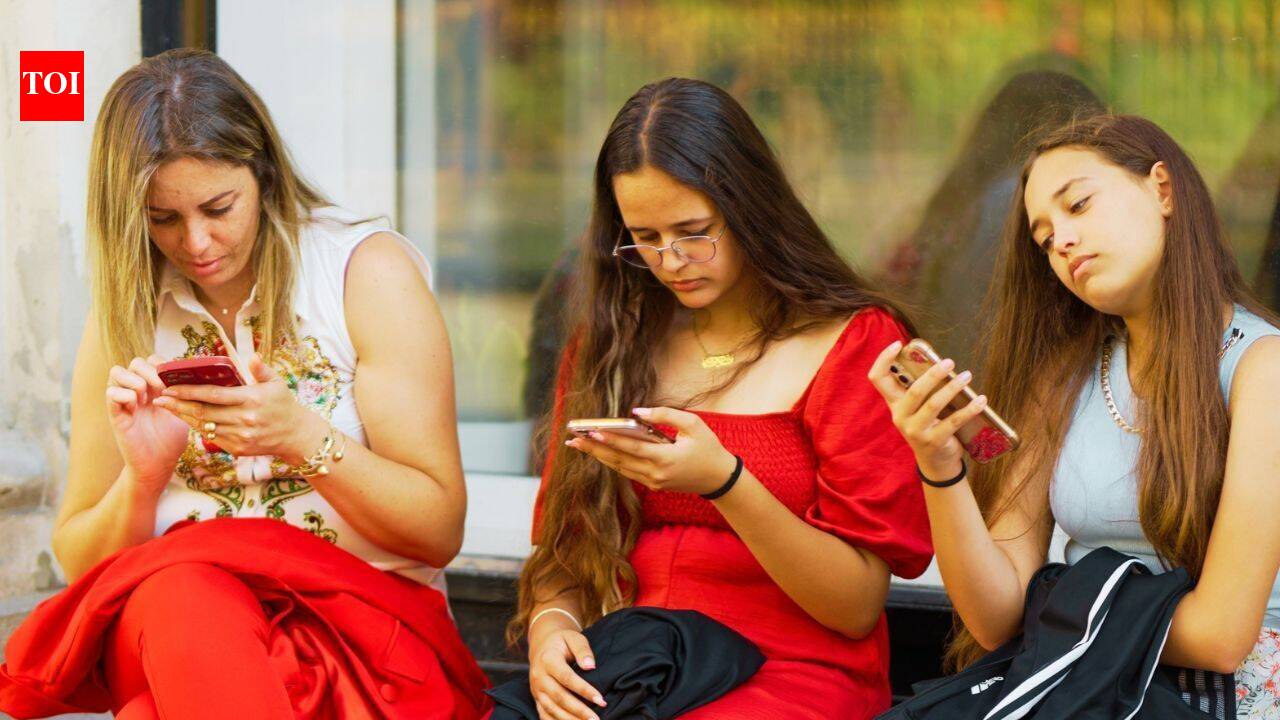
checking social media notifications (Canva)There’s no denying that cellphones have become an important part of our lives. And with that, social media thanks to easily available internet connectivity. You are waiting for an important email, scrolling through Instagram/Facebook or simply going about your day when your hand automatically reaches for your phone. You unlock it, open WhatsApp, check Instagram, swipe through notifications and lock the screen.But alas! Nothing new. No notification. No messages. No likes. No comments. Yet, a few minutes later, you find yourself doing exactly the same thing.For a number of people, this has become an almost unconscious part of everyday life. Even when the phone does not vibrate or beep, there is an unknown urge to check your phone. Just to see if there was a message, someone liked a photograph you just uploaded or responded to a story you shared only a few minutes ago.Interestingly, this behaviour may have less to do with what is actually happening on the screen and more to do with what the brain expects might happen.The psychology behind checking your phone all the timeSocial media notificationResearchers call it habitual checking. A 2012 study titled Habits Make Smartphone Use More Pervasive, published in the journal Personal and Ubiquitous Computing, examined how people interacted with their smartphones.Researchers Antti Oulasvirta and colleagues identified a pattern they described as a checking habit: brief, repetitive inspections of information that is readily available on a device. Their findings suggested that these habits could develop quickly because smartphones make information and updates instantly accessible.The interesting part is that people do not necessarily pick up their phones because they need something specific. Sometimes, the act of checking itself becomes routine. A moment of boredom, a pause between tasks or even a familiar movement can trigger the behaviour.Why the possibility of a notification keeps you hookedAnother explanation involves the psychology of unpredictable rewards.Hooked on Social mediaSocial media notifications do not arrive at fixed intervals. One time, opening Instagram may reveal several likes, comments or messages. The next time, there may be nothing. Sometimes, a message from someone important appears unexpectedly, while at other times, the notifications are ordinary updates.This unpredictability can make checking particularly reinforcing. In behavioural psychology, rewards that arrive intermittently can encourage repeated behaviour because the next attempt might produce something rewarding.A 2018 paper published in Frontiers in Psychology, titled Hypernatural Monitoring: A Social Rehearsal Account of Smartphone Addiction, discussed how unpredictable smartphone notifications can create anticipation around possible social rewards. The authors examined how expectations of messages and social interactions can encourage repeated checking.This is also why comparing social media checking to a simple dopamine rush can be misleading. Dopamine is involved in motivation, learning and reward prediction, but it is not simply a chemical released whenever someone receives a like.The habit can continue even without notificationsNotificationA 2019 study published in Cyberpsychology, Behavior, and Social Networking examined why people struggle to control their social media use. Researchers Jie Du, Peter Kerkhof and Guido M. van Koningsbruggen studied 590 daily social media users to understand the factors associated with self-control difficulties.The study identified habitual checking, the constant availability of social media and disturbances caused by notifications as important predictors of difficulty controlling social mediause. Interestingly, habitual checking was associated with greater self-control failure, even when people had other important tasks to complete.This suggests that the behaviour can become independent of incoming alerts. People may start checking their phones simply because they have grown accustomed to doing so.Psychologist Adrian Meier's 2022 research, published in Mobile Media & Communication, offers another perspective. In a five-day diary study involving 532 student smartphone users, researchers examined the relationship between mobile checking habits, the urge to check and procrastination.The findings showed that stronger checking habits, perceived interruptions and the urge to check were associated with greater procrastination.Can you break the habit of checking your phone?Checking NotificationA few simple changes can make a difference:Turn off non-essential notificationsCreate phone-free periodsKeep your phone out of reachCheck apps at specific timesRecognise your triggersUltimately, checking your phone repeatedly, even when there are no notifications, does not automatically mean you are addicted to social media. It may simply be an everyday habit that has become automatic through repetition.The more important question is whether you are picking up your phone because you genuinely want to connect with someone or because you have become so accustomed to checking it that your hand reaches for it before you even realise what you are doing.Sometimes, the most revealing part of smartphone use is not how much time we spend looking at the screen, but how often we feel the need to look at it when there is nothing new to see.
Why you keep checking your phone for social media notifications that never come
Full Article
Original Source
Read the full article at Timesofindia →KhanList aggregates and links to publicly available news content. We do not host full articles from third-party sources. Always verify important information with original sources.