
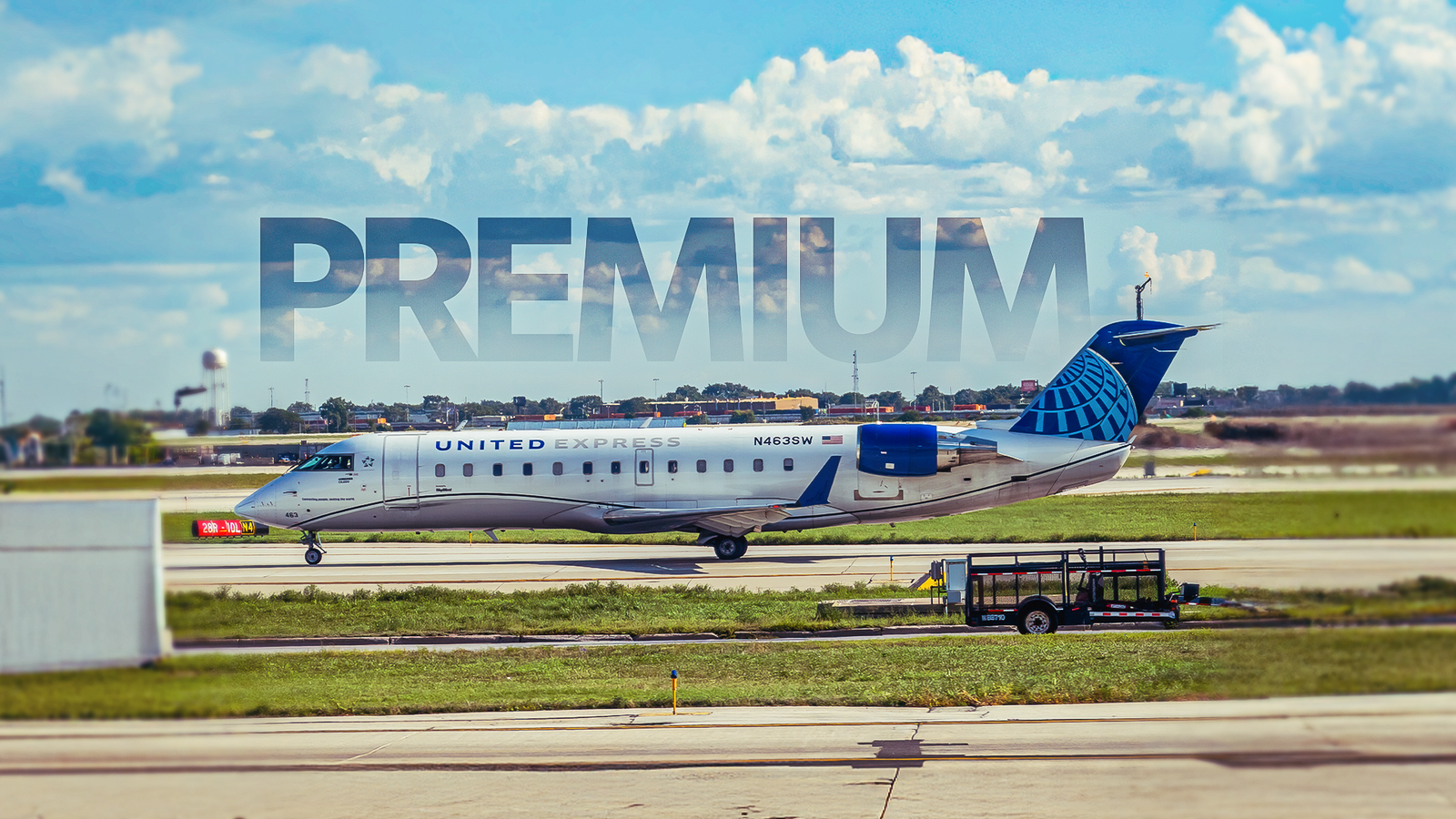
Published Nov 19, 2026, 3:01 PM EST Experienced ICAO English Language Proficiency Instructor for pilots and ATCOs and conference interpreter who is passionate about facilitating effective communication within aviation-related businesses. Possess a deep understanding of the aviation industry, including aviation regulations, terminology, and industry-specific communication protocols. Has been working at numerous airshows across Europe since 2014. Being an ultralight pilot in her free time, she also promotes safety and efficiency in aviation operations. Based in Italy and Malta United Airlines is attempting something that might have seemed unthinkable a decade ago: making the widely disliked, aging 50-seat regional jet attractive to passengers again. Instead of abandoning the 20-year-old Bombardier CRJ200, the Chicago-based carrier is transforming it into a substantially more luxurious aircraft, complete with a first class cabin, extra-legroom seating, and high-speed satellite internet. The resulting CRJ450 represents an unusual strategy in an industry focused on larger regional aircraft and premium-heavy cabins. But why is United investing in an aircraft with just 41 seats when other airlines have been moving away from 50-seater jets? The answer involves pilot union agreements, regional connectivity, the CRJ550's success, and United's ambitions to attract higher-paying passengers even on its smallest routes. Why Is United Giving The 50-Seater Regional Jet A Second Chance? Credit: Victor De Leon | Shutterstock United's decision to introduce the CRJ450 is primarily about making its regional network more profitable without sacrificing connections to smaller communities. The aircraft is a heavily reconfigured Bombardier CRJ200 operated by SkyWest Airlines under the United Express brand. Rather than purchasing an entirely new aircraft, United is giving an existing regional jet a different commercial purpose by replacing its traditional 50-seat economy configuration with a 41-seat, three-cabin interior. The move also demonstrates that the airline believes there is still a place for smaller regional aircraft when the onboard experience is sufficiently attractive. Timing is notable because 50-seat regional jets have struggled with passenger perceptions for years. Frequent flyers have often nicknamed the CRJ200 the Devil's Chariot, reflecting its cramped cabin, limited overhead storage, and relatively uncomfortable experience. Its narrow fuselage and 2-2 seating arrangement leave little room for the amenities passengers expect, particularly those traveling in premium cabins. According to The Points Guy's coverage of the CRJ-450 and Runway Girl Network, United intends to address these shortcomings through a comprehensive interior redesign. However, the CRJ450 is not an attempt to make an old aircraft a private jet with flamboyant luxury. Its introduction reflects a structural limitation affecting United's regional operations: agreements with its pilots limit how many larger regional jets it can deploy. This raises the question of why United cannot simply replace its smallest aircraft with larger jets. How Pilot Scope Clauses Make 50-Seat Aircraft Valuable The explanation lies in pilot scope clauses: contractual provisions negotiated between major US airlines and their pilot unions. These agreements regulate the number and characteristics of aircraft that regional partners can operate on behalf of mainline carriers. United faces particularly restrictive limitations on larger regional aircraft, while its contractual framework provides considerably more flexibility for 50-seat jets. Consequently, retiring every smaller regional aircraft would not necessarily be practical, even if larger jets offered better passenger economics. United previously demonstrated how it could work around this limitation with the CRJ550, introduced in 2019. Based on the larger Bombardier CRJ700, the aircraft was reconfigured from its conventional 70-seat arrangement into a 50-seat aircraft with three cabins. It offered eight First class seats, 16 Economy Plus seats, and 26 standard economy seats, along with additional luggage storage. The strategy lets United offer a more premium experience while keeping the aircraft in the 50-seat category. The Points Guy explains the contractual advantage in its analysis of United's CRJ-450 business case. The CRJ-450 takes the same principle further, this time using the smaller CRJ200 airframe. Regional aircraft Original configuration United's strategy Bombardier CRJ200 50 seats Converted into the 41-seat CRJ450 Bombardier CRJ700 70 seats Converted into the 50-seat CRJ550 Embraer E175 70/76 seats Conventional regional operation United may not be choosing the CRJ450 over a larger aircraft solely because of passenger capacity. Instead, it is opting for the aircraft category that offers the greatest contractual flexibility. Still, keeping 50-seaters in the fleet only makes commercial sense if passengers are willing to fly on them. The CRJ450's redesigned cabin could help make that possible. How The CRJ-450 Turns An Unpopular Regional Jet Into A Premium Aircraft Credit: Wenjie Zheng | Shutterstock One of the biggest changes to the CRJ200 is in the cabin, not the engines or airframe, which remain the same. United is removing nine seats from the original 50-seat layout to create three cabins: seven United First seats, 16 Economy Plus seats, and 18 standard economy seats. The new layout changes how the aircraft is marketed, giving passengers the option to buy a first class seat on one of United's smallest regional aircraft. The first class cabin is arguably the most interesting part of the redesign. United is removing the overhead bins above these seats and replacing them with a dedicated luggage closet, creating a more open environment with a higher perceived ceiling height. Three of the seven first class seats will be individual seats arranged in a 1-1 configuration, giving passengers more privacy. Meanwhile, the Economy cabin will feature larger overhead bins that can accommodate standard rollaboard carry-on bags, addressing one of the CRJ200's most common passenger complaints. The airline has also included free high-speed Starlink WiFi for MileagePlus members. Feature CRJ200 CRJ450 Total passenger seats 50 41 United First None 7 Economy Plus None 16 Standard economy 50 18 Dedicated First Class luggage closet No Yes Larger rollaboard-friendly bins No Yes Starlink WiFi Not part of original configuration Yes The redesign follows the philosophy behind the CRJ550, although United is making more substantial changes to the passenger experience on the smaller aircraft. According to Upgraded Points' CRJ450 cabin tour and Live And Let's Fly, the objective is to make the aircraft feel considerably more spacious despite retaining the narrow CRJ200 fuselage. However, removing nine seats raises another question: can the additional premium revenue offset the reduction in passenger capacity? Why the CRJ450 Has a Place in United's Long History of Regional Flying Credit: United Airlines United's decision becomes easier to understand when viewed against the airline's extensive history of regional aircraft operations. United Express has relied on numerous aircraft families over the decades, ranging from small turboprops to larger regional jets. These aircraft have allowed the airline to serve communities that could not consistently support mainline Boeing or Airbus services while feeding passengers into major hubs. Historical United Express fleets have included aircraft such as the ATR 42 and ATR 72, British Aerospace BAe 146 and Avro RJ, BAe ATP, Jetstream 31 and 32, Jetstream 41, Dornier 328, de Havilland Canada Dash 8, Embraer EMB-120 Brasilia, and Saab 340. United Express also operated several generations of regional jets, including the Bombardier CRJ100, CRJ200, and CRJ700, as well as the Embraer ERJ-135, ERJ-145, E170, and E175. Each type served a different operational need, based on route demand, aircraft availability, and the economics of connecting smaller markets. Planespotters.com's United Express fleet overview illustrates the range of aircraft operated over time. It lists 901 historic aircraft across the regional fleet categories and 480 currently in service. Of those, 78 are Bombardier CRJ200s. These figures show that the aircraft family remains part of the regional aviation network. With 50 seats, the CRJ200 enabled regional operators to connect smaller cities with major hubs without relying on the passenger demand required to fill larger aircraft. United later expanded its regional operations with the ERJ145 and CRJ700, while the E170 and E175 offered more capacity and a newer passenger experience. The CRJ550 showed how an existing airframe could be adapted for a premium product. Now, the CRJ450 applies that approach to the smaller CRJ200, potentially giving the aging aircraft family another role in United's network. But the aircraft's historical importance is only part of the story. Its real value will depend on where United deploys it and whether smaller communities can generate enough premium demand. Why Chicago O'Hare & Denver Are Central To The CRJ450 Strategy Credit: BUI LE MANH HUNG | Shutterstock United plans to use the CRJ450 to connect smaller communities with its major hubs, particularly Chicago O'Hare International Airport (ORD) and Denver International Airport (DEN). These airports are key connection points for passengers traveling beyond the airline's regional network, including those connecting to domestic transcontinental and international services. The CRJ450 will do more than move passengers between two smaller cities: it will help United sell premium itineraries that begin or end in markets with limited air service. Connecting big cities with smaller communities remains critical to the airline's network. The first CRJ450 is expected to enter passenger service through Chicago O'Hare in December 2026, with smaller destinations such as Akron-Canton and Fort Wayne among the potential markets The Points Guy discussed. SkyWest will operate the aircraft under the United Express brand, with a multi-year agreement covering the first 40 aircraft. The commercial argument is compelling for passengers connecting to international flights. A business traveler departing from a smaller Midwestern community could purchase a single itinerary featuring United First on the regional segment and United Polaris on a subsequent long-haul flight. Previously, the regional portion of that journey might have involved a cramped, economy-only CRJ200. United is effectively extending its premium positioning to the first and last stages of the journey rather than concentrating its investment exclusively on larger aircraft. The CRJ450 also fits into United's wider premium expansion strategy. In March 2026, the airline announced plans to add more than 250 aircraft over the following two years, alongside new premium configurations for its Airbus A321neo and A321XLR fleets and its Boeing 787-9 Dreamliners. United reported that premium seats per North American departure had increased by 40% since 2021. Nevertheless, converting older regional jets introduces another challenge: the aircraft must remain economically viable despite its reduced seating capacity and substantial interior modifications. Can United Make The CRJ450 A Long-Term Regional Success? The CRJ450's biggest advantage is that United does not need to develop an entirely new aircraft to introduce the product. It can use existing CRJ200 airframes, after the necessary interior modifications. This provides an alternative to purchasing new regional aircraft, although conversion costs, maintenance requirements, and the age of the underlying airframes will remain important considerations. SkyWest is targeting approximately 50 CRJ200 conversions by 2028, while its agreement with United covers 40 aircraft. The first two conversions were still underway in November 2026, and SkyWest expected subsequent modifications to take about two to three weeks per aircraft. According to Aviation Week, the regional operator sees the program as a longer-term investment in a premium product. SkyWest executives have also suggested that demand for converted aircraft could eventually extend beyond the initial United program. The financial test will be whether the additional revenue from seven First class seats and 16 Economy Plus seats offsets the nine fewer passengers the aircraft can accommodate. Lower passenger capacity also means less weight, which SkyWest's management identified as a potential fuel-related advantage. United will additionally have to demonstrate that passengers are willing to pay premium fares on relatively short regional journeys, rather than simply appreciating the improved cabin without generating additional revenue. The CRJ450 is an unusual attempt to extend the commercial life of an aircraft that many passengers would rather avoid. Its success could encourage further regional aircraft conversions, particularly as airlines search for ways to offer differentiated products without waiting for entirely new aircraft programs. Whether United can turn the Devil's Chariot into a genuinely desirable premium product will become clearer once the aircraft begins operating regularly across its regional network.
Why United Airlines Is Betting On Premium To Bring Revive Popularity Of 50-Seater Jets
Full Article
Original Source
Read the full article at Simpleflying →KhanList aggregates and links to publicly available news content. We do not host full articles from third-party sources. Always verify important information with original sources.