
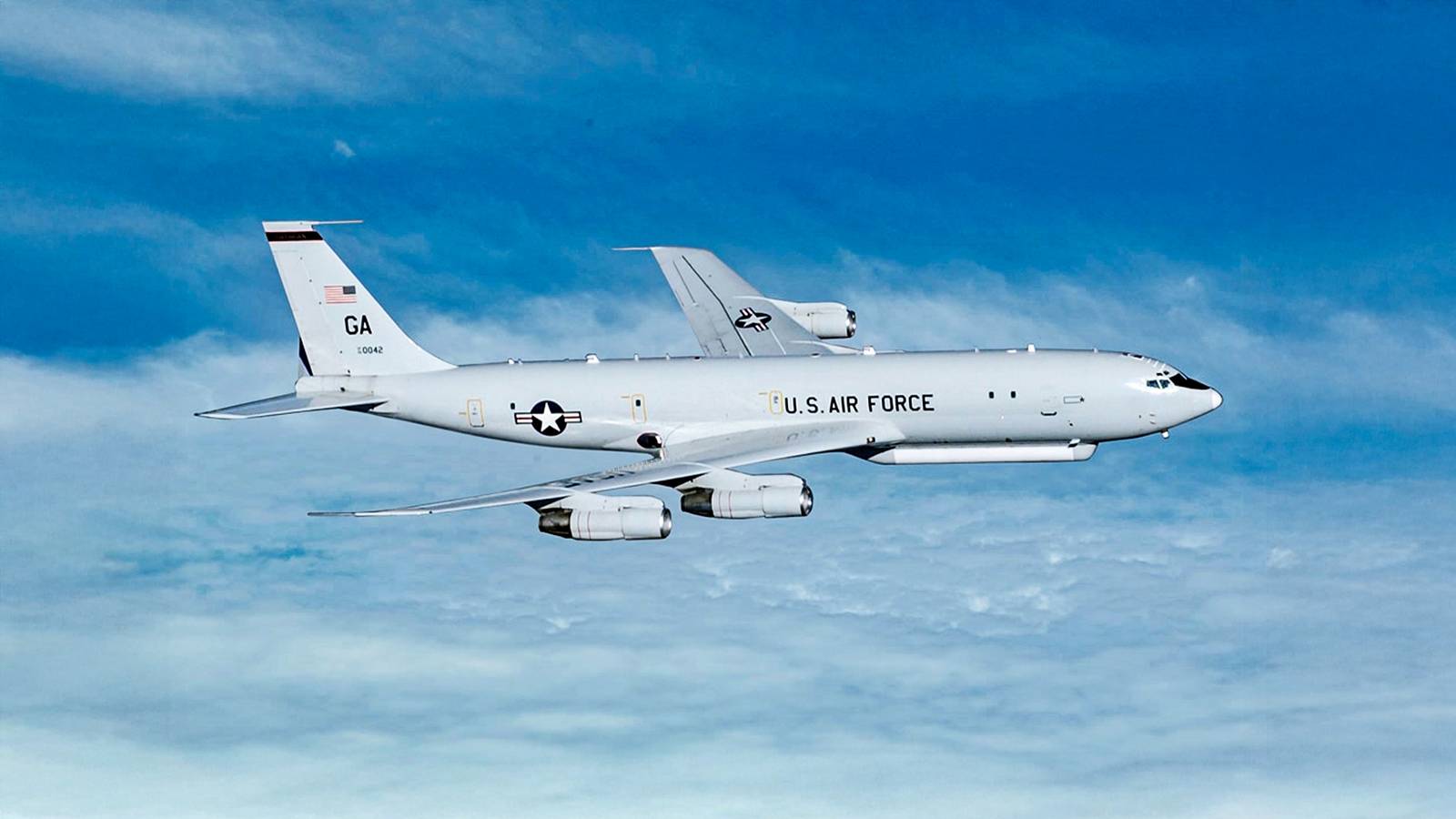
Published Sep 20, 2026, 9:00 AM EDT Luke Diaz is a freelance military writer with experience with active duty experience in the US Navy as well as defense and industrial engineering. He is a former Naval Flight Officer who performed tactical air control on the carrier-based E-2 Hawkeye. For thirty years, just one type of platform handled the monumental task of tracking virtually all ground targets in a combat theater for the United States military. When the Air Force flew Northrop Grumman's E-8C Joint STARS jet home for the last time in September 2023, it didn't just sunset an airframe, it was the end of an era. No new plane rolled off the assembly line to take over the job the radically modified Boeing 707s had done to great acclaim since the Gulf War. According to Air & Space Forces Magazine, the last E-8C departed its home base in Georgia in November 2023, retiring the fleet for good. The plane represented a major advance in data-link interoperability between air, land, and sea forces. Its powerful radar was capable of detecting many threats before any other unit, but its ability to push that information out to combat forces was the true game-changer that it brought to the battlefield. Ultimately, the US Air Force decided the plane was a relic of technology designed for the Cold War, which would be superseded by the new 'system of systems' developing through a myriad of 21st-century technologies. The USAF is betting on a combination of space-based, remote-piloted aircraft, and powerful new 'combat cloud' data-link technology. Although the USAF may still purchase the Boeing E-7 Wedgetail AWACS as a kind of successor, none have been delivered yet. A Radar Built for a Different War Credit: The National Archives Catalog The E-8C originated from an ingenious program of converting used 707-300 commercial jets into an improvised 'Eye in the Sky.' Northrop Grumman basically convinced the Department of Defense that bolting on a powerful radar to an old airliner could transform it into a flying Battlefield Command Post, and that is exactly what happened. After Northrop finished its work, the jets were equipped with a 24-foot antenna mounted in a pod. It was often remarked that the radar array resembled a canoe beneath its belly. With the Pave Mover, the aircraft could scan over 50,000 square kilometers at a time. It pioneered the Ground Moving Target Indicator and Synthetic Aperture Radar to build a 'picture' deep behind enemy lines and find moving tanks, trucks, and armored vehicles. This ability to watch from a safe distance was the main reason the airplane was built. From more than 250 kilometers away, its radar system could identify and follow moving trucks and tanks. The aircraft could safely fly inside friendly territory while giving military commanders below a real-time picture of enemy ground troops. JSTARS proved successful because the Air Force could safely cruise high above a war zone without worrying about getting shot down. As the years went on and enemy air defenses evolved, its range became a grave vulnerability. A huge, lumbering airplane can be readily destroyed by a near-peer adversary firing missiles high into the sky. While its capabilities influenced much of the USAF's technology and operational doctrine, it was left behind by the steady march of time. When Survival Stopped Being True Credit: The National Archives Catalog In 2017, the Air Force planned to replace its aging fleet through a new program called JSTARS Recap. According to Defense News, the military budgeted more than $6.9 billion to buy 17 new aircraft. It started a three-way competition between Boeing, Lockheed Martin, and Northrop Grumman. The goal was to take the same long-distance radar capability, enhance it, and place it onto more modern airplanes. Top Air Force leaders soon became deeply concerned that these modified passenger jets would not survive a war against a major enemy with advanced air defense missiles. The head of Air Combat Command questioned how long the military could keep tracking ground targets while putting a full crew of 18-21 Airmen onto a single, defenseless airplane. Consequently, in its 2019 budget proposal, the Air Force scrapped the multibillion-dollar replacement program. The three rival defense businesses reportedly suffered a $7 billion loss as a result of this cancellation. The military redirected funds for an entirely different concept. The service chose to move ahead with its digitally networked system, the Advanced Battle Management System, instead of purchasing any aircraft at all. Congress Fights The Clock Credit: The National Archives Catalog The Air Force's substitute proposal was met with resistance from Congress. Lawmakers were concerned that military commanders would be blind on the battlefield without JSTARS in the air over a conflict zone. The House of Representatives even threatened to cut the new network's funding in half unless the Air Force picked one of the three defense companies to build a replacement plane. They also passed rules to stop the military from retiring more than a single E-8C airplane while the debate continued. In response, the Air Force Secretary told the Senate that building a new airplane while creating the digital network at the same time would cost an extra $7 billion that Congress had not provided, which only prolonged the institutional battle. The 2022 defense strategy bill, according to the Air Force Times, again cautioned the service to continue using the outdated E-8C aircraft until a suitable successor was ready. Legislators did not outright prohibit their retirement. Yet, Congress ultimately gave in, according to Air & Space Forces Magazine. A Fleet Already Wearing Out Credit: The National Archives Catalog The Air Force's own financial calculus made the argument to retire the plane much easier to win, even if it did not solve the replacement problem. Air & Space Forces Magazine reported that a 2021 study found the fleet of 16 E-8C jets was only able to fly its missions 67% of the time. The same study calculated that retiring the planes early would save $2.7 billion over five years. The military did, however, acknowledge that these savings would temporarily impair its ability to monitor ground targets until the new digital network was operational. All the same, a senior Air Force budget officer used harsh language to convey the threat in no uncertain terms. According to Air & Space Forces Magazine, General Mike Holmes said that the JSTARS aircraft would be destroyed in a minute and could not withstand a contemporary conflict. Still, by the time the last E-8C airplane flew away, the digital network meant to replace it was still mostly an unproven idea. A Two-Pronged Approach Credit: The National Archives Catalog In reality, the Air Force created a developing digital system that is shared by two military services instead of a new aircraft. This technology is not limited to a single vehicle or piece of equipment. This is part of the Pentagon's broader goal of connecting all branches of the military under a single digital network. The Space Force has taken over most of the actual tracking work. Spotting and tracking moving vehicles on the ground, the core job once performed by the E-8C jet, is now a joint mission handled by the Space Force and the National Reconnaissance Office. It has already launched more than 100 small satellites into low orbit to support this mission. However, the specialized tracking satellites needed to completely replace the E-8C's unique capabilities are not expected to start launching until 2028. This delay means the dangerous capability gap that worried Congress back in 2018 is still wide open, even years after the old aircraft were retired to the desert boneyard. The military must use older platforms like the U-2 spy plane's advanced radar, the high-altitude Global Hawk drone's radar, and various Army and Navy systems with partial tracking abilities, rather than relying on a single, direct replacement. The Fight Isn't Over, It Has Just Moved to Space Credit: The National Archives Catalog The JSTARS successor program was terminated amid a debate over the best platform for real-time frontline command and control. That argument has recently resurfaced thanks to the quagmire of procuring the Boeing E-7 Wedgetail. The cutting-edge plane was intended to replace the outdated E-3 Sentry radar jets. However, its prohibitively high cost, even by Pentagon standards, eliminated it from military planning for the foreseeable future. Rather, the military is wagering that space satellites will ultimately be able to do this aerial monitoring task as well. This decision inspired a cadre of nearly 20 retired generals to sign a protest letter asking the government to fund the plane. They argue that space technology is simply not advanced enough yet. A satellite must simultaneously determine the target's height, speed, and position in order to identify a danger in the air. The retired generals pointed out that compared to ground monitoring, where a sensor merely needs to monitor cars traveling across land, this is a much more challenging assignment. To try to salvage the E-7 Wedgetail program, government legislators have begun the process of intervening, but its ever-growing price tag and concerns over Boeing's ability to deliver are also roadblocks. Meanwhile, a new joint operations center in Virginia is working to advance how raw satellite data is translated into actionable intelligence that battlefield commanders can use in real time. This center has become the new home for a massive tracking mission that the E-8C jet fulfilled years ago on a smaller scale. Whether this new concept of operations can handle the mission remains a question mark, however, since the satellites designed to fix the problem are still years away from launch.
Why The US Air Force Retired Its E-8 Joint STARS Fleet Without A Direct Replacement
Full Article
Original Source
Read the full article at Simpleflying →KhanList aggregates and links to publicly available news content. We do not host full articles from third-party sources. Always verify important information with original sources.