
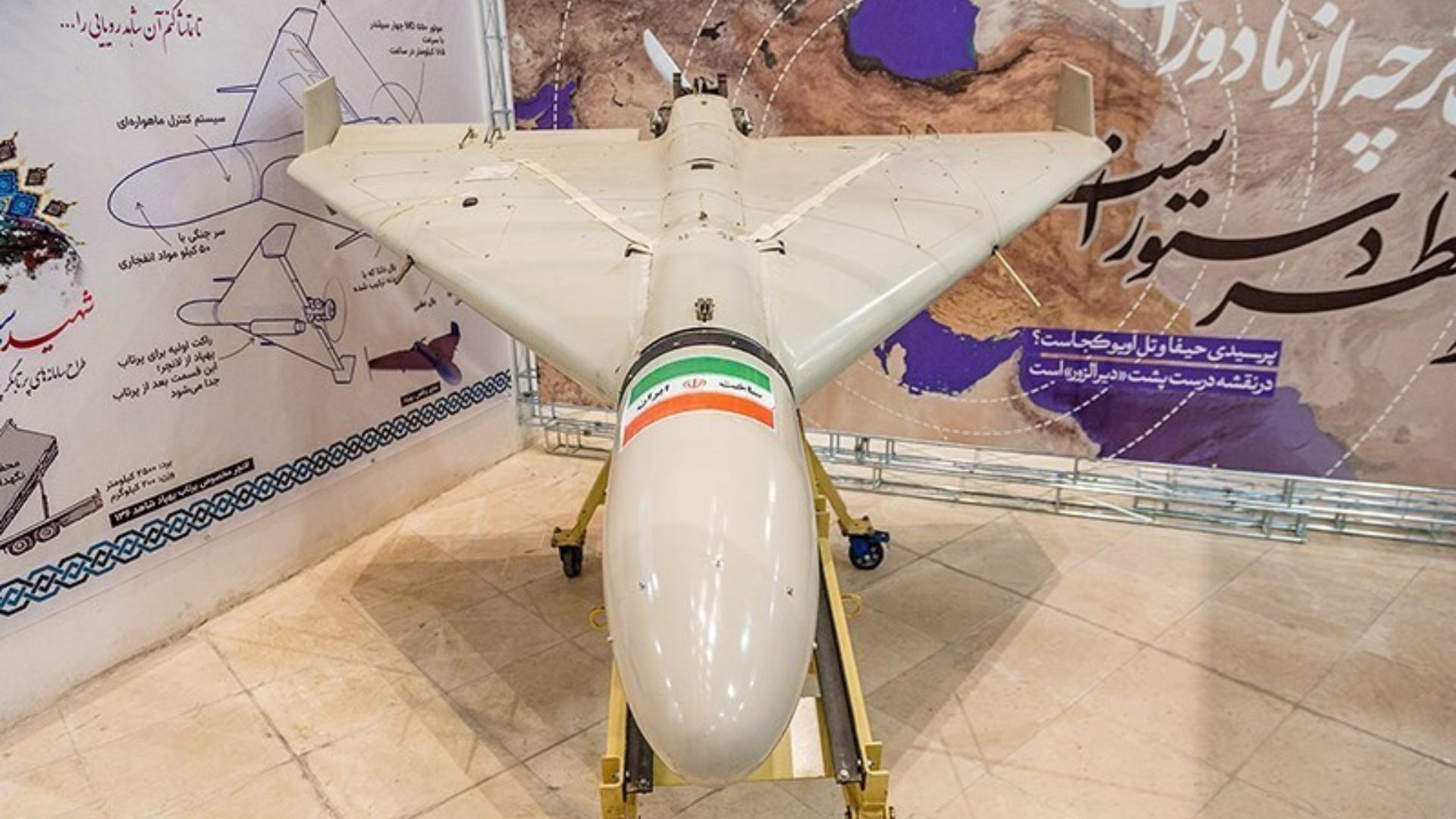
The Shahed-136 has gained prominence through its affordability and ability to be deployed in large numbers.Wikimedia Commons Few weapons have become as recognizable in modern warfare as the Shahed-136. With its distinctive delta-wing shape and unmistakable buzzing engine, the Iranian-designed loitering munition has become a defining feature of conflicts in recent years, particularly in Ukraine. Despite its relatively simple design, it has sparked global discussions about the future of aerial warfare, air defense, and the economics of modern combat. So why has this comparatively inexpensive weapon attracted so much attention? It isn’t really a drone; it’s a loitering munition Although it is commonly referred to as a “drone,” the Shahed-136 is more accurately classified as a loitering munition or one-way attack UAV. Unlike reusable unmanned aircraft that return to base after completing surveillance or strike missions, the Shahed-136 is designed to locate its target and destroy itself on impact. In effect, the aircraft itself becomes the weapon. Once launched, it follows pre-programmed navigation before diving into its target with an explosive warhead. This relatively simple concept eliminates the need for recovery systems while allowing operators to launch large numbers of aircraft in coordinated attacks. Defense analysts at RUSI classify the Shahed-136 as a one-way attack UAV, noting that such systems have become an increasingly important component of modern missile and drone campaigns. A simple design with a strategic purpose One reason the Shahed-136 has received so much attention is that it deliberately avoids complexity. The aircraft features a compact delta-wing airframe powered by a small piston engine that produces the characteristic buzzing sound frequently reported during attacks. Rather than relying on sophisticated stealth technology or high-performance jet engines, the design prioritizes simplicity, ease of production, and operational reliability. The drone is launched from angled racks mounted on trucks or trailers, allowing multiple aircraft to be fired in quick succession. This mobile launch system enables operators to relocate rapidly after launch, making them more difficult to target. Its relatively straightforward construction also makes large-scale manufacturing easier than for many advanced cruise missiles. The economics may be its greatest weapon Perhaps the Shahed-136’s biggest advantage is not its speed or firepower, but its cost-effectiveness. Modern surface-to-air missiles capable of intercepting incoming threats can cost hundreds of thousands, or even millions of dollars per interceptor. By comparison, loitering munitions like the Shahed-136 are widely regarded as significantly cheaper to manufacture. This creates what military planners call a cost-exchange dilemma: defenders may be forced to use expensive air-defense missiles to destroy comparatively inexpensive incoming weapons. Rather than relying on a single highly sophisticated aircraft, attackers can launch large numbers simultaneously, forcing defenders to expend valuable interceptor missiles while increasing the likelihood that at least some drones will reach their targets. From Iran to the world’s most closely watched battlefields The Shahed-136 first drew international attention after its use by Russia in Ukraine, but its significance has only grown during the ongoing U.S. war on Iran. This campaign shows that relatively simple one-way attack drones are no longer niche weapons. They have become integral to modern strike operations. Rather than relying solely on cruise or ballistic missiles, Iran has repeatedly paired Shahed-type drones with other long-range weapons to complicate air-defense operations. The approach forces defenders to track and engage multiple kinds of threats simultaneously while increasing pressure on interceptor stockpiles. At the same time, Russia has continued expanding domestic production of the Shahed-136, known locally as the Geran-2, demonstrating how militaries increasingly view mass-produced loitering munitions as a core component of long-range warfare. The drone that changed the economics of air defense Perhaps the Shahed-136’s greatest achievement is that it has changed how militaries think about cost. The ongoing war involving the United States, Israel, and Iran has most clearly highlighted the cost-exchange dilemma. A relatively inexpensive Shahed drone can force defenders to fire interceptor missiles that may cost orders of magnitude more, particularly when attacks come in large waves alongside ballistic or cruise missiles. Analysts have argued that the challenge is no longer simply intercepting drones. It is doing so economically over a sustained campaign. This reality has accelerated investment in cheaper counter-drone interceptors, electronic warfare systems, and directed-energy weapons, as militaries seek alternatives to relying exclusively on high-end missile defenses. In that sense, the Shahed-136’s greatest legacy may not be the targets it destroys, but the billions of dollars it has forced adversaries to spend defending against it. Changing air warfare forever The Shahed-136’s greatest contribution may not be its technology, but the questions it has forced militaries to ask. For decades, air power was measured by faster aircraft, stealthier platforms, and increasingly sophisticated precision weapons. The Shahed-136 has demonstrated that battlefield influence can also come from the opposite approach. Relatively inexpensive, expendable systems are deployed in large numbers to overwhelm defenses and impose disproportionate costs on an adversary. The ongoing wars have shown that modern air campaigns are no longer defined solely by advanced fighter aircraft and cruise missiles. They are increasingly shaped by layered attacks that combine drones, missiles, electronic warfare, and precision-guided weapons to exhaust defensive systems both physically and economically. That lesson is already reshaping military procurement around the world. Governments are accelerating investment in dedicated counter-drone interceptors, electronic warfare, directed-energy weapons, and other lower-cost air-defense solutions that can defeat mass drone attacks without rapidly depleting expensive missile inventories.Recommended ArticlesGet the latest in engineering, tech, space & science - delivered daily to your inbox.Kaif Shaikh is a journalist and writer passionate about turning complex information into clear, impactful stories. His writing covers technology, sustainability, geopolitics, and occasionally fiction. A graduate in Journalism and Mass Communication, his work has appeared in the Times of India and beyond. After a near-fatal experience, Kaif began seeing both stories and silences differently. Outside work, he juggles far too many projects and passions, but always makes time to read, reflect, and hold onto the thread of wonder.
Why the Shahed-136 has become one of the world’s most discussed military drones
Full Article
Original Source
Read the full article at Interestingengineering →KhanList aggregates and links to publicly available news content. We do not host full articles from third-party sources. Always verify important information with original sources.