
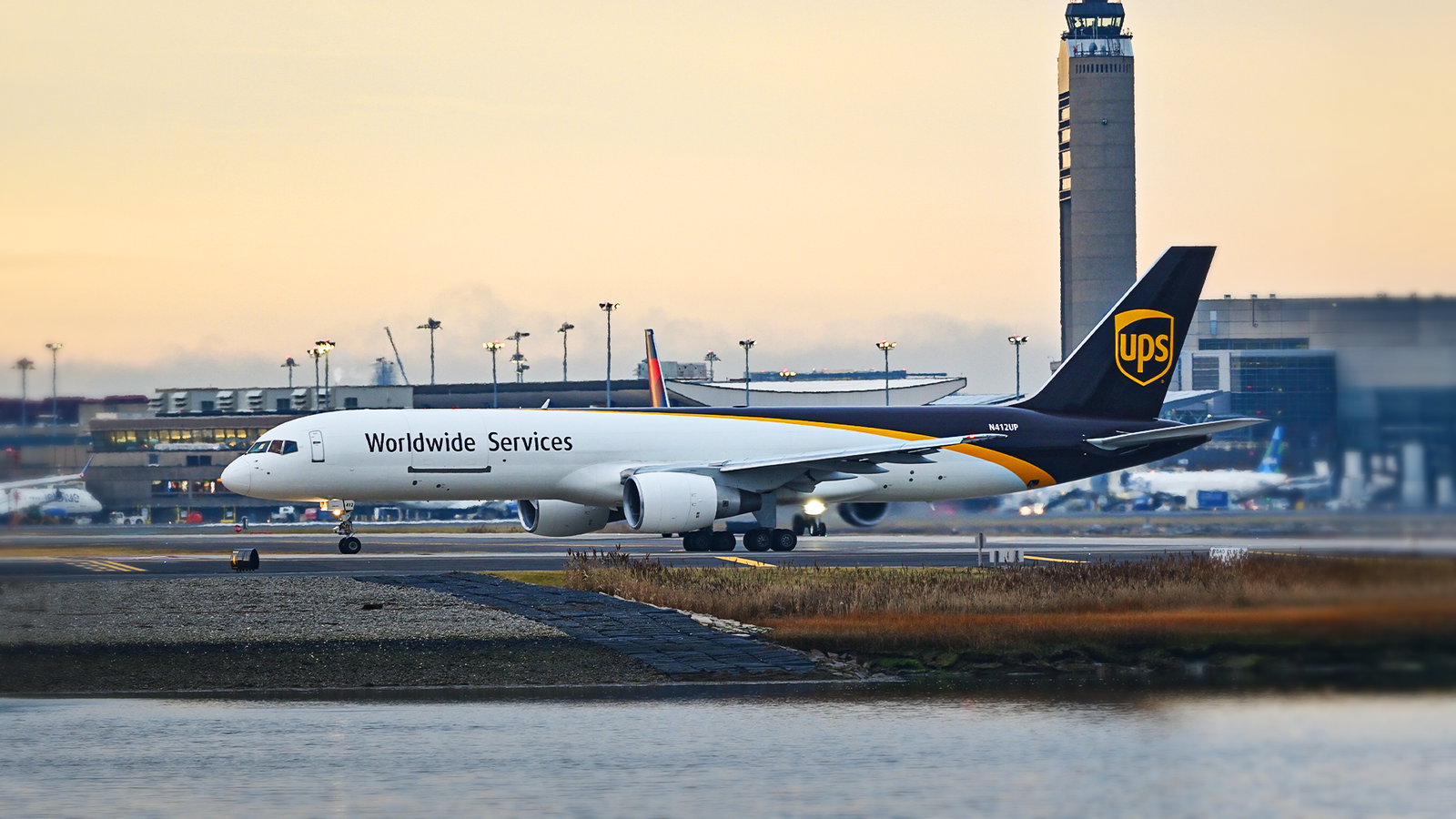
The aviation industry has seen few aircraft receive the reverence and operational loyalty of the Boeing 757. Conceived in the late 1970s to replace the aging trijet Boeing 727, the twin-engine narrowbody evolved far beyond its original short-haul domestic mandate. It paired an exceptionally clean supercritical wing with overpowered turbofan engines, and with this, Boeing created a high-altitude thoroughbred capable of operating out of restricted city-center airfields that was also capable of crossing vast oceanic expanses. As major carriers accelerate fleet modernization and phase out aging airframes for modern, high-bypass geared turbofans, the aviation community is losing an icon. The retirement of the 757 is the closing chapter of an engineering era in which raw thrust and structural over-design compensated for fuel efficiency, leaving an unmatched operational coverage across global aviation networks. A Climb Like No Other The foundational secret behind the 757's legendary performance came from its massive power-to-weight ratio. Boeing equipped the airframe with either the Rolls-Royce RB211-535 or the Pratt & Whitney PW2000, each capable of generating between 36,600 and 43,500 pounds of thrust (162.8 to 193.5 kN). This immense raw power earned the narrowbody the nickname "homesick angel" among flight crews, due to its steep, rocket-like climb gradients immediately after rotation, according to The Aviation Geek Club. This high-thrust power provided critical operational safety margins when departing from obstacle-constrained or temperature-restricted airfields. At high-elevation destinations or hot-weather airports where standard narrowbodies experience strong engine performance degradation, the 757 maintained its climb capability with full passenger loads. Furthermore, its clean aerodynamic wing design allowed it to cruise efficiently at higher altitudes and faster speeds than typical single-aisle competitors, reducing block times on congested transcontinental and oceanic corridors. The combination of massive thrust and structural strength enabled the aircraft to handle extreme operational demands that other modern narrowbodies could not handle without offloading cargo or restricting fuel payloads. Still, raw engine power alone didn't define the airframe's commercial success until regulators unlocked its true global reach. Reaching Far Across Oceans For the first decade of its commercial life, the 757 mainly flew domestic routes across North America and Europe. However, its long-range potential was finally realized in May 1986 when the Federal Aviation Administration approved Rolls-Royce-powered 757s for 120-minute Extended-range Twin-engine Operational Performance Standards, commonly known as ETOPS, as per Aircraft Commerce. It allowed twin-engine narrowbodies to cross large bodies of water, such as the North Atlantic, by ensuring they could fly safely on a single operating engine to an emergency diversion airport within a two-hour window. By 1990, ETOPS approvals expanded to 180 minutes, enabling airlines to link secondary European cities directly with North American East Coast hubs, meaning that the incredibly high operating costs of widebody quadjets or large twinjets could be avoided. Transatlantic routes from cities like Shannon Airport(SNN), Edinburgh Airport(EDI), and Lisbon Airport(LIS) to New York JFK Airport(JFK) and Boston Logan International Airport(BOS) suddenly became economically viable. Airlines could test new point-to-point international markets with 200 passengers instead of 350, opening new possibilities for global airline network planning. This regulatory breakthrough laid the groundwork for today's widespread narrowbody transatlantic model and showed that passengers would accept single-aisle aircraft for six-to-seven-hour ocean crossings. ETOPS made the 757 far more enticing to airlines, but the cabin layout was equally useful for operators, contributing heavily to its efficiency on quick turnarounds. Speedy Boarding And Turnarounds In addition to its engine performance and oceanic range, the 757 featured a distinct structural advantage that modern narrowbodies frequently lack. The L2 door's position immediately forward of the wing root let airlines split passenger boarding flows across two separate cabin entries, as Simple Flying coverage explored. On high-density domestic and charter configurations, ground crews could use both the forward L1 door and the mid-cabin L2 door at the same time, dramatically cutting down aircraft turnaround times at congested hub airports. The 757's dual-entry capability proved especially valuable for the stretched 757-300 variant, which seated up to 295 passengers in a single-class layout. Without a mid-cabin boarding door, loading nearly three hundred passengers through a single forward door creates severe boarding bottlenecks that extend gate times. The 757's floor plan enabled rapid passenger deplaning and cabin-cleaning cycles, increasing daily aircraft utilization across high-frequency domestic shuttle networks. Operational efficiencies made the aircraft an indispensable fleet asset for decades, though advancing fuel economics and maintenance realities ultimately shifted airline priorities as the years went by. Furthermore, the very design characteristics that made the airframe exceptional also introduced economic penalties as fuel prices fluctuated, penalties that many airlines refused to take on. Falling Out Of Favor With an unmatched performance envelope, it's hard to see how this aircraft could have fallen out of favor. The 757 eventually succumbed to changing macroeconomic pressures and technological advancements in propulsion, which combined, left the aircraft trailing behind many others. The low-bypass design of the RB211 and PW2000 engines, while delivering immense thrust, burns significantly more fuel per seat-mile than modern turbofans like the Pratt & Whitney GTF or CFM International LEAP-1A. On shorter domestic sectors, the fuel-burn penalty began to eat into profit margins, making older 757s increasingly expensive to operate against newer single-aisle competitors. Furthermore, aging airframes incur escalating maintenance costs as they pass the thirty-year operational threshold. Heavy structural checks, fuselage skin inspections around high-stress door cutouts, and diminishing availability of proprietary avionics replacement parts require substantial capital investment. Airlines had to decide whether to invest millions in recurring heavy maintenance checks for vintage narrowbodies or redeploy capital toward next-generation aircraft offering double-digit fuel savings. Most airlines chose the latter. These economic realities drove massive fleet reductions, with major operators like Delta Air Lines steadily trimming their active 757 counts down to roughly 86 airframes by late 2026, according to Planespotters. Even as passenger airlines phase out the type, a dedicated secondary market ensures the airframe can keep flying in more specialized roles. A Second Life In The Secondary Market Many global carriers have retired their passenger fleets, but select operators still extract high value from the 757 by leveraging its unique capabilities. United Airlines is one of the prominent passenger operators clinging to its remaining 757s, using them strategically out of slot-controlled or constrained hubs like Newark Liberty International Airport(EWR) and Denver International Airport(DEN). From high-altitude or capacity-restricted terminals, the 757 provides the exact payload-range combination needed to serve thin premium markets without sacrificing cargo space. The secondary market has breathed new life into retired airframes through dedicated freighter conversions. According to Key.Aero, over 80 aircraft were originally delivered as factory freighters, though there are far more 757 aircraft operating now as freighter aircraft. Supplemented by hundreds of passenger-to-freighter conversions managed by FedEx, UPS Airlines, and various cargo logistics firms, many operators around the world still utilize the wide underfloor cross-section to haul high-priority freight. The aircraft's ability to carry up to 15 full-size 88 by 125-inch (223 by 317 cm) cargo pallets gives cargo operators an intermediate lift capacity that sits between regional turboprops and widebody freighters. The enduring utility across freight and specialized passenger sectors clearly demonstrates the reality that no single aircraft has replicated the exact operational niche carved out by Boeing's narrowbody workhorse. Some aircraft are now getting closer to the capabilities that the 757 is so revered for, such as the Airbus A321XLR which is pushing range capabilities once more for narrowbody aircraft. Despite this, no aircraft is a direct replacement, and one likely never will be. Leading The Way For The Next Generation The retirement of the 757 marks the end of an extraordinary engineering philosophy in which sheer performance and structural redundancy took precedence over absolute fuel minimization. From its unmatched hot-and-high takeoff acceleration to its pioneering role in opening thin transatlantic corridors through ETOPS certification, the airframe redefined what a single-aisle aircraft could achieve and set the course for the next generation of narrowbody airliners. For passengers and enthusiasts alike, the 757 offered a spacious cabin cross-section, rapid boarding via mid-cabin doors, and a smooth, high-speed cruise that cut travel times. For airlines, it offered a versatile, high-yield revenue platform that could connect secondary markets across continents. Now, with modern narrowbodies like the Airbus A321XLR assuming the mantle of long-range thin route operations, they do so with advanced fuel efficiency but without the raw, overpowered climbing authority of Boeing's classic twinjet. The 757 will forever be an enduring icon of aviation engineering, remembered as the time Boeing built a rocket ship disguised as a commercial airliner.
Why The Boeing 757 Will Remain As A Narrowbody Icon Once It's Retired
Full Article
Original Source
Read the full article at Simpleflying →KhanList aggregates and links to publicly available news content. We do not host full articles from third-party sources. Always verify important information with original sources.