
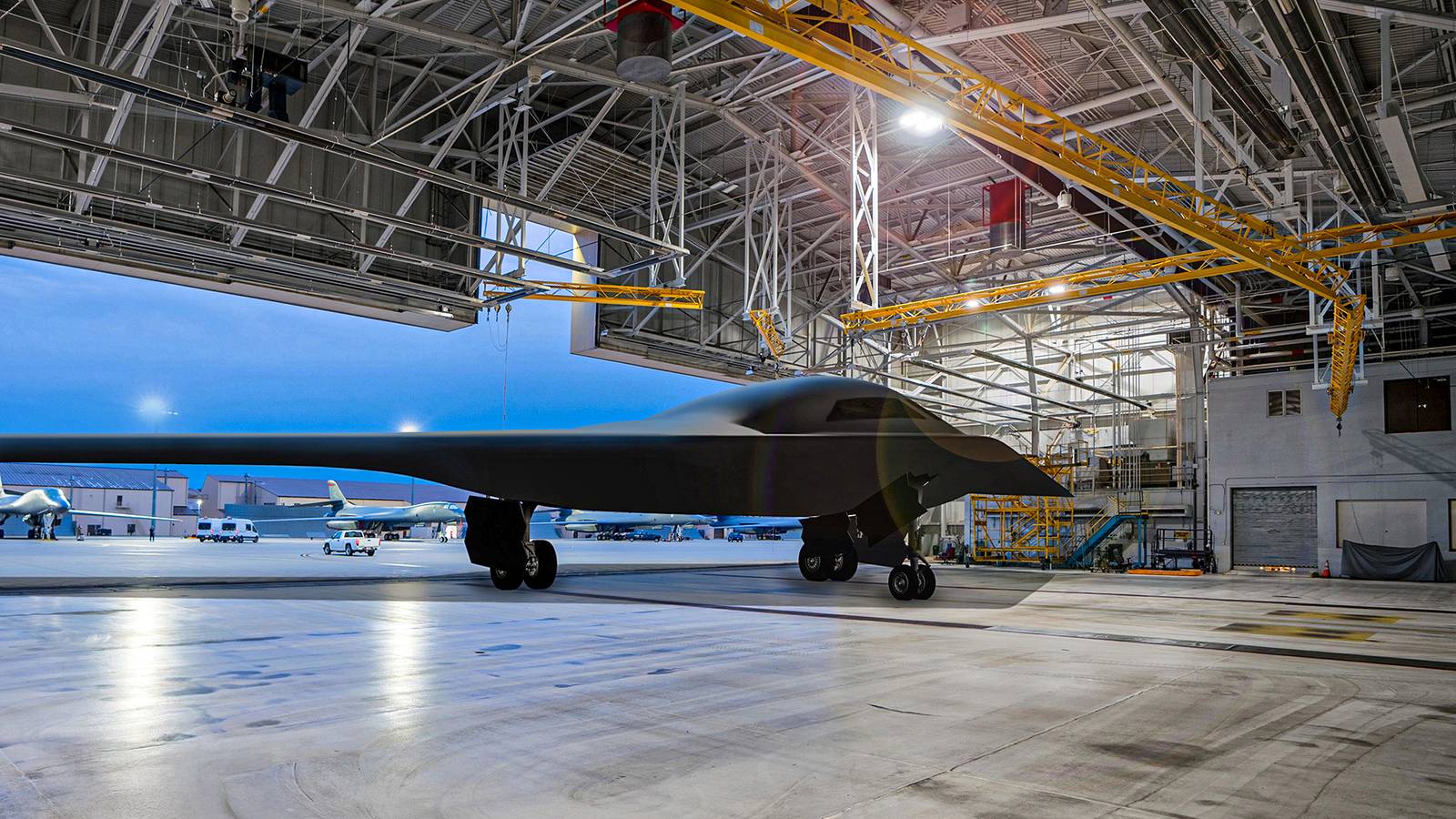
Published Nov 6, 2026, 2:00 PM EST Luke Diaz is a freelance military writer with experience with active duty experience in the US Navy as well as defense and industrial engineering. He is a former Naval Flight Officer who performed tactical air control on the carrier-based E-2 Hawkeye. The Northrop Grumman B-21 Raider is on track to be the first operational sixth-generation stealth bomber in the world by next year. Inspired by the first stealth flying wing, the B-2 Spirit, the B-21's progression from first flight to operational handover also parallels its predecessor, with the current expectation that it will be slightly earlier as well. The B-2 was the world's first fifth-generation bomber and combat-capable flying wing aircraft, but it was also notoriously expensive. That is one of many key areas in which the B-21 is expected to significantly improve, in addition to the advanced technology packed into the airframe. To date, the Raider has been heralded as a model US Air Force procurement program, and the plane itself has impressed top brass so much that leaders from all the US armed forces agreed to increase the planned fleet size. Key to making that a reality is the expected turnover of the first operational airframe in 2027. The test aircraft built for the B-21 program were manufactured using the same tooling, data, and assembly lines intended for the final production run. Unlike traditional programs that completely separate developmental testing from operational testing, the B-21 program pairs developmental and operational test pilots in the same cockpit. Because of this, the first operational aircraft headed to Ellsworth Air Force Base will transition directly out of the test fleet. How The B-2 And B-21 Clocks Compare Credit: The National Archives Catalog The B-21 Raider and B-2 Spirit programs share a nearly identical timeline from first flight to first delivery, at roughly four years. Both were built in deep secrecy at Air Force Plant 42 in Palmdale, California. Their highly publicized first flights were on an identical route from Palmdale, landing less than two hours later at Edwards Air Force Base. The most significant differences are found beneath the surface, from the 'baked in' radar absorbent material to leaner manufacturing practices on the factory floor and even in the digitally overhauled engineering office. The B-2 program famously suffered from ballooning timelines and costs, resulting in Congress slashing the original order of 132 bombers down to just 21. The first jets from 1989 were purely experimental, and after testing concluded, the test aircraft had to be placed into long-term storage for years. The planes were then painstakingly retrofitted into an operational Block Ten configuration, which created a massive lag between initial delivery in 1993 and true front-line squadron readiness in 1997. The B-2 program's timeline followed a rigid, sequential testing path. It was plagued by major mid-course changes, whereas the B-21’s timeline is a hyper-optimized production sprint. The aircraft flying today are built on the current production line using the same tooling, technicians, and digital configurations as the final fleet. The Raider Combined Test Force embeds operational test pilots directly alongside developmental pilots in the same cockpits. When the B-21 arrives at Ellsworth AFB in 2027, it arrives ready to fight. A Different Era Of Strategic Air Power Credit: The National Archives Catalog The B-2 fell victim to poor timing as the Soviet Union collapsed in 1991 and eliminated the urgent military necessity for its primary mission of nuclear deterrence. The program lost political momentum, funding was throttled, and the timeline stretched out because there was no longer an immediate threat. Today, there is a powerful sense of strategic urgency within the Pentagon to deliver the B-21 as soon as possible. The B-2 was designed to penetrate the dense, highly advanced air defense networks of the Soviet Union at high altitudes. It made its first flight in July 1989. Just months later, the Berlin Wall fell, and by December 1991, the Soviet Union collapsed. Suddenly, the trillion-dollar adversary the B-2 was built to fight no longer existed. The B-21 is arriving during a period of intense great-power competition, specifically tailored to counter anti-access/area-denial (A2AD) bubbles in the Indo-Pacific. Milestone B-21 Raider B-2 Spirit First Flight November 10, 2023 July 17, 1989 First Handover 2027 December 17, 1993 IOC Date 2027–2028 January 1, 1997 Final Delivery 2038–2040 July 14, 2000 Fleet Size 100–145 21 Flyaway Price ~$750M ~$737 Million (approx. $2.1 Billion total program unit cost) Rising peer competition in the Indo-Pacific has created intense strategic urgency. Sophisticated long-range radar and missile networks mean standard non-stealth aircraft cannot safely operate in these theaters. The Pentagon views a long-range, penetrating stealth bomber as an absolute necessity to deter or fight a high-end conflict today. Instead of slowing down, Congress and the Pentagon have injected extra funding in the amount of $4.5 billion to expand manufacturing industrial capacity by 25%, keeping the 2027 delivery target secure. Testing Everything At Once On The Raider Credit: US Air Force The Air Force isn't rushing the B-21 out of sheer impatience. They are running out of time. The average age of the current bomber fleet is over 40 years old. The B-2 Spirit fleet is so small, with only 19 remaining airframes, and parts are so scarce that a single mishap can degrade the nation's stealth bomber capacity by 5% overnight. Similarly, the B-1B Lancer is suffering from severe structural fatigue in its swing-wing mechanisms after decades of heavy use in the Middle East. The B-52, while reliable, cannot penetrate contested airspace. Because the legacy fleet is facing a steep structural retirement cliff, the Air Force needed a strategy where the end of development seamlessly blended into the start of mass production. Instead of building handmade experimental prototypes, Northrop Grumman built the first test aircraft on the actual manufacturing line using production-ready tooling. Before a single piece of composite material was cut, a high-fidelity 'digital twin' of the B-21 was flown millions of times in supercomputers. This allowed engineers to stress-test the airframe structure, map internal wiring, and predict maintenance failure points before physical assembly even began. That means that when a flight test at Edwards AFB reveals a required hardware tweak, that change is immediately implemented on the assembly line in Palmdale. Northrop also designed the jet with an open systems architecture that not only makes it faster and simpler to replace defective or broken equipment but also to upgrade it as new technology emerges. There is no multi-year delay to 'tool up' a factory after testing finishes either. The test aircraft are production aircraft, allowing them to be handed directly over to operational squadrons. A Factory Made For A Full-Size Fleet Credit: US Air Force Palmdale is the same complex where the first B-2 was rolled out in 1988, a reminder that final assembly is only one constraint on output. Multiple Raiders are already in various stages of production there, but the new B-21 building expands existing infrastructure rather than replacing it. This allows the current line to keep running while the second takes shape next door. On September 29, the Air Force and Northrop Grumman broke ground on a new final assembly line at Air Force Plant 42 in Palmdale, California, adding more than one million square feet (92,903 square meters) of production space. As The Aviationist reported, the facility supports a planned 25% rise in annual B-21 production capacity. Northrop chief executive Kathy Warden disclosed on an April earnings call that the company would invest $2.5 billion along with the $4.5 billion expected from the Department of Defense. Northrop's new two-million-square-foot (185,806 square meters) component manufacturing campus in Utah is another major element of the success of Plant 42's final assembly line. By injecting capital early into parts suppliers across the country, the Air Force ensured that raw materials and advanced components were stockpiled ahead of time. Northrop invested heavily in a unified digital network that connects its design suites directly to the factory floor. This has cut software certification time by 50% to further expedite the delivery of each airframe. What Remains Before The First Raider Reaches Ellsworth Credit: US Air Force Beyond the task of constructing each B-21 Raider, the Air Force must also balance competing priorities between funding, strategy, and training in order to deliver the first airframe to Ellsworth AFB next year. Air Force Global Strike Command designated the 28th Bomb Wing of the 8th Air Force to accept the very first operationally ready examples of the B-21. The 34th and 37th bomb squadrons are slated to be the first to transition after the formal training unit is up to speed. At the same time, the B-21 is being considered for missions far beyond traditional strategic bombing, including potential air-to-air engagement capabilities and an entirely new role as a kind of drone-controlling arsenal ship. Meanwhile, the Pentagon is still defining the final production ceiling, balancing a baseline of 100 aircraft against intense pressure to scale to 145 or 200+ airframes. Deciding this number changes the assembly line flow, long-term parts contracts, and upfront funding allocations right now. All of these factors create an institutional dependency loop. As the Air Force is testing and producing the aircraft simultaneously, any sudden shift in the bomber's mission set, factory scale, or base readiness directly shifts the exact delivery date of the first aircraft. The Air Force must lock these variables down quickly to ensure the first tail successfully rolls onto the South Dakota ramp next year.
Why The B-21's Path From 2023 1st Flight To 2027 Delivery Mirrors The B-2's Roughly 4-Year Timeline
Full Article
Original Source
Read the full article at Simpleflying →KhanList aggregates and links to publicly available news content. We do not host full articles from third-party sources. Always verify important information with original sources.