
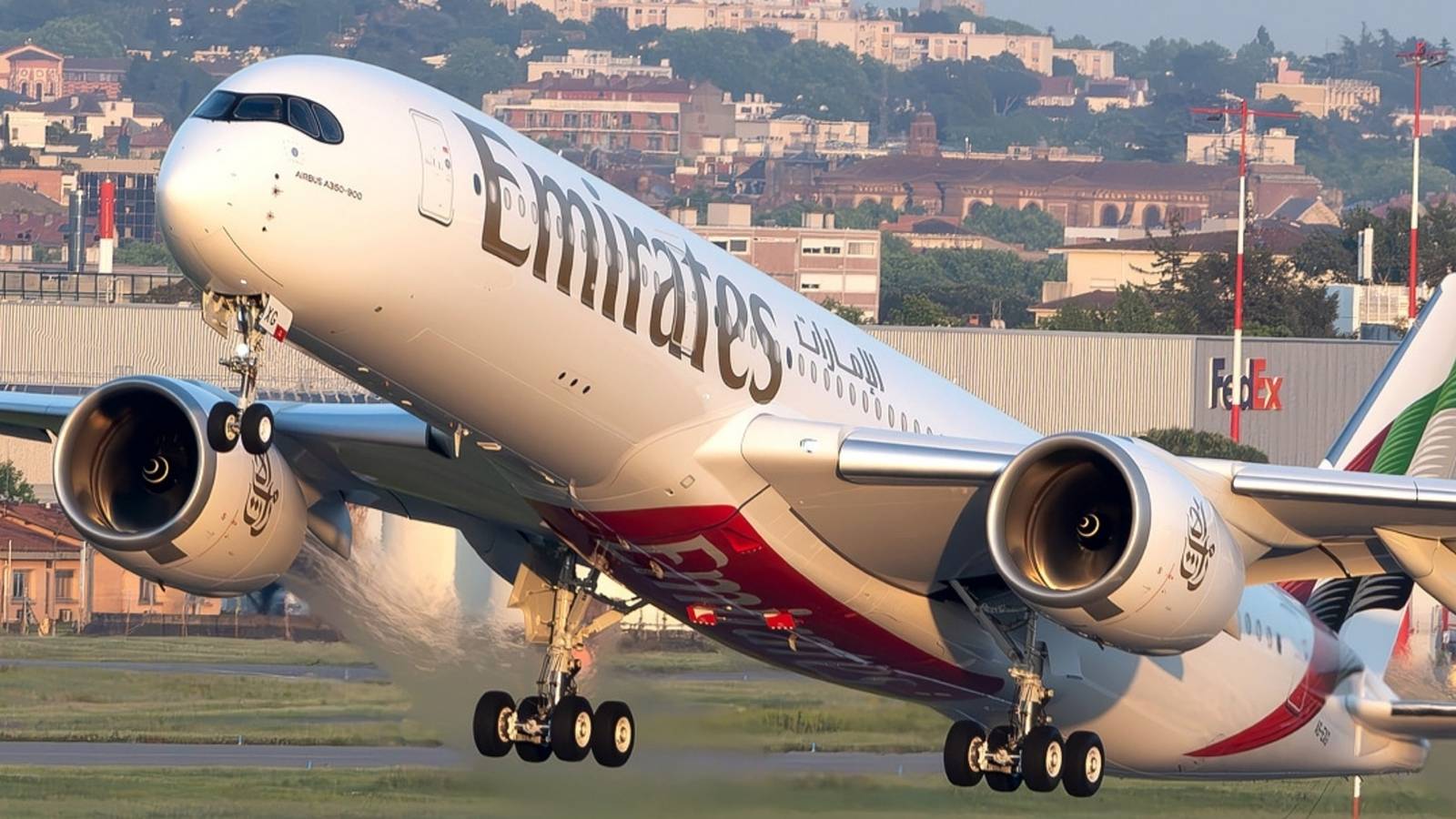
Updated Nov 16, 2026, 7:51 AM EST Experienced ICAO English Language Proficiency Instructor for pilots and ATCOs and conference interpreter who is passionate about facilitating effective communication within aviation-related businesses. Possess a deep understanding of the aviation industry, including aviation regulations, terminology, and industry-specific communication protocols. Has been working at numerous airshows across Europe since 2014. Being an ultralight pilot in her free time, she also promotes safety and efficiency in aviation operations. Based in Italy and Malta Few aircraft in modern aviation have sparked as much passenger enthusiasm as the Airbus A350. Launched to compete with Boeing 787 Dreamliner, the current 777 series, and the upcoming 777X, the A350 has carved out a reputation for its technical innovation and also for delivering a superior passenger experience. From comfort in economy class to luxury in business class, passengers consistently describe the A350 as one of the smoothest and most relaxing aircraft to fly on. In our guide, we will explore why the A350 is celebrated by travelers, referencing reviews and discussions from Simple Flying Threads, TripAdvisor, Reddit, Airliners.net, and other forums.. Passenger experience has become a critical battleground for airlines as long-haul travel expands across competitive markets. Airbus designed the A350 with a clear mission: to combine fuel efficiency, advanced aerodynamics, and composite structures with a cabin tailored to comfort. The aircraft is now a flagship for airlines such as Singapore Airlines, Qatar Airways, Delta Air Lines, Virgin Atlantic, ITA Airways, and Finnair, all of which prominently feature the A350 in their premium marketing materials and routes. Understanding why passengers and pilots alike rate it so highly gives us insight not only into this aircraft but into the future of long-haul travel. The Airbus A350: A Modern Marvel Of Engineering Credit: Airbus At its core, the Airbus A350 is a widebody twinjet designed to cover long-haul routes efficiently while offering airlines lower operating costs and passengers a smoother ride. Built primarily with carbon-fiber reinforced polymer, it is lighter and stronger than traditional aluminum aircraft. This not only boosts efficiency but also allows for innovations in cabin pressure, humidity, and space. According to Airbus’ official overview, the A350 offers up to 25% lower fuel burn compared to earlier long-haul aircraft, while simultaneously delivering a quieter cabin and more spacious layout. Technological sophistication is a hallmark of the A350. Its advanced aerodynamics, including curved winglets and morphing wing technology, ensure reduced drag and turbulence for passengers. The cockpit features a full fly-by-wire system and advanced avionics, designed to ease pilot workload while enhancing flight safety. This focus on both operational performance and comfort reflects Airbus’ dual approach: design an airplane that airlines want to fly and passengers want to board. Passengers may not always realize how engineering shapes their onboard experience, but the A350 demonstrates this connection clearly. The ability to pressurize the cabin at 6,000 feet instead of the industry standard 8,000 feet directly impacts passenger well-being, reducing jet lag and fatigue. The composite fuselage allows for higher humidity, preventing the dryness often reported on older aircraft. These behind-the-scenes improvements form the foundation for the consistently high ratings the A350 receives from travelers on TripAdvisor and Reddit discussions. The Economy Class Experience: A Notable Upgrade Credit: Emirates Economy class is where the A350 has made one of its greatest impressions. Many long-haul travelers usually expect tight seating and fatigue, but reviews suggest that the A350 delivers a noticeably better experience. For example, the Airbus A350 offers a slightly wider 18-inch standard seat, a crucial upgrade compared to many Boeing 787s, which often use narrower 17-inch layouts. It is possible because the A350 cabin is slightly larger, which can make a difference for an economy class, according to One Mile At A Time. For travelers flying 10 to 15 hours, even one extra inch in seat width can significantly improve comfort. Airbus markets its A350 cabin under the “Airspace” brand, designed to maximize both physical and psychological comfort. Features include wider aisles, larger overhead bins, and advanced LED mood lighting. Passengers on Reddit’s r/aviation forum frequently mention how spacious and modern the cabins feel, especially when compared to aging Boeing 777s. One user noted that even in economy, “the A350 feels airy and less claustrophobic, with lighting that actually helps you adjust to time zones.” Noise levels also stand out in economy reviews. The A350 is frequently described as one of the quietest cabins in service, reducing engine roar and creating a calmer atmosphere. A Virgin Atlantic says that even in the rear of the aircraft, conversations can be held at normal volume without competing with background noise. Combined with reduced turbulence due to advanced aerodynamics, passengers often feel less worn out upon arrival, making economy class on the A350 far more pleasant than on many rival aircraft. The Business Class And Premium Experience Credit: Emirates If economy class benefits from the A350’s design, business and premium cabins elevate it to a new level. Airlines have capitalized on the A350’s wide cabin to install modern staggered or suite-style seating that enhances privacy and comfort. Qatar Airways'Qsuite, Delta Air Lines’ Delta One Suite, and Singapore Airlines’ business class all take advantage of the A350’s layout to deliver top-tier products. Passenger feedback from TripAdvisor and Simple Flying discussion threads emphasizes two points: privacy and ambiance. Many airlines have configured their A350 business class cabins with doors, providing passengers with a sense of personal space similar to that of first class. The improved humidity and lighting, combined with flat beds, create a sleep environment that passengers consistently rate higher than on older aircraft. On Reddit, several travelers note they deliberately book A350 flights on airlines like Finnair or Cathay Pacific because “the difference in rest is real.” Beyond business class, premium economy also benefits from the A350’s design. Wider seats, more recline, and quieter cabins make this class particularly attractive for long-haul travelers who cannot justify business fares. Airlines like Virgin Atlantic and Lufthansa highlight their A350 premium economy as a major selling point, often comparing it favorably to business class products of just a decade ago. This layered approach ensures that the A350 delivers a consistent experience across all passenger classes. The Quiet Cabin: Noise Reduction And Well-Being Credit: Channing Reid | Simple Flying One of the most consistent compliments the A350 receives is about noise reduction. Cabin noise is not just a comfort factor; it also affects sleep quality, stress levels, and even long-term hearing health. The A350 is widely acknowledged as one of the quietest widebodies flying today, with sound levels significantly reduced compared to the Boeing 777 and even the 787 Dreamliner. Airbus achieved this through several innovations, including new engine nacelles, acoustic insulation, and aerodynamic refinements. On Airliners.net forums, frequent flyers often remark on how different the environment feels, where you can converse without raising your voice and still be heard. Virgin Atlantic and Delta Air Lines specifically market this as a benefit, noting that it reduces fatigue and helps passengers arrive more refreshed. The psychological impact of a quiet cabin should not be underestimated. Studies have shown that reduced noise contributes to lower stress hormones, which directly connect to passengers, flight attendants, and pilots' well-being. Combined with lighting systems that mimic sunrise and sunset to adjust circadian rhythms, the A350 creates an environment where long-haul travel feels far less taxing. This is perhaps the single most cited reason passengers prefer it over comparable aircraft. Pilots’ Perspective: Why They Love The A350 Too Credit: tristan tan | Shutterstock Passenger comfort is only one side of the story, because the A350 also earns praise from the professionals flying it. Pilots consistently describe it as one of the most advanced and comfortable cockpits in service. In fact, in another article, we interviewed a pilot of an A350 to get first-hand experience. Overall, many pilots highlighted that they appreciate its intuitive controls, visibility, and ergonomic design. The cockpit features large touchscreen displays, head-up displays (HUDs), and a fly-by-wire system that reduces workload on long-haul flights. Pilots on forums and in interviews note how the aircraft’s handling feels “natural,” with Airbus refining the control laws to make the A350 responsive yet stable. Notably, the quiet cabin extends to the cockpit, resulting in less fatigue for pilots on ultra-long-haul sectors, such as Singapore to New York. Ultimately, when pilots enjoy flying an aircraft, it indirectly leads to a better passenger experience. A well-rested, less fatigued crew is better prepared to handle long flights and ensure smooth operations. The fact that the A350 is loved not only by travelers but also by those at the controls highlights why it stands as a pinnacle of modern aviation design. Looking Ahead: The A350 And The Future Of Air Travel Credit: guilhem gaubert l Shutterstock The Airbus A350 has already redefined long-haul passenger travel, but its story is still unfolding. With the launch of the A350-1000 and the upcoming ultra-long-range variants, airlines are positioning it for routes that stretch across the globe. Singapore Airlines has already deployed the Airbus A350-900ULR on nonstop flights from Singapore to New York, demonstrating how comfort and endurance can coexist. According to passenger reviews, it is evident that travelers will increasingly choose flights based on the aircraft type. Many deliberately book itineraries on A350s, even if slightly more expensive, due to the overall comfort advantages. This marks a shift in consumer behavior, where the aircraft itself, not just the airline, becomes a deciding factor in long-haul travel choices. Looking forward, the A350 sets a benchmark that Boeing and future manufacturers will need to meet. Passengers now expect higher humidity, quieter cabins, and ergonomic seating as the baseline for long-haul flying. For airlines, the A350’s combination of efficiency and passenger satisfaction offers a competitive edge. Its ultimate passenger experience is not a marketing phrase, but a reality reflected in thousands of positive reviews worldwide.
Why The Airbus A350 Has Such An Ultimate Passenger Experience
Full Article
Original Source
Read the full article at Simpleflying →KhanList aggregates and links to publicly available news content. We do not host full articles from third-party sources. Always verify important information with original sources.