
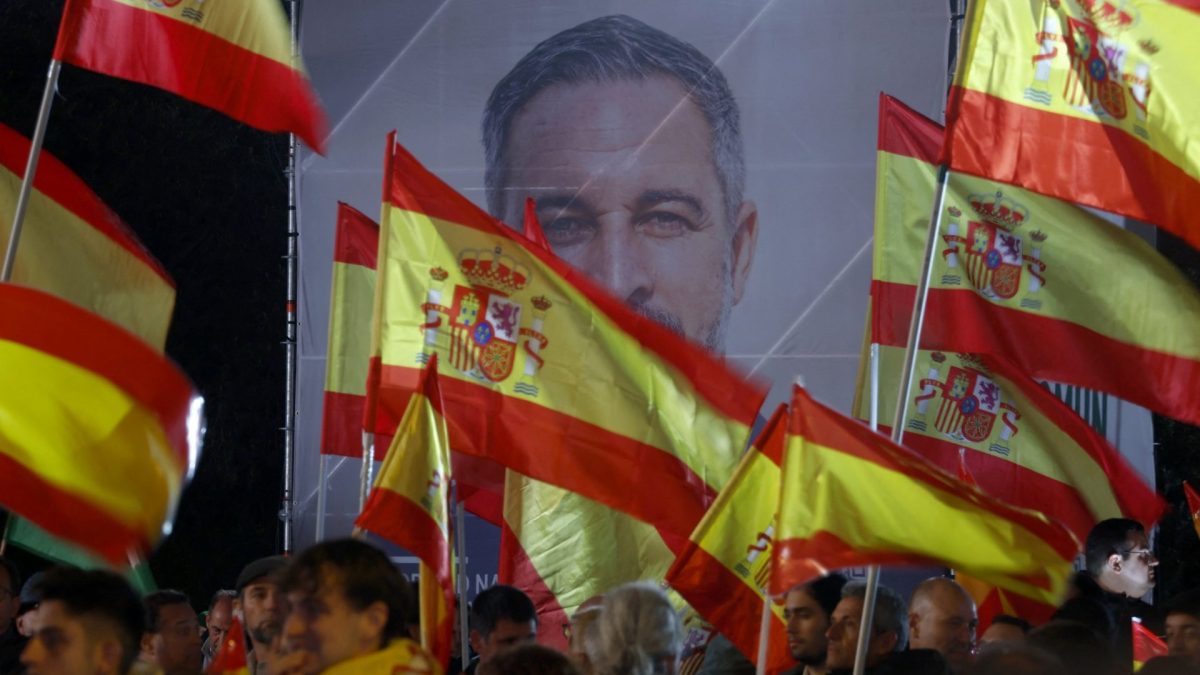
The view couldn’t be more tranquil. The calm sea glints beneath the late autumn sun, a postcard-like reminder of why the island of Lanzarote is one of the most popular destinations for British and other north European tourists. Travelling across it this week, it would be easy to take the sense of peace at face value. Yet, talk to the Spaniards who live here and there is a feeling of unease and anger brewing that could set the trend for what happens elsewhere in Europe next year. Those feelings will become apparent in Spain’s snap election on 29 November. After nearly a decade of Socialist-led rule under Prime Minister Pedro Sánchez, Spanish voters want change, particularly over illegal migration and a lack of affordable housing. The upcoming election is shaping up to be a referendum on the ability of the current government to deal with these two toxic issues. If Sánchez falls and the conservative People’s Party needs the far-right Vox party to govern – which polls suggest is likely – the effect will be felt in Brussels, Paris, Berlin, Kyiv and beyond. Housing and immigration are particularly sensitive issues in Lanzarote, part of the Canary Islands just 80 miles from the coast of Africa. During the election campaign, Vox has drawn attention to the landing of 11,000 illegal migrants on the Canaries in the first 15 days of November alone. Its campaign is also focusing on how many workers are unable to find homes: it wants to place Spaniards first in line to receive government benefits, such as social housing, and has called for mass migrant expulsions.A campaign stall of the opposition People’s Party, with a poster of its leader Alberto Núñez Feijóo (Photo: Susana Vera/Reuters) Vox was born out of the dreams of former People’s Party activists 13 years ago. They thought their old party had become too moderate and was not capable of resolving Spain’s challenges. Now, the irony is that they could be sharing power with those they have long denigrated. If Spain turns right, Europe’s centre of gravity will shift with it. The election would add to the gains in other EU countries made by the far right this year. They are now in the governing coalition in the Czech Republic. In Germany, the AFD won a regional election and are ahead in national opinion polls. Next year, the far right have high hopes in elections in France, Italy and Poland. The right feel they have momentum, and this is where the geopolitical repercussions kick in. Spain moving rightwards would be good news for Vladimir Putin’s Russia, but not in the way that you might expect. Neither the centre-right nor Vox are pro-Moscow. Both parties have condemned the invasion of Ukraine, but having them in power in Spain means getting all 27 EU Member States to a consensus on Russia would become harder. That matters because Europe is increasingly governed not by grand ideological projects but by awkward coalitions of national governments trying to find common ground. A PP–Vox administration would be likely to be more transactional. It could still support Ukraine while demanding concessions elsewhere before approving future sanctions packages, financial guarantees for Kyiv, or enlargement of the EU to allow Ukraine to become a member. Madrid would likely want to trade its vote for movement on migration, agriculture and EU spending. It’s just the sort of crack that Russia likes to see in European unity. Spanish voters want change, particularly over illegal migration and a lack of affordable housing (Photo by Luciano Lima/Getty Images) Vox’s European allies, like France’s National Rally headed by Marine Le Pen, include parties much more sceptical of Russia sanctions and European integration. Nationalist governments do not need to admire Putin to help him, they merely need to turn every foreign-policy decision into a bargaining chip. Then there is Donald Trump. Relations between Washington and Madrid have become unusually abrasive. Trump attacked Spain this summer over its defence spending and opposition to his Iran war, at one point threatening to halt trade. A right-wing government would lower the temperature. There are already promises floated by the People’s Party to rebuild the transatlantic relationship, and calls for a greater commitment to Nato, including bigger investment in defence. That creates an interesting paradox in which Spain might be seen as a more reliable Nato ally while becoming a less enthusiastic champion of European unity and autonomy. Voters and politicians in France will be watching on with keen interest next weekend. Le Pen is currently leading opinion polls for next April’s French presidential election. A PP–Vox government in Madrid would hand the French far right a useful precedent: another major European capital in which the nationalist right has crossed the threshold from protest to power. That does not guarantee Le Pen victory, but it does something much more important: it normalises the possibility. This is why Spain’s election is bigger than Spain. Sánchez can still spoil that script. His party is fighting back in some polls. And the campaign gives him one powerful argument: the election is not simply left versus right, but a decision about how much power Vox should wield. If the right wins, Europe should resist the lazy conclusion that Spain has gone pro-Russian. In fact, something more consequential would have happened for Europe. It would be a sign that the continent’s centre-right parties are willing to govern with the nationalist right. As a result, the EU could become tougher to govern, more Atlanticist and more restrictive on migration. The European far right does not need to capture every capital. It only needs enough of them to change what Europe can unite around.
Why Spain’s far-right surge is being watched by Putin
Full Article
Original Source
Read the full article at Inews →KhanList aggregates and links to publicly available news content. We do not host full articles from third-party sources. Always verify important information with original sources.