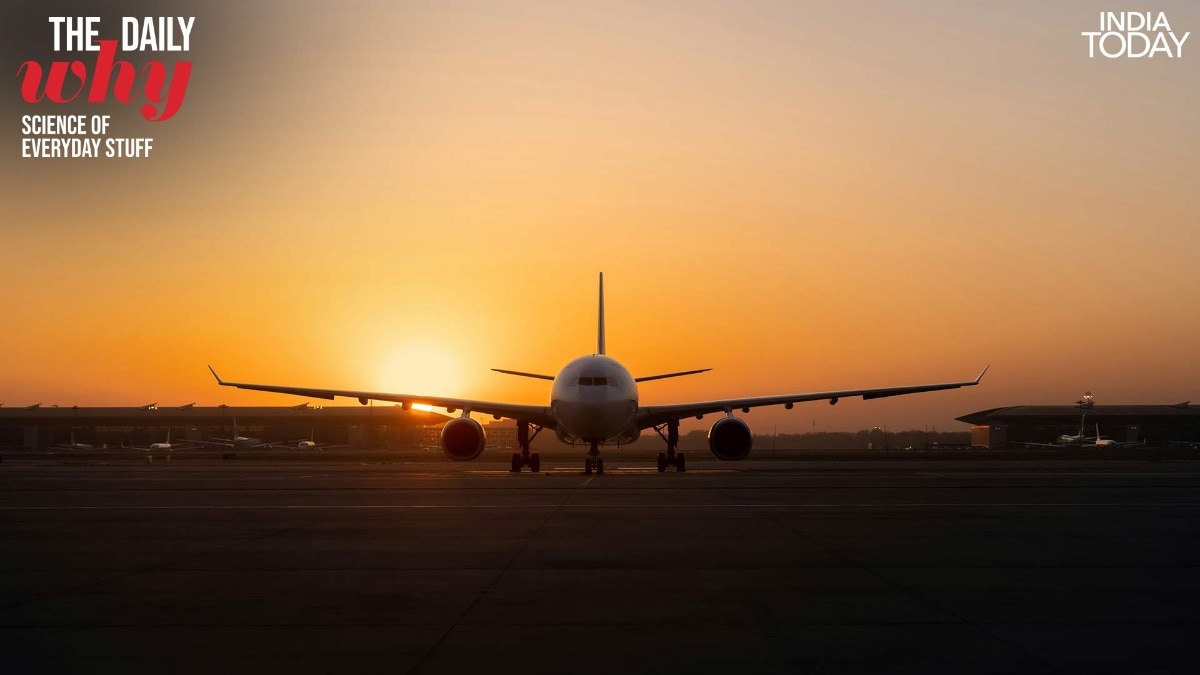
A SpiceJet flight from Delhi to Pune turned into a furnace on the tarmac, leaving passengers gasping for air. Here is the physics of why a parked aeroplane traps heat, why its air conditioning struggles on the ground, and why the cabin finally cools after take-off.Sunlight pours through the windows while the superheated tarmac radiates upward, turning a parked cabin into a greenhouse. (Photo: Unsplash)The doors had shut, but nobody was reading the in-flight magazines. They were fanning themselves with them. On board SpiceJet flight SG 105 from Delhi to Pune on August 11, passengers said the cabin grew so hot before take-off that some could barely breathe. A woman in a wheelchair gasped for air. The heat curdled into anger, and the anger into a sit-in on the tarmac.The airline said the aircraft had a last-minute technical fault, that a replacement was arranged, and that the air conditioning stayed on throughout.Set the blame aside and ask physics instead. Why does a machine built to keep you comfortable in air colder than minus 50 degrees Celsius, seven miles up, turn into an oven the moment it sits still on a sunlit runway? This happens not because it is broken, but because a parked aeroplane is a heat trap, and its cooling system is fighting with one hand tied behind its back.Read the other articles in our flight series here.WHY ARE AEROPLANES SO HOT ON THE GROUND? Picture a metal tube left under an enormous heat lamp. Sunlight, which is short-wave radiation, the high-energy light your eyes see plus the invisible near-infrared beside it, streams through the windows and lands on the seats, carpets and panels. Those surfaces warm and throw the energy back as long-wave infrared, a weaker radiation the windows refuse to let out. Heat strolls in and cannot find the exit. It is the same greenhouse effect that bakes a car in a car park.The ground compounds it. Asphalt and concrete drink sunshine all day, grow far hotter than the air, and radiate that heat upward into the belly of the plane. A passenger beside a sunlit window absorbs direct radiant heat that someone across the aisle never feels. (Photo: Unsplash) Then there is you, and 180-odd fellow travellers. A resting body gives off around 70 to 100 watts of heat, about the same as a small bulb. Fill a narrow cabin with people walking, hauling bags and perspiring, and you have added the warmth of a dozen heaters before a single laptop opens.The National Academies' landmark study of the cabin found that a full aircraft in a hot climate can grow uncomfortable in under 15 minutes once cooling falters.DOES PLANE AIR CONDITIONING WORK WHEN IT IS PARKED?Here is the part almost nobody knows. A plane does not cool itself the way your home does.A household air conditioner uses a chemical refrigerant. An aircraft, in the classic design, uses air itself. It draws scorching compressed air from its engines, then chills and expands it through an air-cycle machine, a small turbine across which the air loses heat dramatically as it expands. Cold air conjured from hot. A lovely thermodynamic sleight of hand. With the main engines off at the gate, the cooling packs in an aeroplane must lean on a smaller auxiliary power unit or a hose of airport air. (Photo: Unsplash) But that machine must dump the heat it strips out somewhere, and it does so through heat exchangers, radiators that need a strong stream of outside air washing over them. In flight, the aircraft's own speed delivers that stream for nothing. Engineers call it ram air.On the ground, speed is zero and the free wind vanishes. The National Academies notes that a parked jet must run a fan to force air through those exchangers, and a fan is a feeble stand-in for a plane travelling at 800 kilometres per hour. The engines are usually off at the gate too, so the cooling packs lean on a smaller auxiliary power unit in the tail, or a hose of pre-chilled air from the terminal. Either can fall behind on a savage day. It is why two planes on the same apron can feel like different worlds inside.WHY DOES THE WINDOW SEAT FEEL HOTTER ON A FLIGHT?Because a thermometer measures the air, but your body feels the whole room.Researchers at Beihang University who measured real flights found the cabin temperature strikingly uneven, with the sharpest gaps around the windows. A field study across 10 aircraft found the same: sit by a sunlit pane, and you soak up direct radiant heat your neighbour across the aisle never feels. Once airborne, full engine power and a rush of freezing outside air restore the cooling system to its full strength. (Photo: Unsplash) The vent above can blow cold while you still swelter, because comfort hangs on radiation, humidity and air movement, not air temperature alone.Humidity turns the screw. Your body cools by evaporating sweat, which carries heat away. When the air is already sodden, the sweat cannot lift off, and the cooling stalls. A hot, humid Indian tarmac attacks you twice.WHY DO PLANES COOL DOWN AFTER TAKE-OFF?Because every disadvantage reverses at once.The engines wind up and feed the packs at full power. The jet accelerates and ram air floods the heat exchangers once more. It climbs off the scalding concrete into thin, freezing air. The heat balance, simply the heat pouring in minus the heat carried out, tips at last from positive to negative, and the cabin cools.That is the real lesson of the SpiceJet furnace. An aeroplane does not turn cold the instant its air conditioning clicks on. It turns cold only when it is shedding heat faster than the tarmac, the crowd and the engines can feed it in.Cooling systems are in fact designed around exactly this worst case, the hot-day, fully-boarded, Sun-soaked jet standing on the ground. Sometimes, as Delhi reminded us this week, the worst case wins.- EndsPublished By: Radifah KabirPublished On: Aug 13, 2026 10:00 IST
Why planes turn into ovens on ground but cool down after take-off
Full Article
Original Source
Read the full article at Indiatoday →KhanList aggregates and links to publicly available news content. We do not host full articles from third-party sources. Always verify important information with original sources.