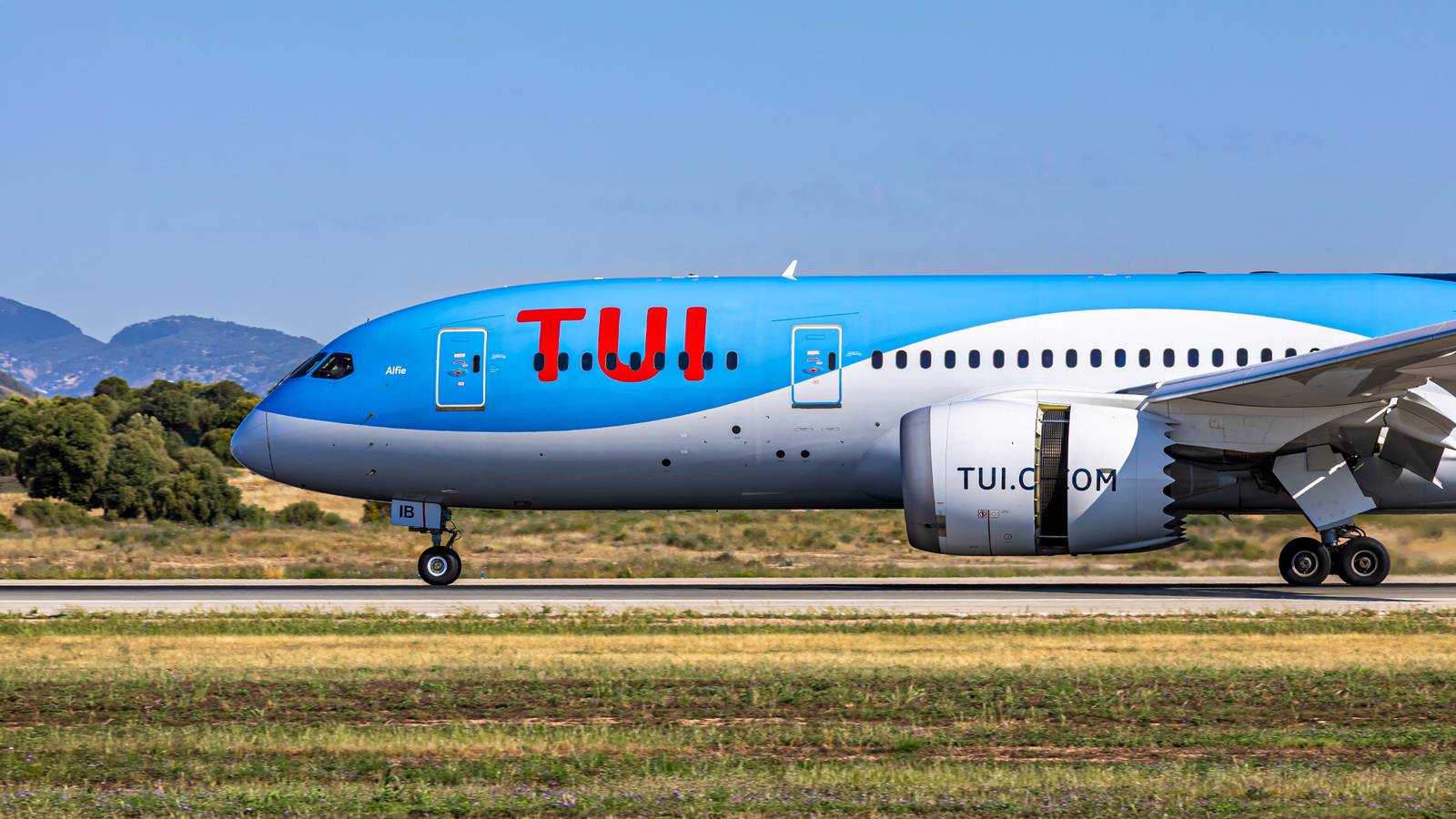
Published Aug 4, 2026, 1:00 AM EDT Josh is an Aviation Journalist and lifelong aviation enthusiast who's now turning that passion into a career. From watching planes and playing flight simulators at a young age to now sitting in the cockpit, Josh has always been drawn to the world of flight. Currently training to become a commercial pilot, Josh aims to make aviation interesting and accessible to everyone, whether you're in the industry or simply passionate about aviation. Now actively building a career in Aviation, Josh is focused on telling stories from inside the aviation world, stories shaped by firsthand experience, curiosity, and a genuine love of all things that fly. Most people have probably noticed the distinctive sawtooth edges on the back of the engines fitted to aircraft such as the Boeing 787 Dreamliner or Boeing 737 MAX, yet few know what they actually do. Known as chevrons, these serrated trailing edges were developed to tackle one of commercial aviation's biggest environmental challenges: aircraft noise. Rather than being a styling feature, they represent years of research between Boeing, GE Aerospace, Honeywell, and NASA aimed at making jet engines quieter during takeoff and landing. Their introduction coincided with a period when aircraft manufacturers were under increasing pressure to satisfy progressively stricter international airport noise standards without sacrificing the fuel efficiency that airlines demand. Boeing's answer was not simply to redesign the engine itself, but to rethink how the exhaust left the nacelle. The result was one of the most recognizable features of several modern Boeing aircraft, although it ultimately came with compromises that would shape future engine development. What Are Chevrons & How Do They Reduce Engine Noise? A modern turbofan engine produces two separate streams of air at its exhaust. The hot, high-speed core exhaust exits through the center of the engine, while a much cooler bypass airflow surrounds it. When these two flows meet behind the engine, the large difference in velocity creates turbulent mixing, which is one of the primary sources of jet engine noise. This is particularly important during takeoff and initial climb, when engines operate at high thrust settings, and aircraft are closest to surrounding communities, making noise reduction a key consideration for manufacturers and regulators. Chevrons help reduce this noise by generating small vortices that encourage the hot and cold airflows to blend more gradually. This reduces the intensity of the turbulent mixing process and lowers the acoustic energy produced by the exhaust. Before the technology entered airline service, engineers from Boeing, GE Aerospace and NASA evaluated numerous chevron shapes, depths, and spacing arrangements to determine the best balance between acoustic performance and aerodynamic efficiency. Because every engine produces different airflow characteristics, the final chevron configuration was tailored to each engine type rather than adopting a single design across every aircraft. The result was a noise-reduction solution that could be integrated into existing turbofan designs, helping aircraft meet increasingly strict noise standards without requiring a complete redesign of the engine architecture. The Trade-Off Behind A Quieter Engine Credit: Shutterstock Although chevrons reduce noise, they achieve this by deliberately altering the way exhaust gases leave the engine. The serrated edges create controlled vortices that allow the hot core exhaust and cooler bypass airflow to mix more gradually, reducing the turbulence that generates noise. However, these vortices also create additional aerodynamic losses compared with a smooth nozzle design, slightly reducing thrust and increasing fuel consumption. While the impact is minimal, it represents a permanent efficiency penalty because the chevrons remain in the exhaust stream throughout every phase of flight, including cruise when their noise-reduction benefits are less important. The exact performance impact has never been publicly quantified by manufacturers. Modern engines are already designed to operate at high levels of efficiency, meaning even small aerodynamic penalties can influence fuel consumption, payload capability and operating costs. For airlines, fractions of a percentage point matter because aircraft spend thousands of hours in the air every year. The impact of chevrons is particularly relevant for high-frequency operators flying aircraft such as the 737, where multiple short sectors mean the small performance penalty is repeated across a large number of flights. Ryanair, one of the world's largest 737 operators, schedules approximately 3,800 flights per day, demonstrating how even minor efficiency differences can accumulate into significant fleet-wide impacts over time. Why The Performance Penalty Exists Throughout Every Flight Credit: Shutterstock One of the biggest engineering compromises of chevrons is that they are fixed structures. Unlike movable aerodynamic devices such as flaps, slats, and spoilers, they remain in the exhaust stream throughout the entire flight, regardless of whether their noise-reduction benefits are actually required. While this simplicity avoids the weight and maintenance associated with moving parts, it also means the aerodynamic impact is present from takeoff until landing. Aircraft noise regulations are most stringent during takeoff, initial climb, and approach, when aircraft are operating close to airports and the communities surrounding them. To minimize the impact of aircraft noise, many airports implement noise abatement procedures that require airlines to follow specific departure and arrival profiles, including reduced-thrust takeoffs where conditions allow, and preferential runway use. Once an aircraft reaches its typical cruise altitude of around 35,000–40,000 feet, engine noise has little effect on people on the ground. However, the chevrons continue to protrude into the exhaust flow and create a small aerodynamic penalty throughout the remainder of the flight. Engineers reportedly explored deployable chevrons that could extend only during takeoff and landing before retracting in cruise, but the added weight, mechanical complexity, and maintenance requirements outweighed the relatively modest efficiency gains. The Airbus Alternative: Why The European Manufacturer Skipped Chevrons Although Boeing's chevron design was patented until 2021, intellectual property was not the only reason Airbus avoided the technology. Even after the patent expired, the European manufacturer chose not to incorporate chevrons into aircraft such as the Airbus A350 or A320neo families. Speaking about the A350 program, Chief Engineer Dougie Hunter explained the company's reasoning succinctly, saying that "we didn't get a noise advantage from chevrons, and there is a specific fuel consumption penalty, so we've not adopted them." His comments reflected Airbus' conclusion that the trade-off simply was not worthwhile. Instead, Airbus focused on reducing noise through other aspects of engine and nacelle design. Simple Flying Quiz Think you really know Boeing? Answer 10 questions and put your knowledge to the test Simple Flying Quiz Think you really know Boeing? Answer 10 questions and put your knowledge to the test The Rolls-Royce Trent XWB powering the A350 combines an exceptionally high bypass ratio with sophisticated acoustic liners and carefully optimized airflow around the nacelle. Modern high-bypass turbofan engines are inherently quieter than previous generations because a larger proportion of their thrust comes from slower-moving bypass air, reducing the intensity of the exhaust mixing that generates much of the noise in the first place. Boeing's New Approach On The 777X Credit: Shutterstock Boeing itself has now begun moving away from chevrons on its newest widebody aircraft. The 777X's GE9X engines abandon the familiar serrated nozzle entirely in favor of a new low-drag exhaust design that achieves comparable community noise levels through different engineering solutions. On that notes, GE Aerospace's 777X Chief Project Engineer Terry Beezhold confirmed that "we are replacing the chevrons with a new nozzle design technology. It provides equivalent levels of noise for the cabin and community but is lighter in weight and has lower drag." A key part of the redesign is the extensive use of ceramic matrix composites, which can withstand much higher temperatures than traditional metal alloys. This allows engineers to produce a shorter, lighter, and more aerodynamically efficient exhaust nozzle with fewer components, reducing both drag and overall engine weight. According to GE Aerospace, the nozzle is around 20% lighter than previous designs. The GE9X is also the largest commercial aircraft engine ever developed, featuring a fan measuring 134 inches (3.40 meters) in diameter. It is also approximately 20% lighter than older nozzle designs. Boeing says the 777X will have a significantly smaller noise footprint than the aircraft it replaces, illustrating how advances in engine architecture, materials and exhaust design have enabled manufacturers to achieve low noise levels without relying on external chevrons. Why Chevrons Still Made Sense On The Boeing 787 Credit: Boeing Despite their drawbacks, chevrons proved highly beneficial on the 787 Dreamliner because they delivered advantages beyond simply reducing airport noise. The quieter engines allowed Boeing engineers to rethink other parts of the aircraft's design, creating opportunities for additional weight savings. Because the engines generated less external noise, Boeing was able to reduce the amount of acoustic insulation required inside the fuselage by approximately 600 pounds (272 kg). Eliminating this material reduced the aircraft's empty weight, helping improve fuel efficiency and partially offsetting the small performance penalty associated with the chevron-equipped engines. The saving also complemented the Dreamliner's broader design philosophy, which centered on minimizing weight through extensive use of composite materials and advanced systems. The result demonstrates that aircraft design is rarely about finding a perfect solution. Instead, manufacturers continually balance competing priorities such as efficiency, weight, community noise, maintenance, and operating costs. While Boeing has already moved beyond chevrons on the 777X, the technology remains an important milestone in commercial aviation, proving that careful aerodynamic shaping of the engine nacelle could deliver meaningful reductions in aircraft noise while paving the way for the quieter engine designs that followed.
Why Only Boeing Jets Wear Those Distinctive Serrated Engine Nozzles
Full Article
Original Source
Read the full article at Simpleflying →KhanList aggregates and links to publicly available news content. We do not host full articles from third-party sources. Always verify important information with original sources.