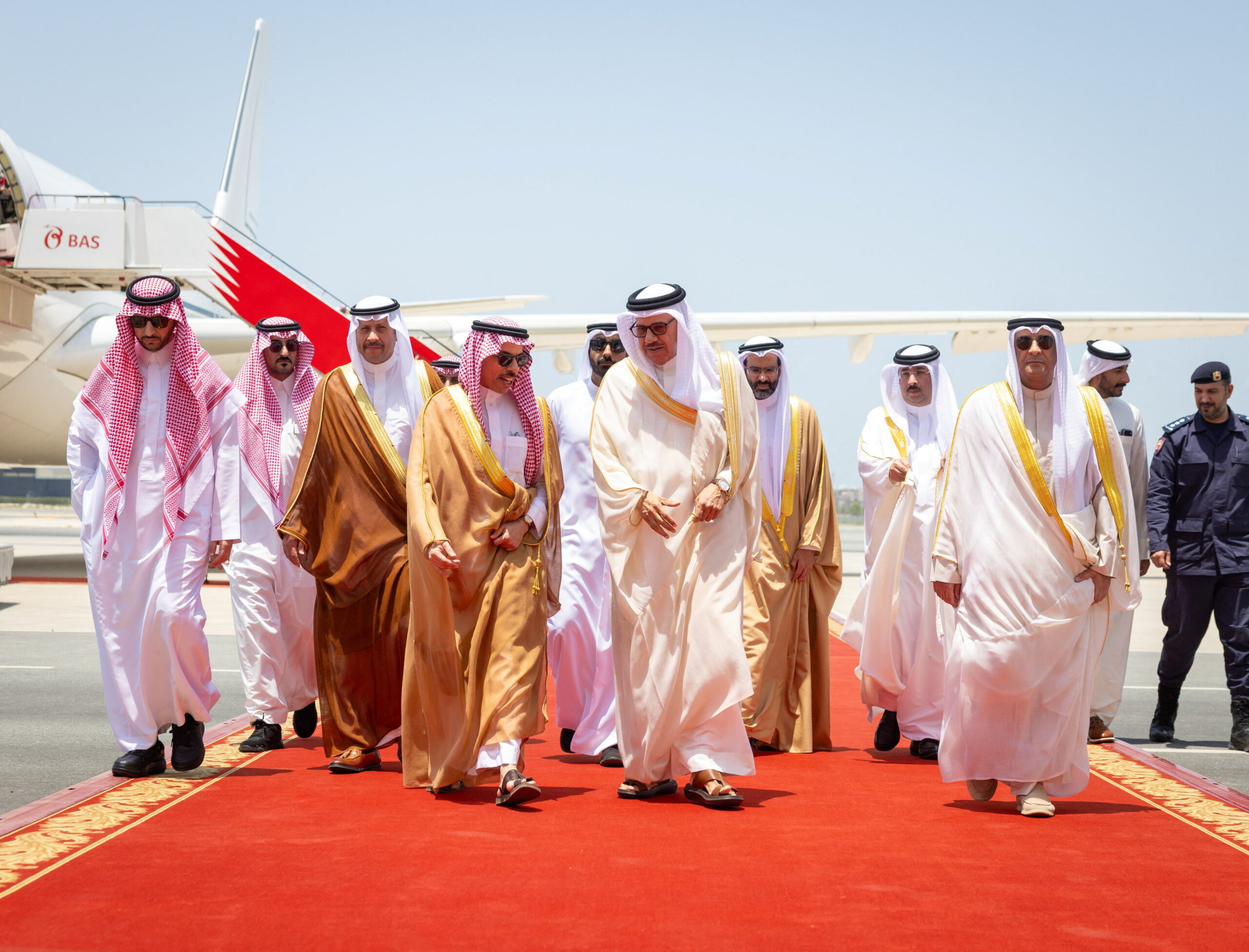
Last week, Saudi Arabia’s Minister of Media Salman Al-Dosary and the United Arab Emirates’ Abdulla bin Mohammed Al Hamed posted on X, within hours of each other, warm reaffirmations of the two countries’ friendship. Shared security interests perhaps inspired cooperation, as Gulf countries continue to face Iranian and proxy attacks amid the war with the US. Yet the more compelling case for cooperation is economic, and it extends far beyond the current geopolitical moment. Diversification is what lets a nation ride out economic cycles instead of being encumbered by them. Saudi Arabia’s Vision 2030 was built on that premise: its architects understood that in a knowledge economy, prosperity depends more on cultivating minds than extracting hydrocarbons. However, for nations in transition, regional cooperation is necessary to augment scale and growth. The so-called “Asian Tiger” nations of Southeast Asia are a case in point. Malaysia, Thailand, Singapore, and others need integrated cooperation for investment, trade, and technology transfers. They built integrated investment- and export-led economies while having political differences. No single Gulf Cooperation Council (GCC) economy, however deep its pockets, in my view can build an artificial intelligence sector or a biotech cluster entirely on its own capital and its own talent pool. In a 2025 International Monetary Fund (IMF) working paper, Yevgeniya Korniyenko and Weining Xin draw on a deal-level database covering more than thirteen thousand investment transactions between 2000 and 2023, finding that inward cross-border investment has a substantially greater effect on growth in areas outside the fossil fuel industry than domestic investment alone. They also find that more than one quarter of investment into the GCC already originates within the region, while Saudi Arabia and the UAE account for the majority of investment activity by both number of investments and their value. Their empirical analysis further finds that a 1 percentage point increase in inward investment as a share of gross domestic product (GDP) is associated with approximately a 1.2 percent increase in non-hydrocarbon sectoral GDP after four years, roughly three times the effect of an equivalent increase in domestic investment. If cross-border investment is more productive than domestic investment alone, then deeper GCC integration is not simply an exercise in regional diplomacy. It is a strategy for accelerating diversification, productivity, and long-term growth. SIGN UP FOR THIS WEEK IN THE MIDEAST NEWSLETTER None of this is a new economic idea. David Ricardo worked out over two centuries ago that nations get richer by specializing in what they’re relatively good at and trading for the rest. What’s changed is what comparative advantage is actually made of. In Ricardo’s era it was land, labor, and raw materials—things a country either had or didn’t. Today it is research institutions, capital markets, digital infrastructure, entrepreneurial density, and innovative minds. These types of assets, unlike an oil field, become more valuable the more they’re connected to other people. Specialization is not enough. Industries get better as more people use them, not just as more capital flows into them. A regional payment system is more useful with each bank that joins it. Capital markets get deeper and cheaper to trade in as more issuers list and more investors show up. A university partnership or a research network generates more value the more freely knowledge and talent move across its member states’ borders. Every additional participant makes the whole system worth more to everyone already in it. The Iran conflict complicates this, but probably not in the direction most people assume. It pushed every Gulf government toward more domestic resilience. That instinct is understandable and perhaps even necessary. But six countries each duplicating the same strategic infrastructure and supply chains is an expensive way to buy that resilience. Capital gets sunk into redundant capacity that never earns a commensurate return. Shared logistics corridors, interoperable payments, and coordinated energy infrastructure buy some of the same protection against shocks, at a fraction of the cost, because the region can lean on whichever part of it isn’t currently under stress. Regional integration doesn’t replace the need for national resilience. It just makes that resilience more cost effective. Iran’s provocations may have provided the immediate catalyst for last week’s public display of unity. But the more important point is the countries that succeed in this new age will not necessarily be those with the largest hydrocarbon reserves or the richest sovereign wealth funds. They will be those that build the strongest networks of capital, talent, and technology. For the GCC, that is not simply an aspiration. It is the economic logic of long-term prosperity. Khalid Azim is the director of the MENA Futures Lab at the Atlantic Council’s Rafik Hariri Center for the Middle East. Further reading Wed, Jul 22, 2026 What to know about the new US-Saudi nuclear deal Fast Thinking By Atlantic Council The reported deal with Riyadh would send US nuclear technology, material, and equipment to the kingdom—raising the issue of nonproliferation. Image: Saudi Foreign Minister Prince Faisal bin Farhan Al Saud and Bahrain's Foreign Minister Abdullatif Al Zayani walk upon Prince Faisal's arrival ahead of the 167th meeting of the Gulf Cooperation Council Ministerial Council in Muharraq, Bahrain, June 10, 2026. Saudi Press Agency /Handout via REUTERS
Why GCC integration matters more than ever
Full Article
Original Source
Read the full article at Atlanticcouncil →KhanList aggregates and links to publicly available news content. We do not host full articles from third-party sources. Always verify important information with original sources.