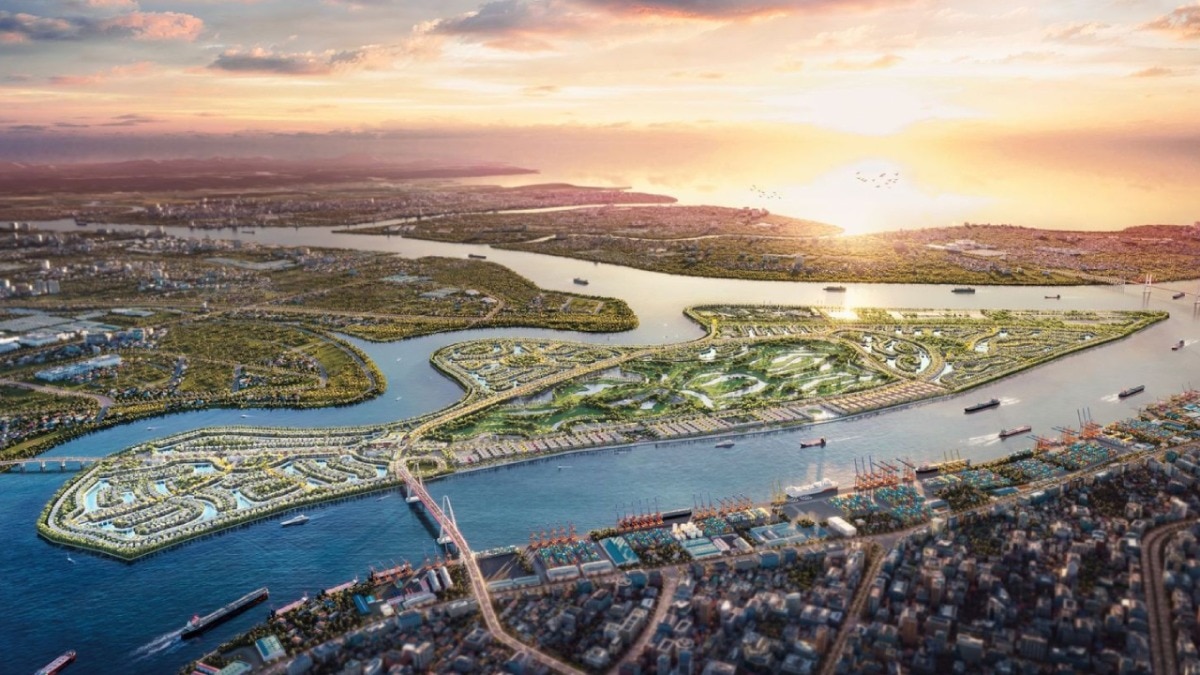
As floods, heatwaves and water shortages become more frequent, developers are beginning to rethink what makes a premium property. The future of real estate may be less about luxury and more about resilience.For years, India's premium housing market has been driven by a familiar checklist. A larger apartment. A bigger balcony. A clubhouse. A swimming pool. Better connectivity.But as cities grapple with recurring floods, rising temperatures and water shortages, the definition of a premium home is beginning to change.Increasingly, developers and institutional investors are looking beyond luxury amenities to something that could determine a property's value over the long term—its ability to withstand climate-related risks. The shift is subtle today, but industry experts believe it could fundamentally change how homes and even entire cities are designed over the coming decades.According to global real estate consultancy JLL, climate resilience and sustainability are becoming increasingly important in determining the long-term quality, investment potential and risk profile of real estate assets. Rather than evaluating projects solely on location and returns, investors are paying closer attention to how developments manage water resources, energy consumption, biodiversity and climate-related disruptions.Jean-Paul de la Fuente, Director of the New7Wonders Organisation, believes the conversation is moving well beyond constructing buildings."Climate resilience, investor preferences and the growing focus on long-term sustainability are reshaping how real estate projects are planned and valued globally," he says.According to him, developers are increasingly integrating environmental resilience into large-scale developments instead of focusing only on construction.FROM BUILDINGS TO ECOSYSTEMSRapid urbanisation is accelerating this transition.The World Bank estimates that nearly 70% of the global population will live in cities by 2050. As urban populations expand, cities will face greater pressure on housing, transport, water resources and public infrastructure.That is prompting governments, investors and developers to rethink conventional construction-led growth.Instead of building standalone residential projects, developers are gradually moving towards creating integrated urban ecosystems that combine renewable energy, efficient transport, smart infrastructure, water conservation and green public spaces."The focus is gradually shifting from developing standalone buildings to creating self-sustaining urban ecosystems that combine renewable energy, smart infrastructure, green spaces, efficient mobility and climate resilience," de la Fuente says.The objective is no longer simply to build homes, but to create communities that remain liveable and economically viable as climate risks become more pronounced.CLIMATE RESILIENCE IS BECOMING AN INVESTMENT METRICFor institutional investors, climate resilience is no longer viewed merely as an environmental consideration.It is increasingly becoming a financial one.Buildings that are better equipped to deal with flooding, heat stress, water scarcity and changing weather patterns are increasingly being viewed as lower-risk, longer-lasting assets.Industry experts say this reflects a broader evolution in real estate investing, where long-term resilience is beginning to matter alongside rental yields, occupancy rates and location.Developers are responding accordingly.Around the world, several large urban projects are already incorporating sustainability into their master plans instead of treating it as an afterthought.Singapore's Tengah Forest Town has been designed around green mobility, smart energy systems and extensive forest cover, while Saudi Arabia's NEOM project is attempting to integrate renewable energy, technology and environmental restoration into urban planning.Vietnam is also experimenting with this approach.Its largest residential developer, Vinhomes, has introduced what it calls an "ESG++" framework that goes beyond traditional environmental, social and governance standards by incorporating regeneration and resilience into project planning.According to the company, biodiversity conservation, hydrology and ecological restoration are considered during the planning stage of projects such as Vinhomes Green Paradise Can Gio and Vinhomes Global Gate Ha Long.INDIA IS MOVING IN THE SAME DIRECTIONIndia's real estate sector is beginning to reflect similar priorities.Developers are increasingly incorporating rainwater harvesting systems, renewable energy, water recycling, EV charging infrastructure and energy-efficient buildings into new residential projects.While these features were once viewed primarily as sustainability initiatives, they are now increasingly seen as investments that could improve the long-term resilience and attractiveness of a development.Institutional investors, too, are giving greater weight to ESG compliance and climate resilience while evaluating projects.According to de la Fuente, this represents a much broader transformation taking place across the global property market."Investors are increasingly evaluating assets on their ability to remain environmentally sustainable, economically viable and resilient over the long term, rather than on the size or scale of development alone," he says.THE NEXT LUXURY MAY BE PEACE OF MINDFor homebuyers, the change may not be immediately visible. Sales brochures will probably continue to highlight clubhouses, landscaped gardens and rooftop amenities.But behind the scenes, another checklist is quietly gaining importance.Can the project withstand flooding? Will it remain water secure? Is it energy efficient? How resilient is it to extreme weather?These are questions that developers, investors and urban planners are increasingly asking—and they may soon become just as important for buyers.The next premium home may still have a larger balcony.But its biggest luxury could be something far more valuable: the confidence that it is built not just for today's lifestyle, but for tomorrow's climate.- EndsPublished On: Jul 31, 2026 15:09 IST
Why future homes may not have a bigger balcony but better climate resilience
Full Article
Original Source
Read the full article at Indiatoday →KhanList aggregates and links to publicly available news content. We do not host full articles from third-party sources. Always verify important information with original sources.